
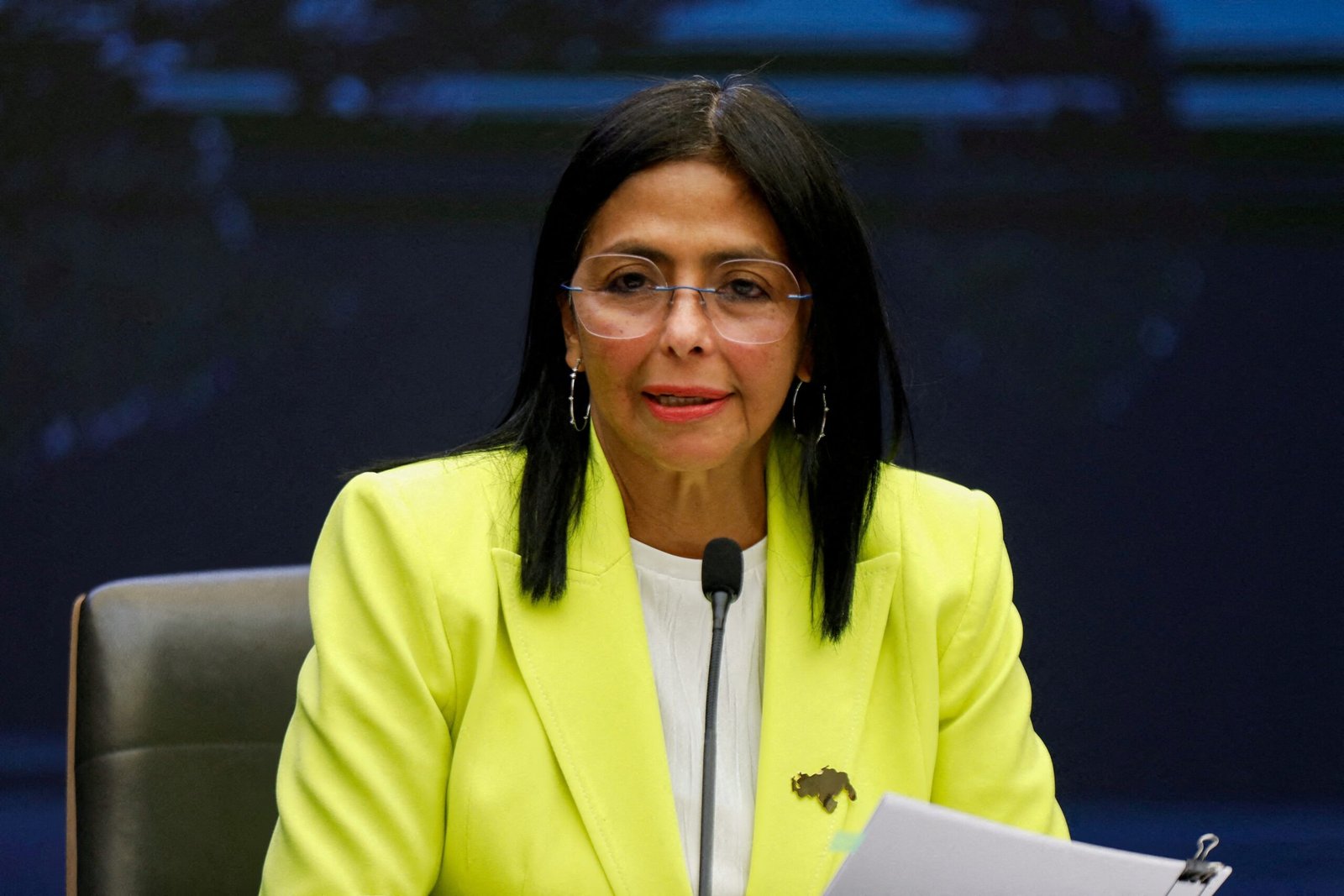
Vice President and Minister of Oil of Venezuela, Delcy Rodríguez, speaks to the press in Caracas, Venezuela, on March 10, 2025. Reuters In the six days following the US operation that removed Nicolás Maduro from power in Venezuela, the government led by Delcy Rodríguez, under US supervision, has sent contradictory signals to ensure control of the country. The announcement of the release of political prisoners is mixed with the maintenance of the usual repressive apparatus on the streets and the measures enacted by the government to curb, for example, those who celebrate the American military intervention. ✅ Follow the g1 international news channel on WhatsApp Delcy’s older brother, the president of the Legislative Assembly, Jorge Rodríguez, justified the decision to release what he considered a significant number of prisoners as “a gesture to consolidate peace and peaceful coexistence”. He made a point of highlighting that this was a unilateral measure by the current government and not the result of pressure from the USA. The morning, however, was tense for the prisoners’ relatives, with no information on names, and resulted in the release of only five, with Spanish passports. Among them, former candidate Enrique Márquez and respected human rights lawyer Rocío San Miguel, imprisoned 23 months ago on false charges of conspiracy, treason and terrorism. Trump claims he has canceled the second stage of attacks planned in Venezuela “Three in the morning in Venezuela. An absolutely dramatic night with hundreds of families waiting. On a political level, the failure to release this evening, after more than five hours since the announcement, only left aside the fragility of Rodrigato’s power. What or who is preventing political prisoners from leaving?”, reported political scientist Luis Peche on his social networks. The confusing and slow release of political prisoners appears to be the first concession by the Rodríguez brothers, who now hold power in Venezuela. According to the NGO Foro Penal, the government keeps 820 people in prison for political reasons and the most varied and fanciful accusations. Around a hundred are in the feared prison known as El Helicoide, considered a torture center managed by the Bolivarian National Intelligence Service (Sebin). The Chavista regime, now reprocessed under the Trump banner, has been ambiguous in its statements. On the one hand, it provides timid demonstrations of openness and collaboration; on the other, it maintains paramilitaries and militias to patrol streets and ensure order by force, in yet another indication that the repressive apparatus is intact. For the internal public, the interim president tries to convey the image that the regime resisted the US intervention in the deposition of Maduro and Cília Flores. “Nobody here surrendered. There was a struggle and a fight for this homeland. We have historical dignity, commitment and loyalty to President Maduro, who was kidnapped”, she assured at the ceremony in honor of the hundred dead in the American operation on the 3rd. The vehemence that the interim president tries to convey to Venezuelans, however, loses strength in the measures dictated by the Trump administration, such as control of the country’s oil, but is still sustained by the brutality in daily life on the streets. READ ALSO: Trump says the release of prisoners in Venezuela is a ‘sign of peace’ and that Delcy’s cooperation made him cancel the 2nd wave of attacks Khamenei says he will not back down in the face of protests and accuses protesters of seeking to ‘please’ Trump Venezuelans who oppose Maduro and also Trump: ‘It’s like one villain saving you from another’ See the videos that are trending on g1
Source link
In a recycled regime under US supervision, Delcy Rodríguez sends contradictory signals in Venezuela
37
