
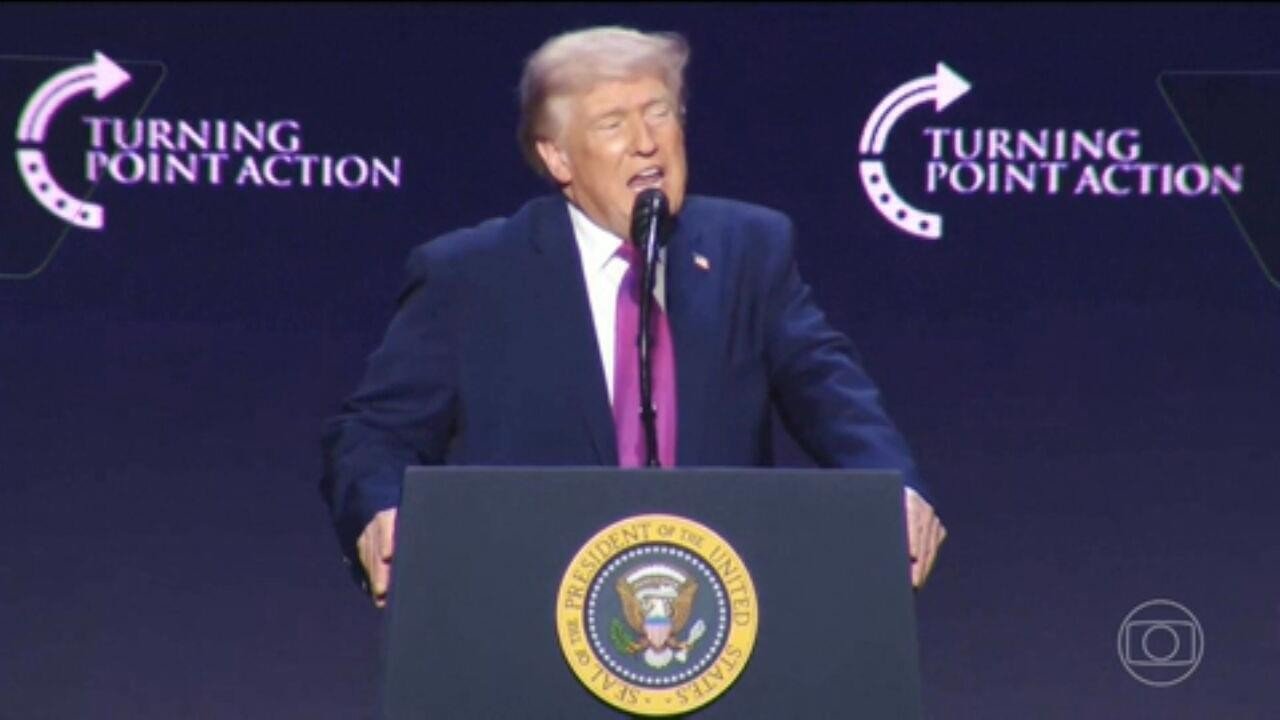
Trump is dissatisfied with Iran’s latest peace offer The President of the United States, Donald Trump, threatened Iran again this Wednesday (29), saying that “no more playing nice” and with a montage of him holding a rifle with explosions in the background. ✅ Follow the g1 international news channel on WhatsApp “Iran can’t organize itself. They don’t know how to sign a non-nuclear agreement. They better get smart soon!”, said Trump in a post on the social network Truth Social. In addition to the text, Trump’s publication includes a montage, which shows him wearing sunglasses holding a rifle and with several explosions in a war zone in the background, and also has the caption “no more playing nice”. (See photo below) This Wednesday’s publication refers to negotiations between Washington and Tehran, brokered by Pakistan, to end the war in the Middle East. Negotiations are stagnant, with both sides rejecting proposals from the other and disagreements over on-site negotiations. Furthermore, the American president is dissatisfied with Iran’s most recent proposal to end the conflict, according to Reuters and the “New York Times”. US President Donald Trump threatens Iran with mounting explosions in a social media post on April 29, 2026. Reproduction/Donald Trump on Truth Social At the same time, the US and Iran are in a period of ceasefire, which may have its days numbered. Not only does Trump’s publication allude to new attacks, the Reuters news agency revealed on Tuesday that the US is analyzing a possible resumption of bombings against military and political targets in Iran. In another context, the Trump administration is also evaluating possible reactions from Iran to a possible declaration of victory in the war. (Read more below) According to Reuters, military options remain officially under analysis. On the other hand, a White House official described the internal pressure to end the war as “enormous.” According to one of the sources, Iran has taken advantage of the ceasefire to recover launchers, ammunition, drones and other equipment that had been buried after American and Israeli bombings in the first weeks of the conflict. Declaration of victory United States President Donald Trump on April 28, 2026 Chris Jackson/Pool via REUTERS United States intelligence agencies are analyzing how Iran would react if President Donald Trump declares victory in the war, according to three sources interviewed by Reuters. The study was requested by high-ranking members of the government with the aim of evaluating the consequences of a possible US withdrawal from the conflict. On the radar is the fear that the war will cause major losses for Trump’s party in this year’s legislative elections. A quick de-escalation could ease political pressure on the president. On the other hand, officials believe the move would strengthen Iran, allowing the country to resume nuclear and missile programs in the future. American allies in the region could also receive new threats. No decision has been made so far and there is no set deadline for completing the analysis. Trump could still expand military operations again, according to Reuters. Recently, intelligence agencies have already assessed possible reactions from the Iranian leadership to an American declaration of victory. After the offensive began on February 28, analysts concluded that if Trump declared victory and reduced the US military presence in the region, Iran would likely interpret the move as a triumph of its own, one of the sources said. On the other hand, if the US declared victory and maintained a strong military presence in the region, Iran could see the gesture as a negotiation strategy, but not necessarily as the end of the war. CIA public affairs director Liz Lyons said the agency has no information about the aforementioned assessment. The CIA did not respond to specific questions from Reuters about current work related to Iran. The Office of the Director of National Intelligence declined to comment. White House spokeswoman Anna Kelly said the US is continuing to negotiate with Iran and will not be pressured into accepting a bad deal. According to her, the president will only accept terms that prioritize national security and guarantee that Iran will not have nuclear weapons. High political costs USS Gerald Ford aircraft carrier, from the United States Navy, in a photo from January 2026. Disclosure/US Navy Opinion polls show strong rejection of the war among Americans. A Reuters/Ipsos survey released last week found that only 26% of those interviewed considered the military campaign to be worth the cost, while 25% said it made the US safer. People familiar with recent discussions at the White House say Trump is mindful of the political impact of the conflict on himself and the Republican Party. Twenty days after the president announced a ceasefire, diplomatic efforts have still failed to fully reopen the Strait of Hormuz, a strategic route for global oil trade. Iran partially blocked the passage by attacking vessels and installing mines in the region. Around 20% of the world’s oil passes through the site. The interruption of the flow raised energy costs around the world and gasoline prices in the United States, increasing economic pressure on the American government. A reduction in the US military presence combined with the lifting of the blockade could, in the future, reduce fuel prices. So far, however, the two sides remain far from reaching an agreement. Over the weekend, Trump canceled a trip by special envoy Steve Witkoff and son-in-law Jared Kushner to Pakistan for meetings with Iranian officials. The president said that the meeting would take “too long” and that Iran would only need to get in touch if it wanted to negotiate. VIDEOS: most watched on g1
Source link
‘No more playing nice’, says Trump in new threat against Iran
6
