
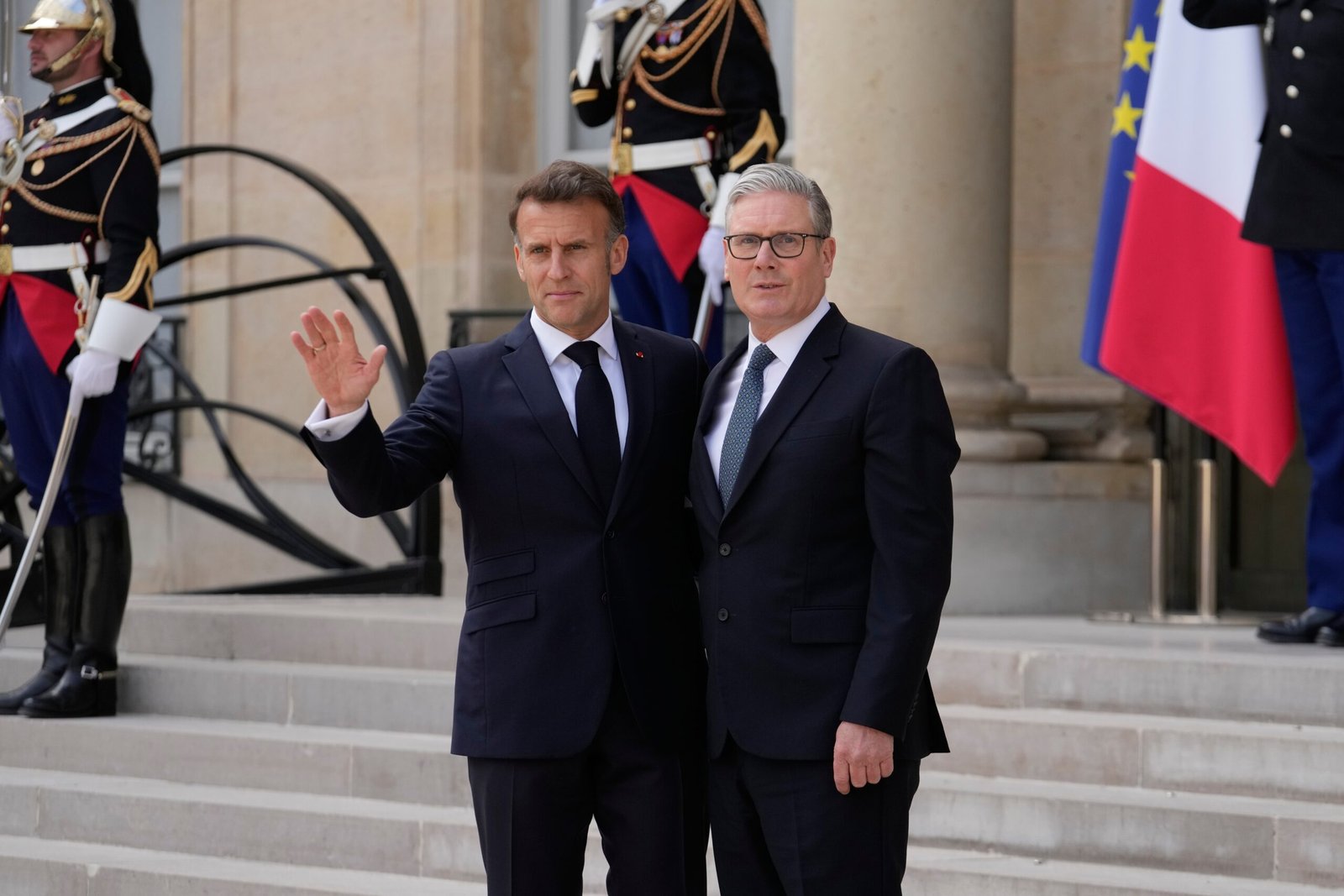
Macron and Starmer have led international efforts to increase diplomatic and economic pressure on Iran. Starmer accused the country of “holding the world economy hostage”. US President Donald Trump raised tensions by announcing a retaliatory blockade against Iranian ports. Michel Euler/AP The leaders of France and the United Kingdom brought together dozens of countries, without the presence of the United States, this Friday (17) to advance plans to reopen the Strait of Hormuz, a strategic oil route blocked by the war between the USA, Israel and Iran. Follow the news about the war in Iran in REAL TIME The meeting in Paris is part of an attempt by countries that remained on the sidelines of the conflict to reduce the impacts of a war that they neither started nor participated in, but which shook the global economy. Since the start of the confrontation on February 28, Iran has effectively closed the strait through which around a fifth of the world’s oil passes. The United States does not participate in planning the so-called Freedom of Maritime Navigation Initiative in the Strait of Hormuz. In a publication on Network X before the conference, French President Emmanuel Macron stated that the mission to guarantee the safety of navigation will be “strictly defensive”, restricted to countries not involved in the conflict and carried out “when security conditions allow”. British Prime Minister Keir Starmer, who is facing internal political difficulties, was received by Macron at the Élysée Palace on Friday afternoon. Macron and Starmer have led international efforts to increase diplomatic and economic pressure on Iran. Starmer accused the country of “holding the world economy hostage”. US President Donald Trump raised tensions by announcing a retaliatory blockade against Iranian ports. “The unconditional and immediate reopening of the Straits is a global responsibility, and we need to act to get energy and trade flowing freely again,” Starmer said ahead of the meeting. READ ALSO: Lebanese displaced by war return home and celebrate ceasefire; VIDEO See the videos that are trending on g1 Military planning in progress France and the United Kingdom are also leading military planning meetings, in a move reminiscent of the “coalition of volunteers” created to guarantee security for Ukraine in the event of a ceasefire. French military spokesman, Colonel Guillaume Vernet, stated on Thursday (16) that the mission is still “under construction”. According to the French government, participating countries must contribute “each according to their capabilities”. Options for ensuring safe passage will depend on the security situation following an eventual lasting ceasefire. The objective is to ensure that ships can cross the strait without risk of attack. This may require resources such as intelligence, mine clearance, military escorts and communication channels with coastal countries, according to an official who spoke on condition of anonymity. Experts estimate that the coalition’s actions should focus more on removing mines and creating warning systems for maritime threats rather than on armed escorts for oil tankers. “You would need a huge number of vessels to do this, something no one has,” said Sidharth Kaushal, a researcher at the Royal United Services Institute. Iran expert Ellie Geranmayeh said that European countries could play a relevant role in removing mines. According to her, this action would be more appropriate than a direct US presence, which could increase the risk of clashes with Iran. Dozens of countries participate in the discussions The United Kingdom is discussing the use of minesweeper drones, which could be launched from the RFA Lyme Bay ship, on a mission in the region. The war also exposed the dwindling capabilities of the British Navy, which sent just one large warship, the destroyer HMS Dragon, to the eastern Mediterranean. France, which has the greatest military power in the European Union, deployed a nuclear aircraft carrier, as well as a ship with helicopters and several frigates. More than 40 countries have participated in diplomatic or military meetings led by France and the United Kingdom in recent weeks, although a smaller number are expected to commit military resources. Around 30 countries are expected to participate in this Friday’s talks, including nations from the Middle East and Asia. The list was not released. German Chancellor Friedrich Merz and Italian Prime Minister Giorgia Meloni are expected in person, while other leaders are expected to participate by video. The operation is also a response to criticism from Trump, who accused allies of not joining the war and stated that reopening the strait is not the US’s responsibility. The president called allies “cowards”, said NATO “wasn’t there when we needed it” and criticized the United Kingdom, saying: “You don’t even have a Navy”. For analysts, European countries and allies such as Canada may try to demonstrate the ability to guarantee international security independently of the USA. Still, the question remains about how many countries have resources available to contribute to the operation.
Source link
Macron and Starmer hold international summit on reopening the Strait of Hormuz without US presence
9
