
Nicholas Enrich was working in Kenya in 2003 when the then US president George W Bush signed a landmark $15bn, five-year commitment to combat HIV, the largest international health commitment by any nation to fight a single disease.
It was the peak of the epidemic, and for the young American government aid worker “it clicked that my government was ready to join the fight against HIV and I was excited to be a part of that”, he says.
More than 20 years on, Enrich, now 43, has published an account of what happens when a new US administration comes in with an agenda powered by an “America first” ideology and a plan to refashion the US’s outward international posture.
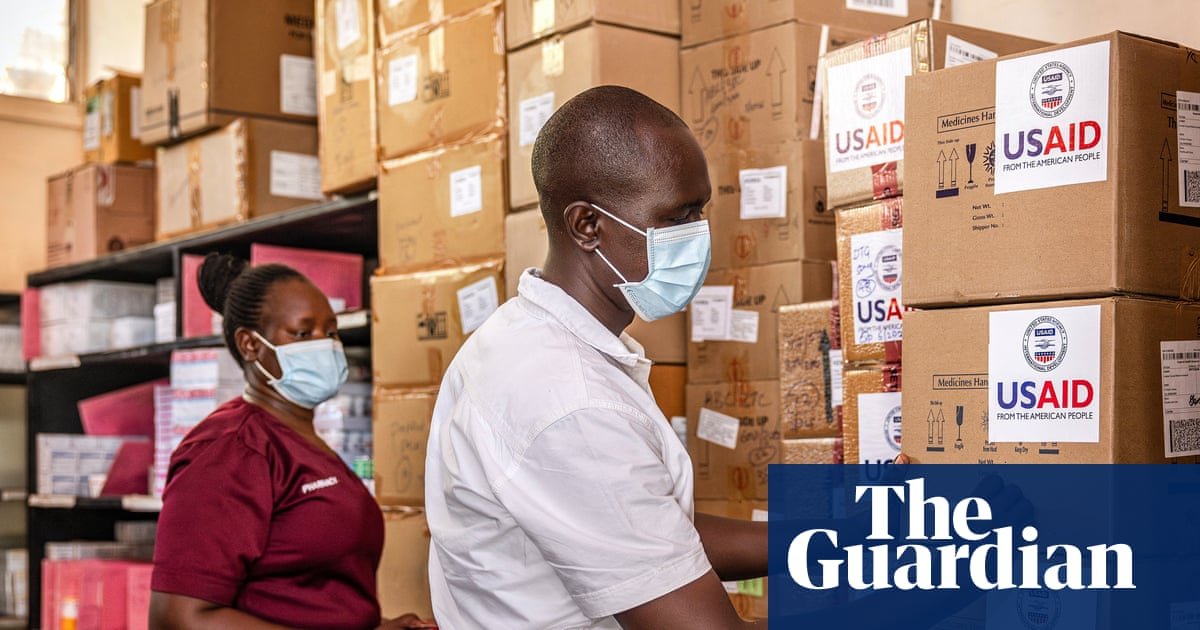
That account, published last week as Into the Wood Chipper – a phrase taken from a comment by Elon Musk on Doge cuts at the agency – details the early days of Doge’s foray into the US Agency for International Development (USAID), the freestanding federal agency established in 1961 by John F Kennedy as a strategic instrument of US foreign policy and a force for improving lives around the world.
Within days of taking office in January last year, Donald Trump issued a temporary pause on USAID funding. Two months later, a formal dissolution of the agency was announced. By July, with over 80% of programs canceled, it was officially merged into the state department and – in terms of the global development sector – an era had ended.
Last week, Devex reported that the state department had sent out a cable memo to US embassies to push host nations to sign a “trade over aid” declaration that explicitly rejects the US’s role as the top provider of humanitarian assistance in favor of business relationships that create opportunities for US companies.
“I wanted to let people know what happened and however bad they thought that it might be inside USAID when Doge came in to tear it apart, it was way worse – especially the incompetence, ignorance and cruelty that came along with it,” Enrich writes.
The account comes amid a debate over the US’s role in the world and stressed alliances, and acts as a memoir of an already-distant moment that the second Trump administration set the stage for its first 100 days in office with a Maga-pleasing upset of government norms that, in it own terms, were an effort to reduce “waste, fraud and abuse”.
“The 5200 contracts that are now cancelled spent tens of billions of dollars in ways that did not serve, (and in some cases even harmed), the core national interests of the United States,” the US secretary of state, Marco Rubio, wrote on X in March last year. The remaining 1,000 or so contracts would then be administered by the state department, he said.
Oxfam summed up the effects: “The effect of these cuts on people is dire: at least 23 million children stand to lose access to educationand as many as 95 million people would lose access to basic healthcarepotentially leading to more than 3 million preventable deaths per year,” the charity estimated.
But for a workforce of more than 10,000 people inside USAID, like Enrich, the efforts felt like a wrecking ball. “It looked like a group of unqualified people that came in to replace decades of expertise and tore down an agency,” he says.
But Enrich also addresses a broader topic: how to adjust to, or equally to resist, Trump’s style of government.
The book, he told the Guardian in an interview, “comes at a time when so many are wrestling with the idea of when is it no longer OK and when is it time to speak up. I wanted to share my story as an example so that normal people can make choices if they find themselves in that position.”
Enrich, an expert in drug-resistant tuberculosis who served as acting assistant administrator for global health, issued a memo in March 2025 that outlined the risks of freezing foreign aid, concluding it would have “severe domestic and global consequences”. Fewer than 30 minutes after it was published he was put on administrative leave.
In retrospect, he says, “I think I spent too long to try to implement the policies of the administration”. But as a career public servant, he and his colleagues weren’t well suited to resistance. “We’re not activists or advocates so it doesn’t come naturally to reach a point of saying, ‘Hey, wait a minute. This is not OK.’”
The dawning sense that the new bosses were acting out of reformist zeal, resentment or worse had come in a steps. Adam Korzeniewski, a veteran of the first Trump administration, Enrich writes, acted like a “vindictive landlord throwing a farewell party for a tenant”.
But Korzeniewski, the White House liaison to USAID, wanted to know about the risks associated with interruptions to tuberculosis clinical trials and suggested that agency officials draft a “Barney-style” set of slides to help the political leadership understand the dangers because it might be more likely to “catch their attention”.
Trump appointees also voiced concerns that the agency was providing abortions. “I didn’t know whether to laugh or cry,” Enrich says. “USAID didn’t provide abortions to anyone. In fact, we had strict legal prohibitions on that. But it was one of the concerns of Republican members of Congress.”
Enrich says that what came next was worse. “I started to recognize how often and critically administration officials were lying about what was happening inside USAID … like Elon Musk going to the White House to say Ebola activities had been restarted on the same day that his Doge team had canceled the contracts,” he says.
“At some point I realized that if I didn’t speak up from my position as a government official it was just going to be too late. This was not an attempt to realign foreign aid in a way that made sense, or make it more aligned with ‘America first’. This was a group of people who did not know what the agency did but really did not know or care what it was they were tearing apart.”
Some, Enrich says, were motivated by personal grievance. He writes that Mark Lloyd, who led USAID’s bureau for conflict prevention and stabilization, claimed that during the first Trump administration, when he was the agency’s religious freedom adviser, career staff had killed his dog.
“He was excited to get rid of USAID staff because he really considered them to be pet murderers,” Enrich claims.
The dismantling of USAID came five years after the Covid shock, during which the agency sent over $10bn in emergency funding for more than 120 countries that triggered its own set of long-lasting domestic political counter-reactions. Enrich believes the Trump administration’s USAID actions missed the lessons.
“Outbreaks that start abroad do not respect international borders, and USAID had invested hundreds of millions of dollars in early-warning systems to detect potential outbreaks of diseases in countries where they originate and to deal with them before they are able to spread,” he says. “But that was immediately torn down, leaving us blind to what might be developing.
“Our inability to detect outbreaks and prevent the next outbreak is a threat to national security but it’s not the only one. The way that they abruptly tore apart USAID created other national security threats,” Enrich adds, pointing to the suspension of drug trials to treat drug-resistant tuberculosis. “It’s another example of how the situation was made worse.”
Equally worrying, he points out, is that other donor nations mirrored US cuts to foreign development aid. “But my concern is that when we turn our backs on the world, and break the promises we made to millions of people, it erodes the soft power partnerships that the US had built over the years and drives them into partnerships with adversaries like Russia and China,” he says.
“It is politically naive to think that Kennedy’s plan was purely altruistic – it was designed to counter Soviet influence during the cold war. But the Trump administration’s ‘trade over aid’ transactional approach is naked and unproven. It’s not clear, either, that USAID could be restored under an administration with different foreign policy priorities.
“I believe that USAID can and should be instated, but that’s not to say that we can’t make changes. In the same way that we don’t ask if there should be a separate department of state or department of war – they are separate colors of foreign policy and so is development.
“To show the world that we have an agency that says ‘from the American people’ was the embodiment of American generosity and soft power,” Enrich says. “The folks who say it’s gone and can’t be brought back lack boldness and imagination.”
