
In Formula 1, time is everything. Not just the time ticking away on the stopwatch, but also the time needed to design, develop and refine. It is the invisible factor that separates success from failure. The teams are constantly racing against the clock: every detail is planned, every task is meticulously timed, and every margin for error is reduced to a minimum. Nothing is left to chance.
However, the cancellation of the Bahrain and Saudi Arabian Grands Prix has now created an unexpected window of opportunity; a full month’s break from races comparable to the winter break.
It’s an interruption which from the outside might seem like an opportunity to slow down, reorganise, perhaps even catch one’s breath. Autosport spent a day in Maranello, at the heart of Ferrari, to discover that the real picture is quite different.
The Prancing Horse’s headquarters is a hive of activity. There is no sign of a break, the pace remains relentless, the standards unchanged, as if the calendar had not been interrupted at all. The racing may have stopped, but the clock hasn’t. That’s why April has become a key opportunity for the technical departments of all the teams to dive even deeper into the data from the opening leg of the season.
“Having more time available has allowed us to delve deeper into our analysis,” Ferrari technical director Loic Serra tells Autosport. “Because you aren’t immediately faced with a new flood of data from the next race. You can afford to linger longer, to go into the details.”
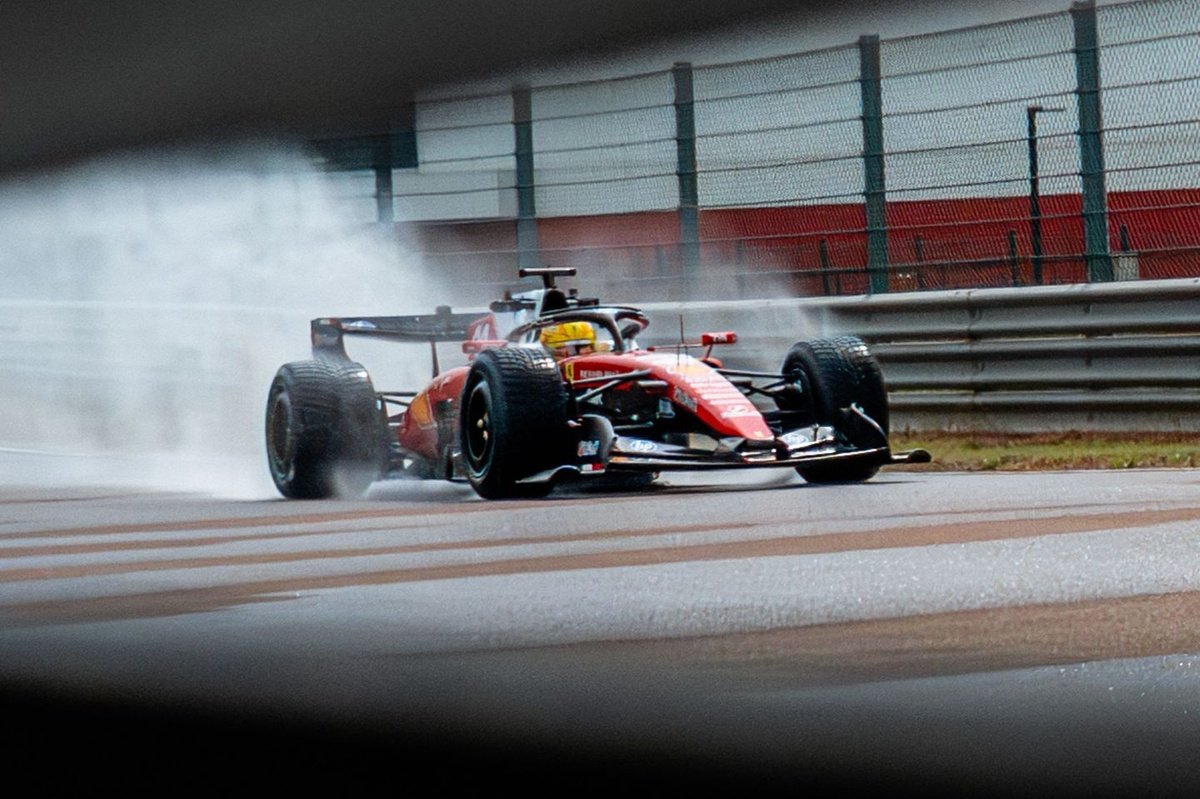
Between a Pirelli tyre test, a TPC test at Mugello and a filming day schedule for Monza, Ferrari already had plenty on its plate, but it has now been able to tackle those more efficiently.
“What break? There was no break at all,” says sporting director Diego Ioverno as he breaks into a smile. “We simply chose not to let it become one. We filled the weeks with activities that weren’t planned, or we distributed the ones that were already planned more effectively.”
Charles Leclerc, Ferrari
Photo by: Peter Fox / Getty Images
The ‘invisible’ world of F1 logistics
In Formula 1, logistics is a well-oiled machine that operates behind the scenes. As long as everything works, it remains invisible. But remove just one piece and its full complexity emerges. After pre-season testing, the pits in Bahrain were left untouched. The plan was to return and find everything ready for the race weekend. Today, however, that set-up is still there, suspended, awaiting shipment to a new location.
Each team has around seven garage set-up kits that are stored in hubs and shipped by sea to keep costs down. The two-week break scheduled between the Miami and Montreal Grands Prix is precisely due to the time needed to transport the equipment used in Florida to Canada. The breaks between certain races are never random: they are designed to allow that equipment to cross oceans and continents. Disrupting this flow means reworking the entire puzzle.
“Efficiency is crucial today,” explains Ioverno, “because even the transport of equipment is subject to the budget cap. Over the past few weeks, we’ve been trying to work out how to manage the rotation of equipment; we hope a route will open up soon to allow us to retrieve the kit that’s been stuck in Bahrain, as it’s due to be used at the Azerbaijan Grand Prix. But in any case, we need to be ready with a Plan B”.
Honing in on pitstops
While one part of the team is reworking routes and strategies, another continues to make inroads on improving Ferrari’s pitstops, with the team not having been able to practice as many reps as it wanted during 2026’s frantic off-season.
“Let me start by taking a step back,” explains Ioverno. “Fortunately, the results haven’t shown it, but we arrived at this year’s first race with fewer training sessions than in previous seasons. The testing season was too intense; we started testing in the week when we would typically be in our third week of training. In the two weeks prior, we worked day and night shifts, so we only managed a third of the pitstops we had planned.”
In recent seasons, teams have realised they can no longer rely on a permanent pitcrew. We’re talking about a group of 27 people, and as in all other areas, the expansion of the calendar has necessitated staff rotation. That’s crucial for staff wellbeing, but it also means more practice is needed for everyone involved to get up to speed and build the muscle memory of their respective position.

Ferrari SF-26: meccanici del Cavallino al lavoro instancabili
Foto di: Marcel van Dorst / EYE4images / NurPhoto via Getty Images
“There isn’t a single race where the pitstop crew is the same as the previous one, so this month’s unexpected break has been a godsend,” admits Ioverno. “We’ve been able to catch up on the sessions we weren’t able to do in January and February.”
Since the team returned from Suzuka, its pitstop crews have followed the same patterns every day. A practice session divided into three parts, with three different teams rotating through, which is a preview of what will happen in Miami, Canada, Monaco and Barcelona.
Not much of a break, indeed.
We want to hear from you!
Let us know what you would like to see from us in the future.
– The Autosport.com Team
