
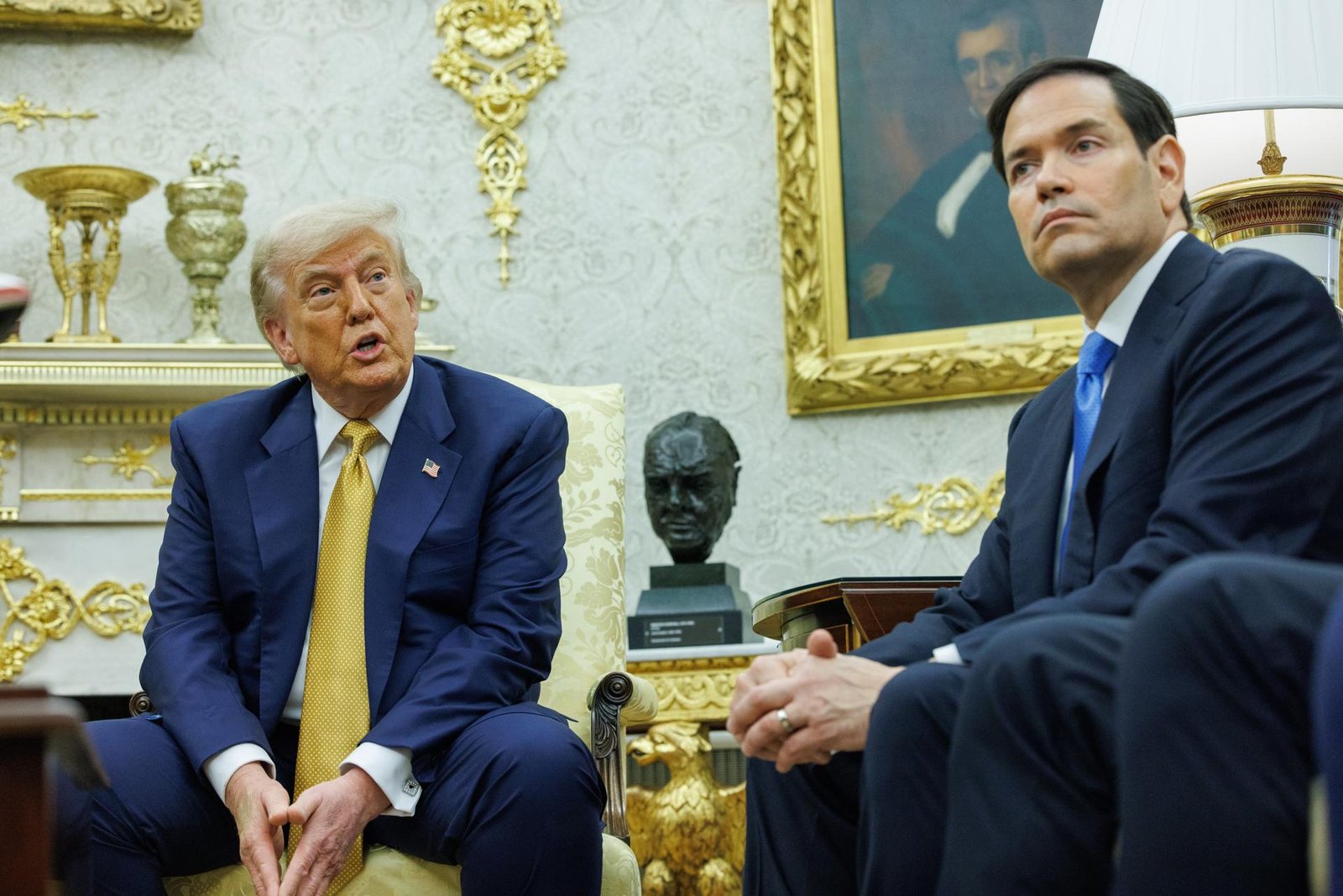
Since returning to the White House, President Donald Trump has launched a series of changes to the process for obtaining an American visa. He restricted travel from dozens of countries, increased the costs of issuing the document and even created a new category seeking to attract investors to the country, the Gold Card.
The most recent measure was announced this week, when the State Department suspended the granting of immigrant visas to citizens of 75 countries, including Brazil. According to the ministry, the decision was taken because immigrants from these nations are considered “likely to extract wealth from the American people” through social benefits.
This week’s announcement only affects the documentation process for those trying to stay in the country for a long time. Tourist visas follow the standard procedure, with no indication of changes or suspension so far.
In just one year of government, Trump announced several actions to restrict the entry of foreigners into the USA. In April, it imposed a deposit of up to US$15,000 for the issuance of some tourist and business visas.
Months later, in September, it announced the charge of US$100,000 (around R$530,000) for granting the H-1B visa, aimed at qualified foreign workers. In November, the State Department shared new guidelines for U.S. embassy and consulate employees around the world to limit visa granting.
The new instruction determines that consular representatives must consider a series of applicants’ details before granting documentation. This specific assessment involves age, health, family situation, financial situation, educational background, qualifications and any previous use of public healthcare, regardless of country of origin.
In December, the government launched a portal for requesting the so-called Gold Card (Golden Card, in Portuguese), document that grants resident status and requires payment of US$1 million. The initiative aims to attract foreigners willing to invest large amounts in exchange for privileges similar to those enjoyed by permanent residents in the USA.
Trump reinforces domestic policy aimed at combating illegal immigration
Ingrid Domingues-McConville, an immigration lawyer in the US for over 28 years, told People’s Gazette that, in this second term, Donald Trump adopted a firmer line in applying the law and clearer in the distinction between legal immigration and irregular immigration.
“The government reinforced border control and inspection mechanisms as a way of restoring immigration order, at the same time that Trump reaffirmed his support for legal immigration, especially that based on merit, investment and concrete economic contribution to the USA”, he stated.
Within this logic, according to her, there was a strengthening of programs aimed at investors and profiles with high economic impact, such as the Gold Card and initiatives aimed at foreigners with high financial capacity or proven potential for job creation.
“At the same time, the government began to more rigorously review work visas such as the H-1B, including the imposition of significantly higher fees, with the declared objective of reducing excessive demand and restricting the program to professionals considered strategically essential for the American economy”, pointed out Domingues-McConville.
As a result, countries like Brazil began to be subjected to more careful analyses, under the argument of protecting the migration system, preventing abuses and reducing the risk of dependence on public benefits. For the lawyer, “the Trump administration’s central guideline remains clear: legal immigration continues to be welcome, as long as it is aligned with the national interest and the rules of the US immigration system.”
The main impacts of visa suspension for Brazil
According to Immigration lawyer Ingrid Domingues-McConville, the impact for Brazilians is mainly concentrated on immigrant visas based on professional merit, such as the EB-2 NIW, the EB-1, the EB-3, in addition to some family immigration processes.
“What occurred was an administrative pause in the final issuance of these visas, determined by the State Department, to allow for a more in-depth analysis of cases under criteria of economic risk and possible dependence on public benefits,” he explained.
According to the specialist in visa processes,
Citizenship and Immigration Services (USCIS) “continues to operate normally”, processes continue to be analyzed, petitions continue to be approved and interviews remain scheduled at consulates. “What is temporarily suspended is only the final issuance of the visa after the interview”, he clarified.
There is no reason for panic or chaos, says the jurist, citing previous suspensions of these migration services. “Similar administrative pauses have occurred in the recent past, including last year, when there was a one-off interruption related to student visas. On that occasion, after a short period of internal review, the system was normalized and issuances resumed.”
Domingues-McConville points out that, to date, there is no indication that tourist, student, exchange or non-immigrant investment visas, such as L-1, 0-1 or E-2, will be affected. “Nor are there any concrete signs of new restrictions on tourism in the US.”
