
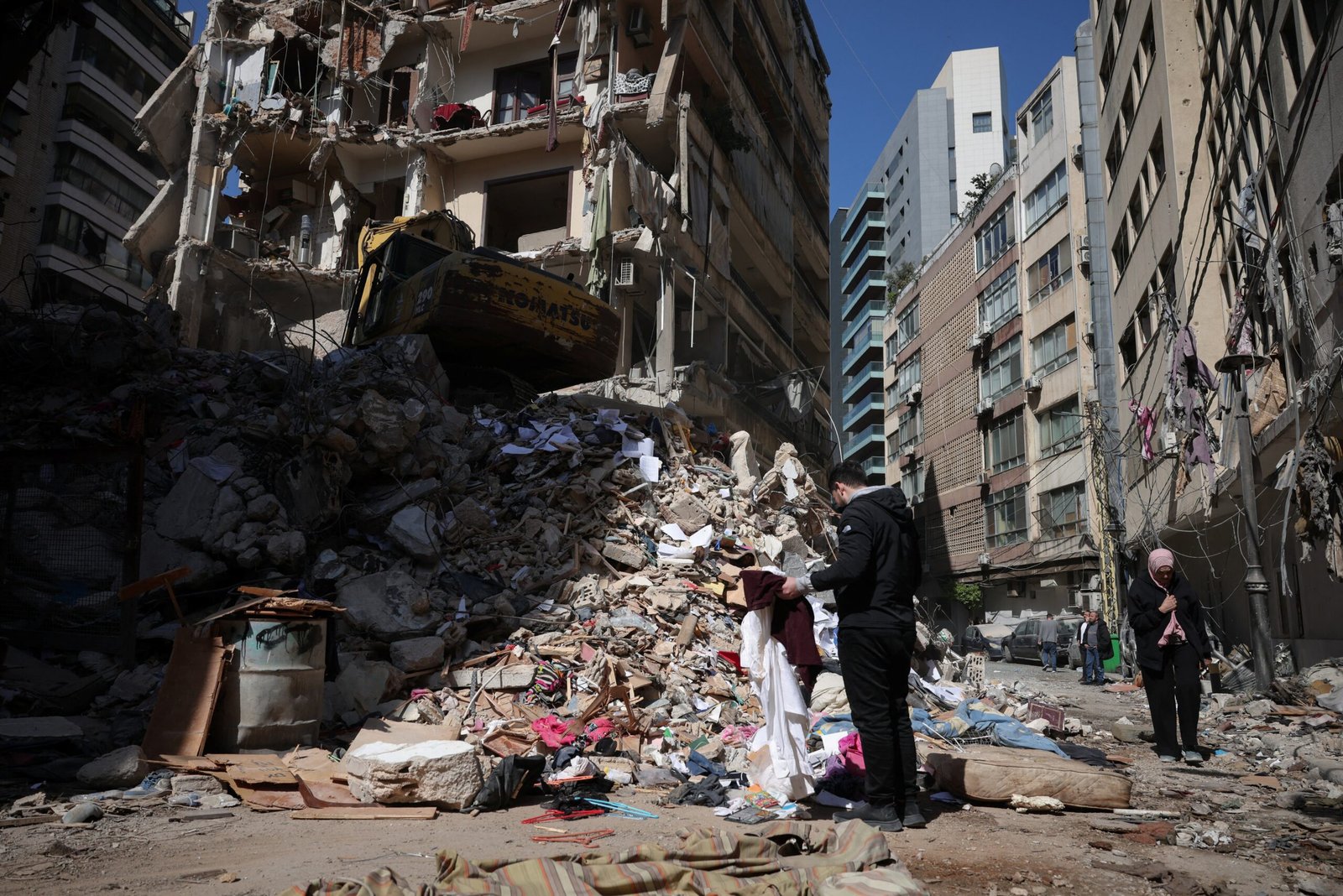
Lebanon accuses Israel of violating ceasefire hours after it came into force Many Lebanese have been returning to their homes since Friday (17), one day after the announcement of a 10-day ceasefire in the conflicts between Israel and the extremist group Hezbollah. But not all of them. Some remain unsure about the effectiveness of this truce. “We don’t intend to return home before these 10 days. And many Brazilian women are not actually going to return, they are just going to check the house, maybe clean and then return to the shelters, because the insecurity in this ceasefire is total. We are not trusting in this ceasefire”, says Romilda, a Brazilian who has lived in Lebanon with her family for over 20 years. ✅ Follow the g1 international news channel on WhatsApp LIVE: Follow the latest news from the war Romilda is one of more than 1.2 million people — around a fifth of the population — who have had to leave their homes in Lebanon since the resumption of the conflict between Israel and Hezbollah, according to the United Nations (UN). She lived in Haret Hreik, a suburb in the south of Beirut, on March 2, when Israel attacked Lebanon again. She, her husband and children had to flee in a hurry and, since then, they have been staying in a building provided for refugees near the center of the capital. She says she intends to return to her house this Saturday (18), but only temporarily to clean and check on her condition. “I’m still scared of going back permanently,” he explains. Romilda with her family Personal collection The Lebanese Army accused Israel this Friday (17) of violating the ceasefire and attacking villages in the south of the country, which was also reported by the Lebanese state agency. In a statement on Thursday night (16), the Lebanese Army asked residents to avoid returning to the affected areas, even after the ceasefire. “The Army command renews its appeal for the population to wait before returning to the southern towns and cities, given a series of violations of the agreement. Several Israeli attacks were recorded, in addition to sporadic bombings that hit some locations,” the Lebanese Army reported on Thursday (16), after the start of the ceasefire. The Israeli Army made recommendations along the same lines. The organization reported that it maintains troops in the south of the country and advised residents not to travel to regions south of the Litani River, an area of approximately 30 km that runs to the border with Israel (see below). Litani River, in southern Lebanon g1/Thalita Ferraz Israel has been carrying out a ground operation in southern Lebanon since the beginning of March against the terrorist group Hezbollah. Israeli troops demolished bridges over the Litani River and said they would take control of the region. For Lebanese authorities, this is an invasion of Lebanese territory and disrespect for the country’s sovereignty. Uncertainties in Israel’s ceasefire in Lebanon Understand the 10-day ceasefire between Israel and Lebanon The President of the United States, Donald Trump, announced this Thursday (16) that Israel and Lebanon have agreed to a ten-day ceasefire. The truce, Trump said, includes Hezbollah. ➡️ Israel has been attacking Lebanon in the wake of the war in the Middle East. According to the Israeli army, the target is Hezbollah, which is financed by Iran and has once again attacked northern Israel. The Lebanese Army was not directly involved in the conflict. The agreement announced on Thursday (16) already faced uncertainty even before it came into force. Hezbollah made compliance conditional on stopping Israeli attacks, while Prime Minister Benjamin Netanyahu stated that the pact did not provide for the withdrawal of troops from southern Lebanon. On Friday (17), Trump said he had banned the Israeli government from carrying out further attacks on Lebanon. “Israel will no longer bomb Lebanon. They are FORBIDDEN from doing so by the USA. Enough!”, wrote the American on his social network Truth Social. A man stands next to the rubble of a building after an Israeli attack in the Ain Al Mraiseh neighborhood, in Beirut, Lebanon, on April 8, 2026. REUTERS/Louisa Gouliamaki
Source link
‘I’m afraid to go home’: Brazilian woman in Lebanon reports climate of insecurity with ceasefire
11
