
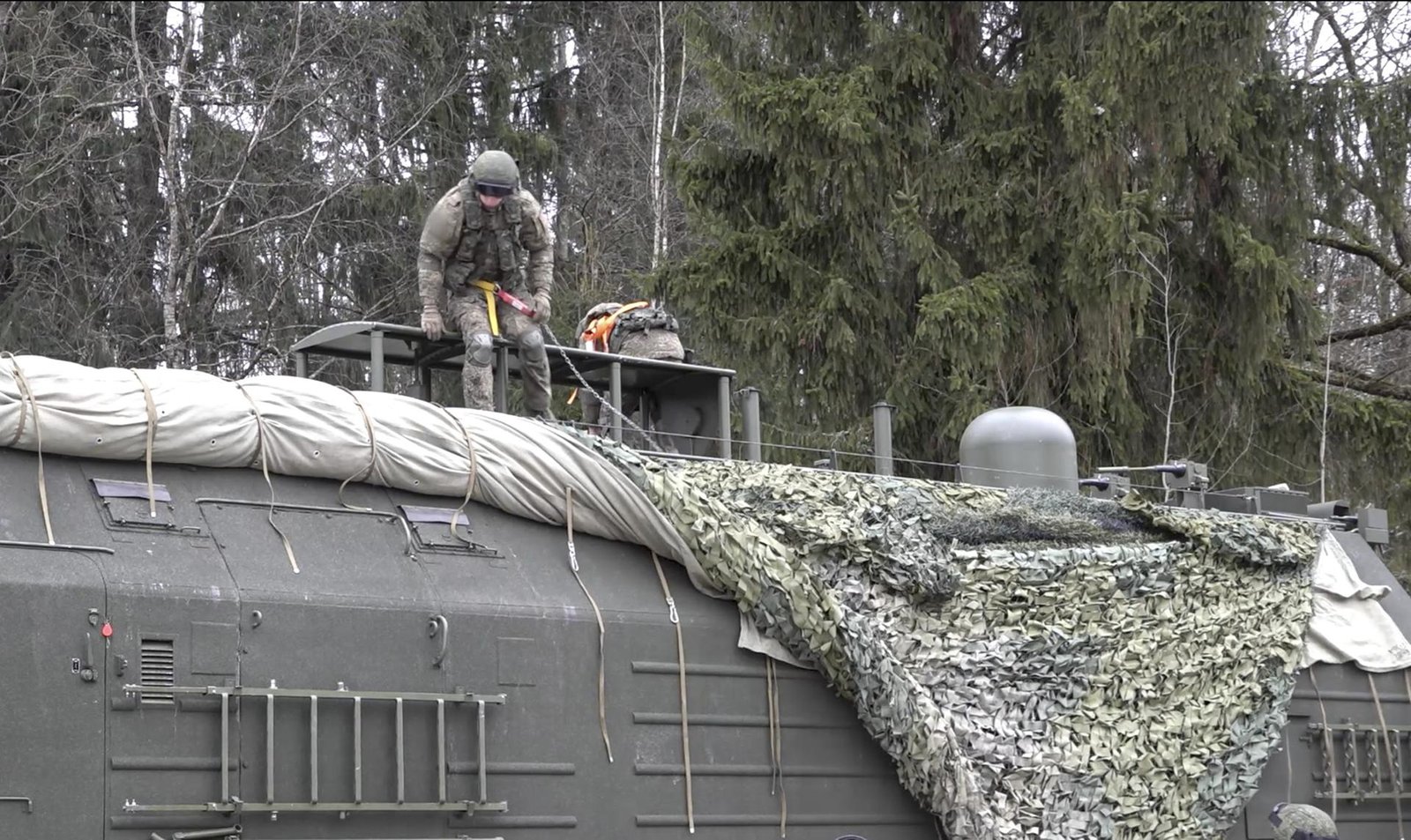
The Russian Ministry of Defense reported this Friday (9) that it used the Oreshnik hypersonic ballistic missile in the attacks it carried out last night in Ukraine.
In a note, the ministry claimed that the action was a “response” to what it called a “terrorist attack” by Kiev on the residence of dictator Vladimir Putin in the Russian region of Novgorod, on December 29, which was denied by Ukraine.
According to information from the EFE agency, the first information from the Ukrainian authorities and military indicates that the Oreshnik would have been used to target energy infrastructures in the Lviv region, on the border with Poland.
The missile, which can carry nuclear or conventional warheads, had already been used by Russia to target a military equipment factory in the Dnipro region in November 2024.
According to CNN, US War Department officials stated that the Oreshnik would be an intermediate-range ballistic missile, with its use to date indicating a range of 965 to 1,600 kilometers.
A feature of the Oreshnik is that it can launch multiple separate warheads, which can be directed to specific objectives, providing a greater attack from a single missile.
“It appears that at this point Russia is using the Oreshnik for warning purposes, so destruction is not necessarily the goal,” Pavel Podvig, director of the Russian Nuclear Forces Project research group, told Reuters.
“It’s probably a general warning of determination to escalate the conflict. My guess is it will be interpreted that way by the West,” he added.
In a post on X, Ukrainian Foreign Minister Andrii Sybiha said that “an attack like this, near the border with the European Union and NATO, represents a serious threat to the security of the European continent and a test for the transatlantic community.”
He called for “firm responses to Russia’s reckless actions” and said Ukraine would inform the United States, European partners and international organizations about the details of the attack through diplomatic channels.
“It is absurd that Russia tries to justify this bombing with the false ‘attack on Putin’s residence’, which never took place. Further proof that Moscow does not need real reasons for its terror and war”, accused Sybiha.
“Putin uses an intermediate-range ballistic missile (IRBM) near the border with the EU and NATO in response to his own hallucinations — this is, in fact, a global threat. And it demands global responses,” argued the minister.
The Latvian government said it will request an urgent meeting of the UN Security Council in light of Russia’s most recent attacks on Ukraine and the use of Oreshnik.
