
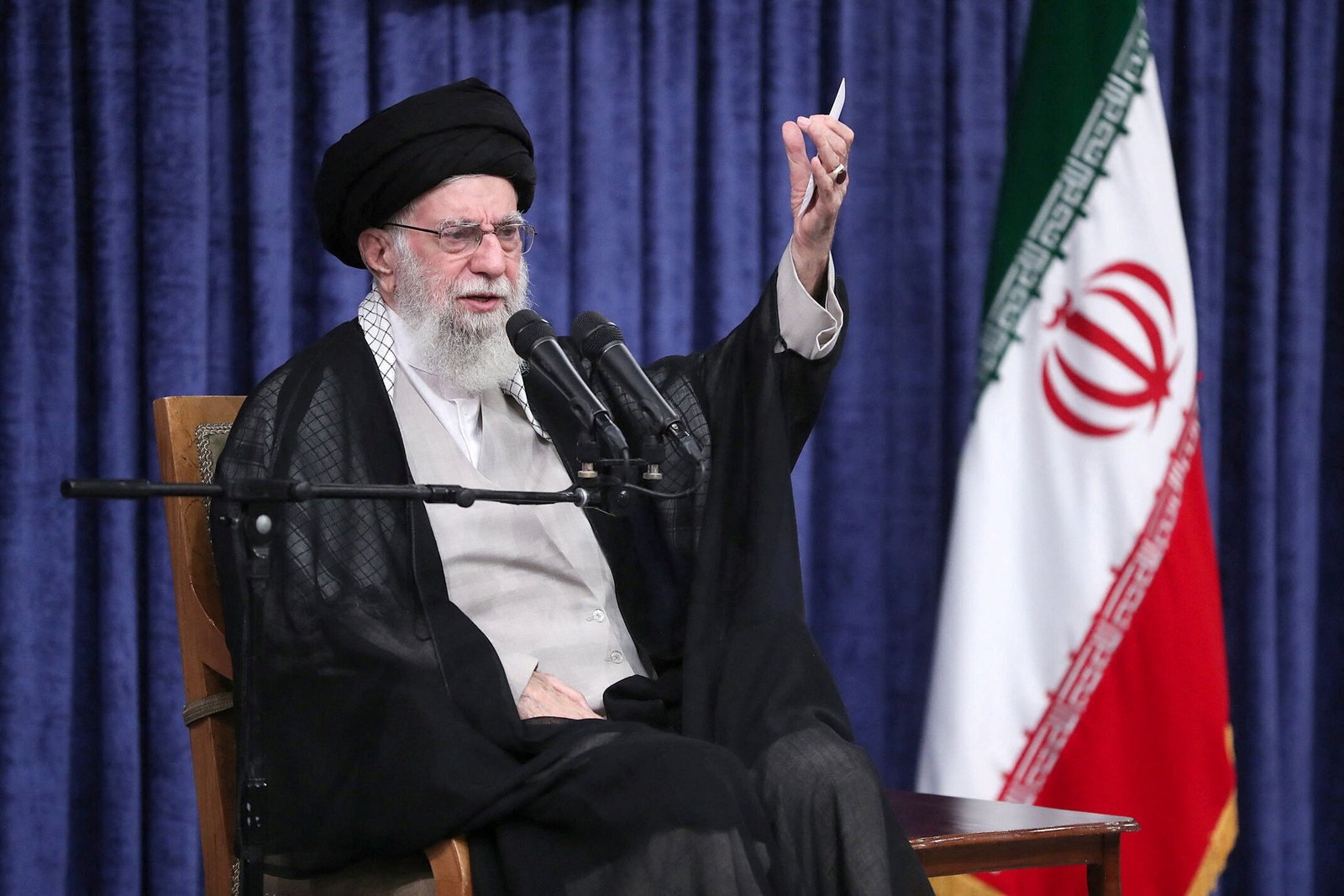
Protests in Iran are already considered the largest in recent years against the country’s regime Since the beginning of widespread protests against the regime of Ayatollah Ali Khamenei in Iran, in the last days of 2025, the movement has expanded in both scale and violence — becoming the newest crisis for the government in Tehran and even involving the USA. ✅ Follow the g1 international news channel on WhatsApp Khamenei said on Friday (9) that his government “will not back down” in the face of widespread protests, which have escalated in proportion and violence in recent days. In a statement broadcast on state TV, the Iranian supreme leader called the protesters “vandals” and “saboteurs”. “Last night in Tehran, a group of vandals and hoodlums came and destroyed a building that belonged to the state, to the people themselves, just to please the president of the United States,” Khamenei said. He accused the protesters “of destroying their own streets to please the president of another country”, in reference to Trump. The Iranian leader told the American leader to “take care of his own country”. Understand the main points of the current crisis in Iran below: Motivations The protests broke out at the end of December in Tehran and were motivated by an economic crisis — the country’s currency, the rial, lost half of its value against the dollar last year and inflation exceeded 40% in December — however, as the days went by and with police repression, the protesters began to demand Khamenei’s resignation. Size The demonstrations have become the largest demonstrations against the Iranian government since 2009 and protests have already been recorded in 25 of Iran’s 31 provinces, according to a count by the AFP news agency. Deaths To date, the protests have left more than 60 people dead, including members of the security forces, according to counts from human rights organizations operating in Iran. The real number of victims could be even higher because there are limitations on the amount of information that leaves the country. Trump’s warning The protests also generated a new escalation in already compromised tensions between the US and Iran. Trump said he will not tolerate the deaths of protesters by the Khamenei regime and said he will “hit the country very hard” if that happens. This Friday, the Iranian leader called the US president “arrogant” and said that his hands “are stained with the blood of more than a thousand Iranians”, in reference to the bombings carried out against nuclear installations in 2025. Internet cuts On Thursday, the protests gained a new proportion after Khamenei ordered a blackout of the internet and telephone network to try to contain the protesters (read more below). Wednesday was considered the “bloodiest day” of the protests to date, with the deaths of 13 protesters. What’s behind the crisis Ayatollah Ali Khamenei, Supreme Leader of Iran. Office of the Supreme Leader of Iran/Wana via Reuters Iran has been facing economic difficulties for years, mainly impacted by the reimposition of sanctions by the United States. The measure was adopted in 2018, when President Donald Trump left an international agreement on the Iranian nuclear program made by his predecessor, Barack Obama. Upon returning to the White House in January 2025, Trump resumed a policy of maximum pressure against Iran. In September, sanctions were also imposed by the United Nations, leading the Iranian government to hold meetings to try to avoid an economic collapse. The situation was also aggravated by the conflict between Iran and Israel in June. At the time, Israeli and US forces carried out attacks against targets linked to Iran’s nuclear program. Amid this scenario, the population began to face high inflation, above 40% per year. Discontent also grew in the face of inequality between ordinary citizens and the country’s elite, in addition to allegations of corruption in the government. On Monday (5), the president of the Central Bank of Iran resigned from his position. Iranian media have claimed that recent economic liberalization policies have put pressure on the local currency, leading to rapid devaluation. In 2025 alone, the Iranian rial lost about half its value against the dollar and reached an all-time low this month. The economic context adds to internal political tensions. Since the Islamic Revolution of 1979, Iran has been a “theocratic republic” — in practice, a dictatorial regime in which the highest authority is the supreme leader, Ayatollah Ali Khamenei. He has been in power since 1989. The regime is criticized for human rights violations and restrictions on social freedoms, especially among younger people, who have led several protests in recent years. Repression and Trump’s speech Protesters marched in the center of Tehran, Iran, against the economic situation of the country Fars via AP Iran intensified the repression against protesters against the regime this Thursday (8), at a time when the wave of protests reaches its 12th day in the country. Also this Thursday, US President Donald Trump mentioned the situation in the Asian country. “I’ve made it clear to them that if they start killing people — which they tend to do during their riots, they have a lot of riots — if they do that, we’re going to hit them very hard,” the US president said during an interview with conservative radio host Hugh Hewitt. Images published on the social network X show large demonstrations in the streets (see below). Initial plugin text According to videos, whose authenticity was verified by AFP, the protesters chanted slogans such as “it is the final battle, Pahlavi will return”, in reference to the dynasty overthrown by the 1979 Islamic Revolution, or “Seyyed Ali will be removed”, in reference to supreme leader Ali Khamenei. Iran is “currently subject to a nationwide internet outage,” cybersecurity watchdog Netblocks said, based on real-time data. The president of Iran, Masoud Pezeshkian, once again called for “maximum moderation” in the face of protesters, as well as “dialogue” and listening to “the people’s demands.” Bloody Wednesday The number of people killed in the protests is not yet known. According to the NGO Iran Human Rights (IHR), based in Norway, at least 45 protesters, including eight minors, died in the acts. Wednesday (7) was the bloodiest day of the crisis, with 13 deaths, according to this organization, which also indicated that “hundreds” of people were injured and that more than 2,000 were detained. The demonstrations are the biggest in Iran since those that took place after the death of young Mahsa Amini, who was arrested in 2022 for violating strict dress codes for women.
Source link
Calls for Khamenei to resign, repression and deaths: understand the crisis in Iran, which is experiencing the biggest wave of protests since 2009
28
