
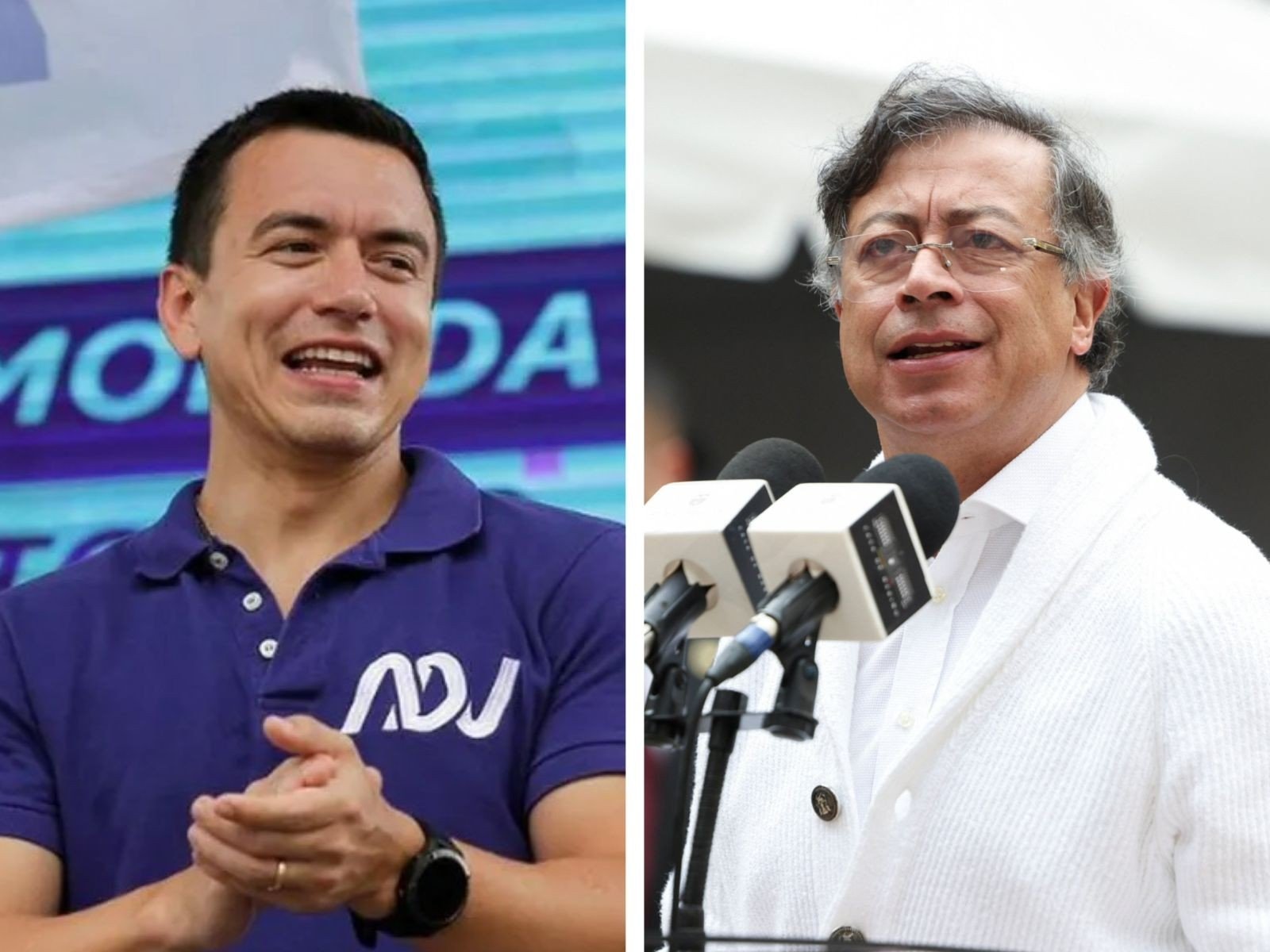
Understand the tensions between Colombia and Ecuador The president of Ecuador, Daniel Noboa, accused this Wednesday (29) the president of Colombia, Gustavo Petro, of encouraging the entry of guerrillas across the border between the two countries. The declaration increases tension amid a diplomatic and commercial crisis between Quito and Bogotá. ✅ Follow the g1 international news channel on WhatsApp According to Noboa, intelligence information would indicate that armed groups had crossed the northern border with support from the Colombian government. He did not present evidence or detail when or where the episode occurred. “Several sources informed us about an incursion across the northern border by Colombian guerrillas, driven by Petro’s government. We will protect our border and our population,” wrote Noboa on the social network X. Petro also responded on the platform and denied the accusation. “Go to the northern border and meet me there so we can build peace in these territories. Stop believing in lies,” he said. The exchange of statements is the latest chapter in a conflict that has been dragging on since February. At the time, Noboa criticized what he called Colombia’s lack of cooperation in combating drug trafficking and crime in the border region. In recent days, the conflict has escalated. Petro accused Noboa of interfering in Colombian politics to favor right-wing sectors ahead of the May 31 presidential elections. He also stated that explosives used in an attack on Saturday (25), which left 21 civilians dead, had come from Ecuador. The attack was claimed by dissidents from the former Revolutionary Armed Forces of Colombia (FARC), who said the explosion occurred during a confrontation with the Army and classified the episode as a “tactical error”. Noboa countered the criticism. “Dedicate yourself to improving the lives of your people instead of wanting to export problems to neighboring countries,” he wrote. The crisis occurs in a context of insecurity on the border of around 600 kilometers between the two countries, where groups linked to drug trafficking, human trafficking, illegal mining and smuggling operate. Despite the hard-line policy adopted by Ecuador, violence remains high. The country recorded 51 homicides per 100,000 inhabitants in 2025, one of the highest rates in the region. In an interview with AFP, Ecuadorian Interior Minister John Reimberg attributed the crisis to failures in the judicial system, previous governments and Colombia’s actions. “We have a neighboring country that is not working on the border,” he said. The tension also reached commerce. Ecuador raised the tax on Colombian products to 100%, and Colombia responded with a similar measure. The two governments also recalled their ambassadors for consultations. Daniel Noboa and Gustavo Petro, presidents of Ecuador and Colombia Montage g1/Reuters/Reproduction Tensions in March Tensions between the two countries grew after Ecuador began a recent military offensive against drug trafficking, with support from the United States and the mobilization of thousands of soldiers. In March, Petro suggested that Ecuador had conducted a bombing raid on Colombian territory, close to the border between the two countries. According to him, an unexploded bomb was found near the house of a rural family. According to Petro, bombs fell near the homes of families who replaced coca crops with legal products, such as coffee and cocoa. The president even released a photo of the chocolates produced by these communities. At the time, Noboa denied that he had ordered a bombing against Colombia. On a social network, he stated that the country is carrying out attacks against criminal groups, but only within its own territory. The Ecuadorian president also accused Colombia of failing to control the border, allowing criminal groups to enter the country. Tensions between Colombia and Ecuador Alberto Correa/Arte g1 VIDEOS: most watched on g1
Source link
Ecuador and Colombia exchange accusations about an alleged guerrilla invasion and increase tension on the border
11
