
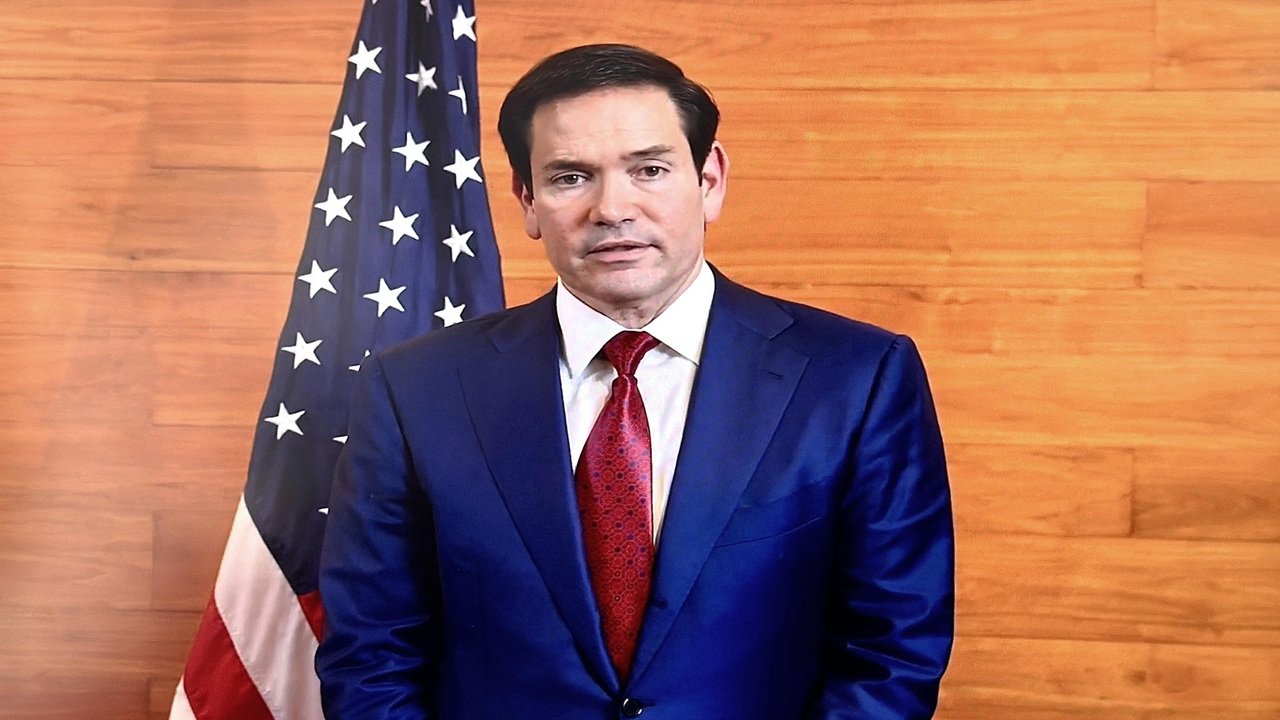
The United States government understands that Venezuela is not yet ready to hold free and fair elections, as the country remains in a transition and stabilization phase that, in Washington’s assessment, has not yet created the necessary political and civil conditions for an election with broad and legitimate participation, according to statements by US Secretary of State, Marco Rubio, to the press this Wednesday (24) during the Caribbean Community (Caricom) summit in Saint Kitts and Nevis.
When asked about a possible electoral schedule for Venezuela, Rubio stated that the White House does not intend to establish an “artificial deadline” for an election and highlighted the current obstacles.
“It is difficult to hold elections in which many of the people who want to participate are in prison or still abroad,” declared the secretary.
According to Rubio, Venezuela has been experiencing a phase of stabilization since the capture of Nicolás Maduro in January. The secretary stated that, contrary to what many predicted, the country did not descend into chaos. “We didn’t see mass migration, we didn’t see civil war, we didn’t see violence,” he declared. For him, this scenario represents a positive sign, but still insufficient to characterize institutional normality. Rubio highlighted that the country is still in transition and warned that the process needs to continue moving forward.
“The trend is good, but it needs to be sustained. This is still a recovery process”, he recalled.
The secretary highlighted that elections require concrete political conditions. “For there to be elections, a series of factors are necessary. There need to be political parties formed. There need to be political movements. There needs to be a media environment that allows people to campaign and publicize their ideas,” he said. He added that it is also necessary that there are “candidates who can compete”.
“Many of the people who were in prison were there because they were candidates or because they supported candidates or because they were involved in politics,” said Rubio, arguing that the reconstruction of a “real civil and political society” is a prerequisite for a legitimate electoral process.
Rubio cited as positive measures underway in Venezuela the release of political prisoners, the closure of the El Helicoide prison, a Chavista torture center, and the approval of the amnesty law by the Venezuelan National Assembly, the country’s Parliament. For the secretary, these initiatives represent concrete signs of institutional change, albeit limited. “They are not sufficient, but they are positive”, he stated, maintaining that these measures begin to establish minimum conditions for the reorganization of political and civil life in Venezuela.
This Thursday (26), in Caracas, Chavista deputy Jorge Arreaza reported that 217 people were released in the first week after the promulgation of the Amnesty Law. According to him, 4,151 people benefited in total, 217 of whom were in prison and 3,934 who were serving precautionary measures. Arreaza also stated that 7,461 amnesty requests were presented and that the process is ongoing.
The NGO Foro Penal, which works to defend political prisoners, reported 109 releases since last week and estimates that more than 600 people are still imprisoned for political reasons. The Venezuelan regime denies the existence of political prisoners and claims that those detained committed common crimes.
