
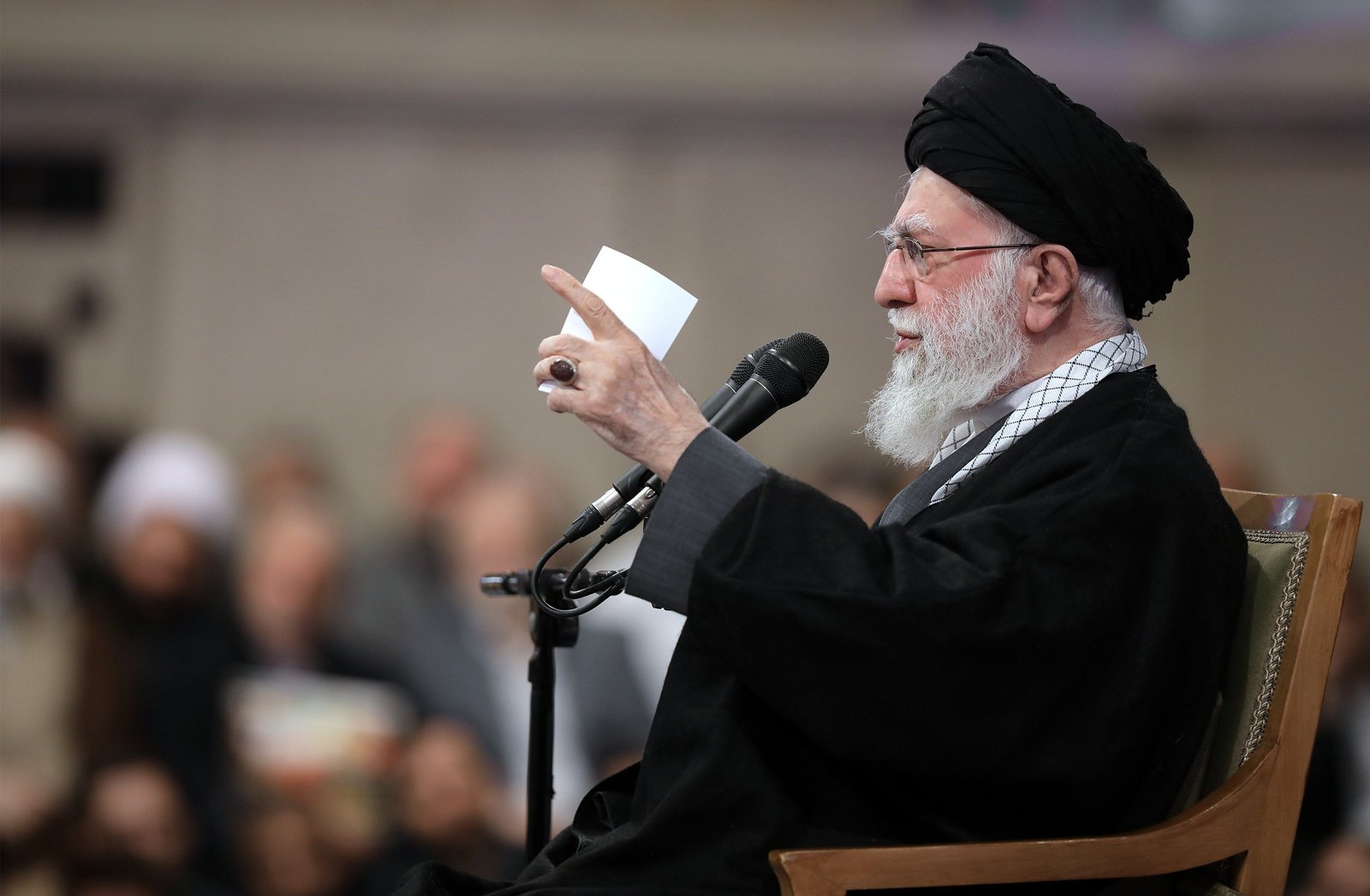
Ali Khamenei Office of Iran’s Supreme Leader via AP Iran’s Supreme Leader Ali Khamenei, a skilled strategist who never hesitated to resort to repression, overcame countless crises at the helm of the Islamic Republic’s theocratic system, but now faces unprecedented opposition. The 86-year-old has ruled Iran since assuming power for life in 1989, succeeding its founder, Ayatollah Ruhollah Khomeini. During this period, he brutally repressed a series of protests, such as the student mobilization of 1999, the mass demonstrations triggered in 2009 by controversial presidential elections and a wave of protests in 2019. Khamenei, who always wears the black “sayyid” turban — used for men who are descendants of the Prophet Muhammad —, became even better known after he harshly stifled the “Woman, Life, Freedom” movement. Understand how the feared ‘morality police’ act in Iran This wave of protests in 2022-2023 was triggered by the death in custody of Mahsa Amini (see image of her below), detained for allegedly violating the strict dress code imposed on women. READ MORE: Iran’s regime is in its ‘last days’, says German chancellor Trump says he was informed that ‘killing’ in Iran has ‘stopped Why protests in Iran are the biggest test for the regime since 1979 and make the next few days decisive Iranian newspaper with Mahsa Amini on the cover Majid Asgaripour/Reuters The supreme leader had to go into hiding during the 12-day war in June, provoked by an unprecedented attack by Israel, his arch-enemy, which revealed the deep penetration of Israeli intelligence services into Iranian structures. But he survived the war. And, faced with the new wave of protests shaking the country, he appeared in public on Friday to deliver an aggressive speech in which he called the protesters a “bunch of vandals” supported by the United States and Israel. “Everyone knows that the Islamic Republic came to power with the blood of hundreds of thousands of honorable people; it will not give in to saboteurs,” he added. Although he may have managed to somewhat stifle the current mobilization with a repression that, according to human rights defenders, left thousands dead, analysts indicate that his grip on power now appears more fragile. Death toll in Iran protests rises to over 3,400, says NGO ‘Public discontent’ Under Khamenei’s rule, “the system faced repeated popular challenges, crushing them repeatedly and maintaining governance as mediocre as before,” the International Crisis Group said in a report published on Wednesday. “This approach bought him time, but success, measured only in terms of coercive power, gave leaders little incentive to address the grievances that are at the root of public discontent,” the think tank added. In a context of constant threat of Israeli or American attacks, the supreme leader, known for leading a simple life without luxuries, is under high protection. His relatively infrequent public appearances are never announced in advance or broadcast live. He has never left the country since taking power, just like Ayatollah Khomeini, who returned to Iran from France during the 1979 Islamic Revolution. Ali Khamenei took power after Ayatollah Khomeini’s death in 1989. Getty Images via BBC Activism Khamenei was born into a poor family in the country. His political activism against the US-backed Shah Reza Pahlavi resulted in him spending much of the 1960s and 1970s in prison. His loyalty to Ayatollah Khomeini was rewarded in 1980 when he was assigned the important task of leading Friday prayers in Tehran. Elected president a year later, following the assassination of Mohammad Ali Rajai, he was initially not considered the natural successor to his mentor. However, shortly before dying, the ruler removed his favorite, Ayatollah Hossein Montazeri, who had denounced the mass executions of members of the People’s Mujahideen group and other dissidents. The People’s Mujahideen were allies of the Revolution, but are currently banned in the country. Rajai’s murder is attributed to this organization. Following his predecessor’s death, Khamenei initially refused his designation as leader by the Assembly of Experts – the Islamic Republic’s highest clerical body – before clergy rose up to validate his appointment. Since then, its grip on power has never lessened and perpetuates the system’s radical ideology, including confrontation with the United States and refusal to recognize the existence of Israel.
Source link
Who is Ali Khamenei, the ruthless supreme leader facing his greatest challenge in Iran?
66
