
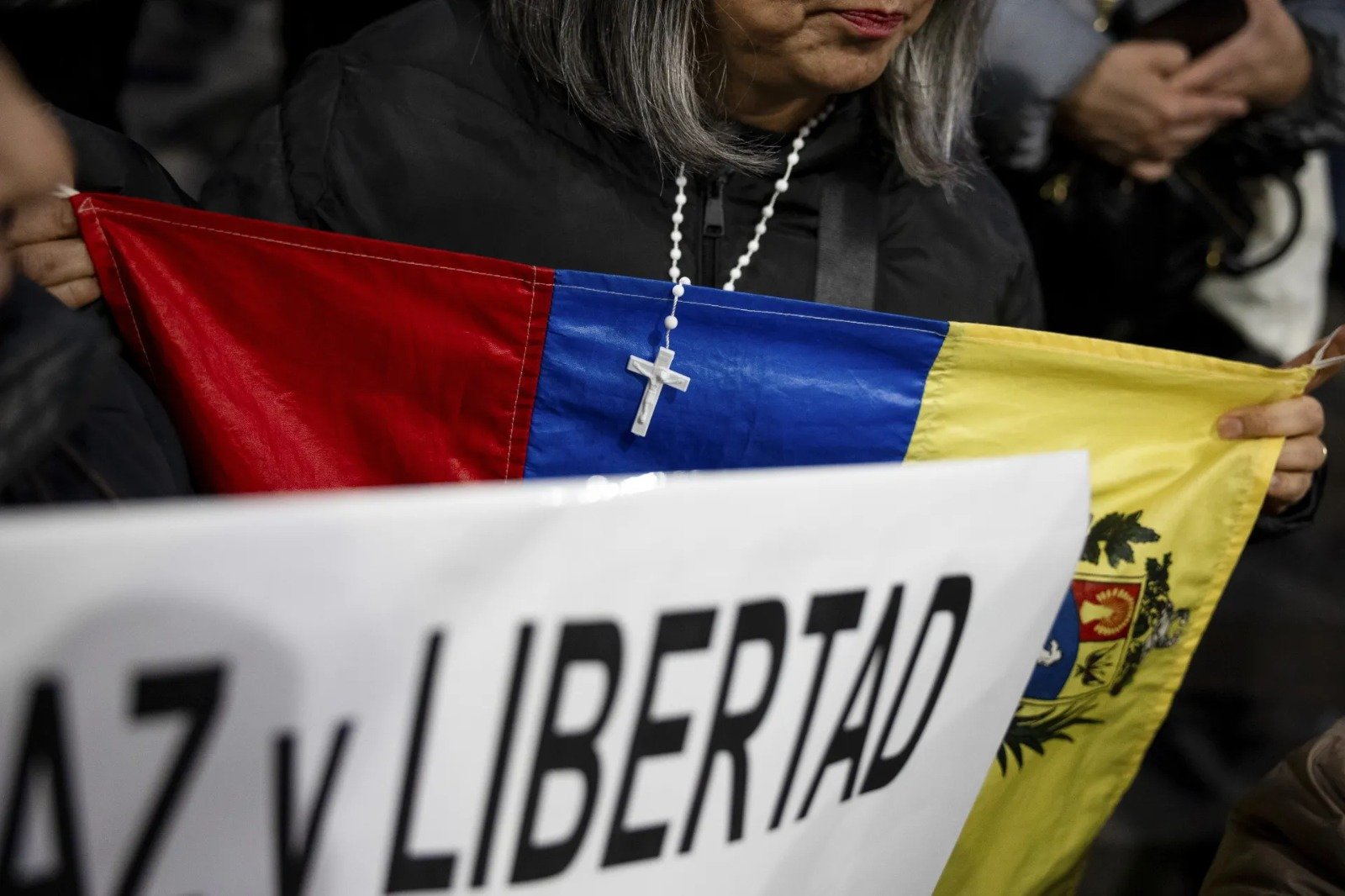
The confirmation of the capture of Nicolás Maduro by Donald Trump’s government in the early hours of this Saturday (3) sparked demonstrations and celebrations among Venezuelans living in different parts of the world, such as Chile, Argentina, Peru, Brazil, the United States and in European countries.
In different parts of the planet, groups gather in squares and avenues to celebrate what they consider “the end of a cycle marked by authoritarianism, economic crisis and political repression in Venezuela”.
With Venezuelan flags, chants of “freedom” and slogans against the regime, the events have brought together entire families and members of the diaspora who have left the country in recent years. It is worth noting that at least eight million Venezuelans left the country to escape the Maduro regime in the last decade.
For many, the news of the dictator’s capture represented concrete hope for political change and the possibility of returning to their country of origin after decades of instability.
Reports from participants indicate a collective feeling of relief and excitement. Some protesters made symbolic gestures, such as kissing the national flag and displaying old Venezuelan currency notes, in reference to the economic crisis that has driven millions into exile. Maduro’s capture was described as a historic milestone by those who classify the former government as a “dictatorship responsible for the country’s institutional collapse”.
For analysts of international conflicts, the mobilization around the world reflects the international impact of the events in Venezuela, especially in countries that have welcomed large Venezuelan migratory flows, which are home to Venezuelan communities outside the country, strongly affected by political decisions in Caracas over the last few years.
Maduro’s capture was also celebrated in Brazil by Venezuelans living in the country, especially in Campo Grande (MS), where refugees gathered in front of the Casa de Resgate this Saturday morning (3) to celebrate the news. With Venezuelan flags and messages of hope, many expressed their desire to return to their country of origin after years of exile forced by the economic, social and political crisis. Reports from immigrants point to emotion, relief and the feeling that a cycle is coming to an end, with the expectation of rebuilding Venezuela and reuniting with family members who remained in the country.
Venezuelan artists began to speak out publicly on social media after the President of the United States, Donald Trump, stated that Nicolás Maduro had been captured. Singers, actors and journalists used platforms such as Instagram and X to celebrate what they consider the end of a cycle of suffering in the country, with messages of relief, hope and calls for peace for the Venezuelan population.
Among the demonstrations, singer Danny Ocean published the Venezuelan flag as a sign of support, while actor Rafael De La Fuente said he had waited decades for that moment, highlighting the losses experienced by the Venezuelan people. Ricardo Montaner shared a message of faith, asking for protection and reconciliation, and Carlos Baute recognized that the country will still face difficult days, but demonstrated confidence in a future of reconstruction.
For doctor in international law Luiz Augusto Módolo, the reactions reflect the symbolic impact of Maduro’s capture among artists and people who, for years, have denounced the political, social and humanitarian crisis in Venezuela. Meanwhile, in Venezuela, pro-Maduro protesters demonstrate against the actions of Donald Trump’s government and call for the release of Maduro and his wife.
