
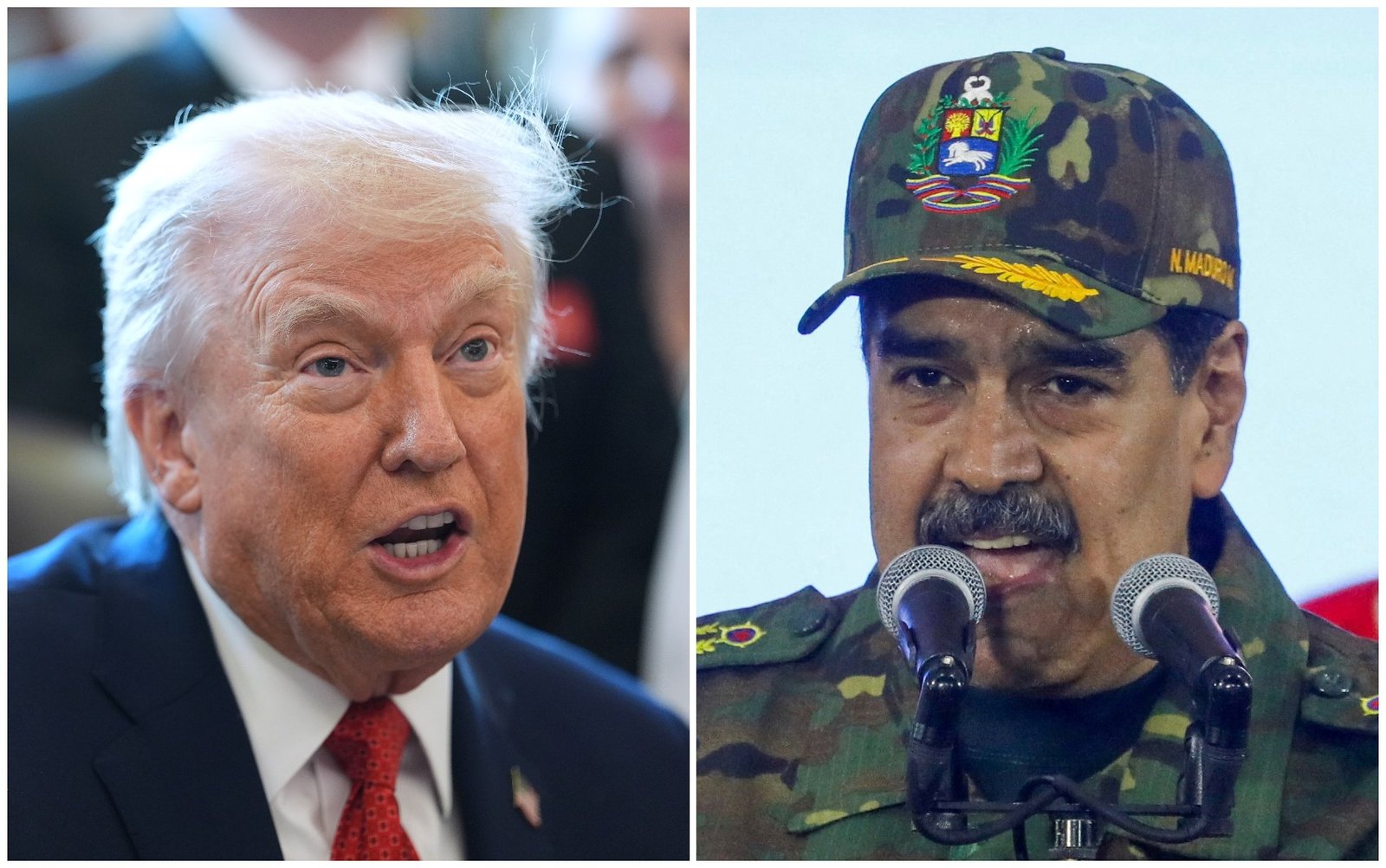
Trump and Maduro AP Photo/Evan Vucci; Reuters/Leonardo Fernandez Venezuela announced this Thursday (1st) the release of 88 people arrested for protesting against the disputed victory of President Nicolás Maduro in the July 2024 elections, in the latest gesture of goodwill from the Venezuelan regime that is under strong pressure from the United States. Maduro imposed a violent repression on opponents who rejected the official result, which led him to a third six-year term as President, although the opposition released data that, it claims, would prove its candidate’s victory. The brutal repression imposed by the regime resulted in the deaths of 28 people and the arrest of around 2,400 protesters, including dozens of minors. Since then, more than 2,000 protesters have been released, according to official records. See the videos that are trending on g1 NGOs: 900 political prisoners still detained The Venezuelan Ministry of Justice reported this Thursday that the 88 people released had been detained “for crimes committed during violent actions by extremist groups.” Two human rights bodies, the Committee for the Freedom of Political Prisoners and the Committee of Mothers for Truth, had previously reported the release of at least 87 prisoners. On December 25, Caracas had already announced the release of 99 prisoners as “a concrete expression of the State’s commitment to peace, dialogue and justice.” The Venezuelan government claims that it does not hold political prisoners, but rather imprisoned politicians, and that those detained would have tried to destabilize the country. Venezuelan NGOs estimate that around 900 political prisoners are still detained, including people arrested before the elections. American pressure Maduro has recently adopted a more conciliatory tone, faced with the threat of military action from President Donald Trump’s government, which accuses the Venezuelan of supporting drug trafficking, terrorism and other crimes. Amid the recent escalation in tensions between the two countries, Caracas accuses Washington of trying to overthrow the government to seize the country’s oil wealth. Trump last week said it would be a “smart” move for Maduro to resign. Since August, the US has been intensifying pressure, sending a naval force to the Caribbean Sea. The White House recently authorized a series of attacks on vessels suspected of transporting drugs to American territory, in addition to seizing oil tankers subject to international sanctions and partially closing Venezuelan airspace. Trump also announced this week that American forces struck and destroyed a port allegedly used to load Venezuelan boats that would be used by drug traffickers, in what could be considered the first ground attack in Venezuela in the US military campaign to combat drug trafficking and pressure the Maduro regime. Maduro avoids commenting on the US attack Maduro, in an interview with the Venezuelan state broadcaster this Thursday, avoided commenting on the American attack and said he was open to cooperation with Washington. “Wherever they want and when they want,” said Maduro about the possibility of a dialogue with the American government on drug trafficking, oil and migration. Asked directly whether he confirmed or denied the attack, he said “that may be something we talk about in a few days.” Maduro insisted that Venezuela managed to defend itself well while the US carried out its military campaign at sea. “Our people are safe and at peace,” he said. In the interview, Maduro said he had not spoken to Trump since their conversation on November 12, which he described as cordial and respectful. “I think that conversation was pleasant, but since then the evolution has not been pleasant. Let’s wait,” he said. “If they want to talk seriously about an agreement to combat drug trafficking, we are ready.” Petro says attack was in Maracaibo Colombian President Gustavo Petro – who also became the target of American pressure on the continent – fueled rumors about the location of the attack, saying that Trump bombed a factory in Maracaibo where “they mix coca paste to make cocaine”. The statement led some to speculate on social media that a fire in the warehouses of chemical wholesale distributor Primazol in Maracaibo could be linked to the attack, which was denied by the company’s president.
Source link
Under US pressure, Maduro releases political prisoners
58

previous post