
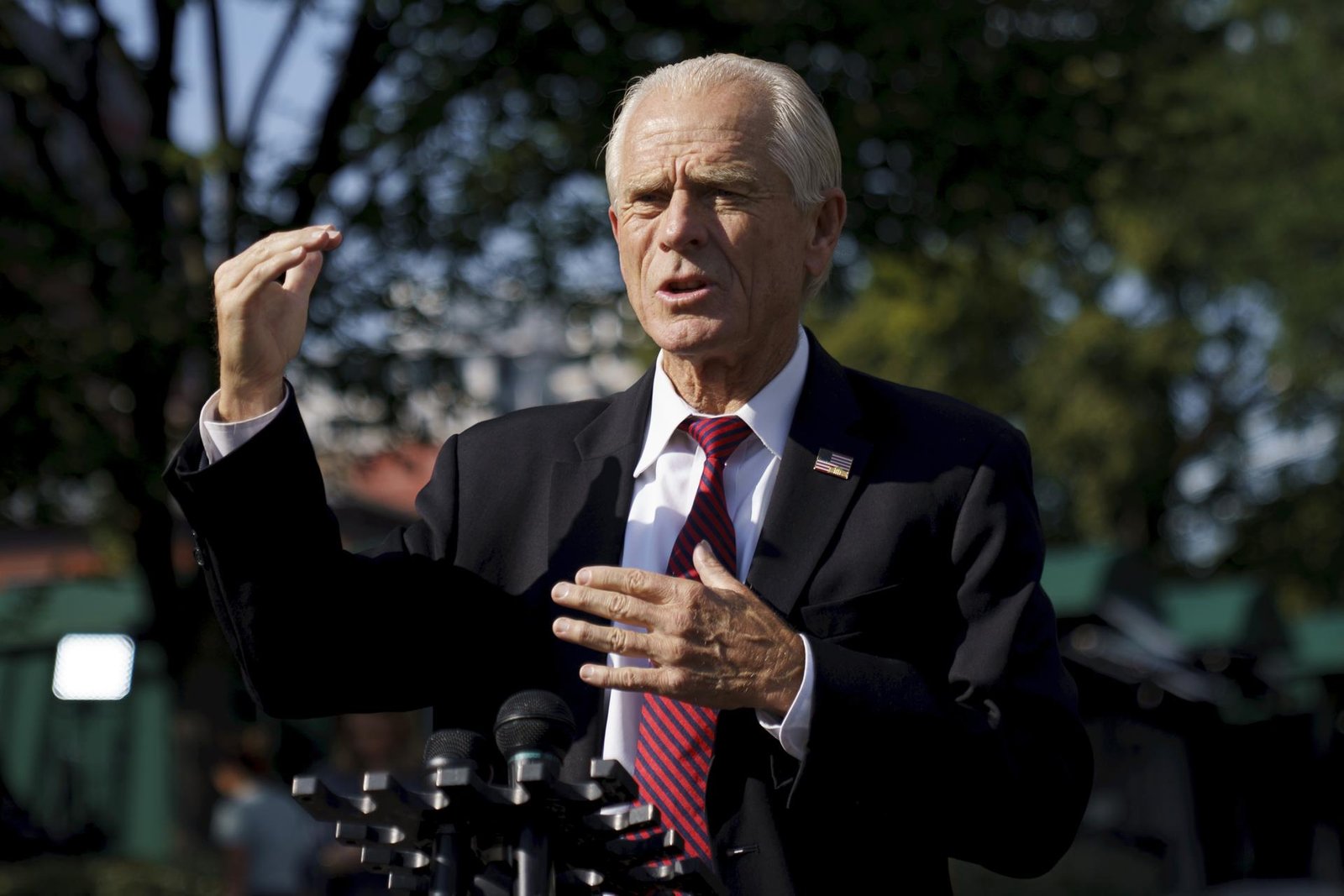
The senior advisor for Commerce and Manufacturing at the White House, Peter Navarro, architect of the tariff war, stated this Monday (26) that the Brazilian JBS is part of what he called a “meat cartel” in the United States and reiterated that President Donald Trump ordered the American Department of Justice to open an antitrust investigation into the beef processing sector in the country, which could affect the Brazilian company.
According to Navarro, in a post on the social network X, four large companies – Cargill, JBS, Tyson Foods and National Beef – account for more than 80% of the supply of beef in the United States. According to the advisor, this level of concentration reduces competition and creates conditions for price formation that harm both American livestock farmers and consumers.
According to Navarro, JBS and National Beef are “effectively managed from Brazil”. He states that Brazilian exports to China, the world’s largest importer of beef, help to establish a price floor in the American market, which, according to his assessment, limits internal competition and puts pressure on the amounts paid by the end consumer.
Announced in November last year, the Department of Justice’s investigation into large meatpacking companies operating in the USA has not yet had any new public developments. At the time, the White House stated that the investigation sought to identify collusion and price manipulation practices by companies that concentrate the majority of beef processing in the United States.
Em published article in the conservative newspaper Washington Examiner last Friday (23), Navarro stated that the rise in the price of meat within the USA would not be related to inflation, but to the actions of a foreign “cartel” in control of meatpacking plants. According to him, prices are not defined on farms, but in slaughterhouses, a stage that would be concentrated in the hands of a few companies.
In the text, Navarro states that around 85% of beef processing in the United States goes through just four companies, creating a “bottleneck” in the market. According to the advisor, this model would allow external demand, especially from China, to directly influence the price paid by the American consumer.
Navarro argues in the article that trade tensions last year led Brazilian exporters to redirect volumes of meat to the Chinese market, which would have reduced supply in the United States and put pressure on supermarket prices weeks later.
The advisor writes that, given this scenario, Trump ordered the Department of Justice to open an antitrust investigation against meatpacking companies that operate in the US and are under foreign control. According to Navarro, the White House considers food safety part of national security and defends the use of antitrust legislation to restore competition in the sector, including the possibility of divestment or division of companies, if necessary.
A People’s Gazette sought out JBS to comment on Navarro’s statements, but did not receive a response until the publication of this article. The space remains open for company demonstrations.
