
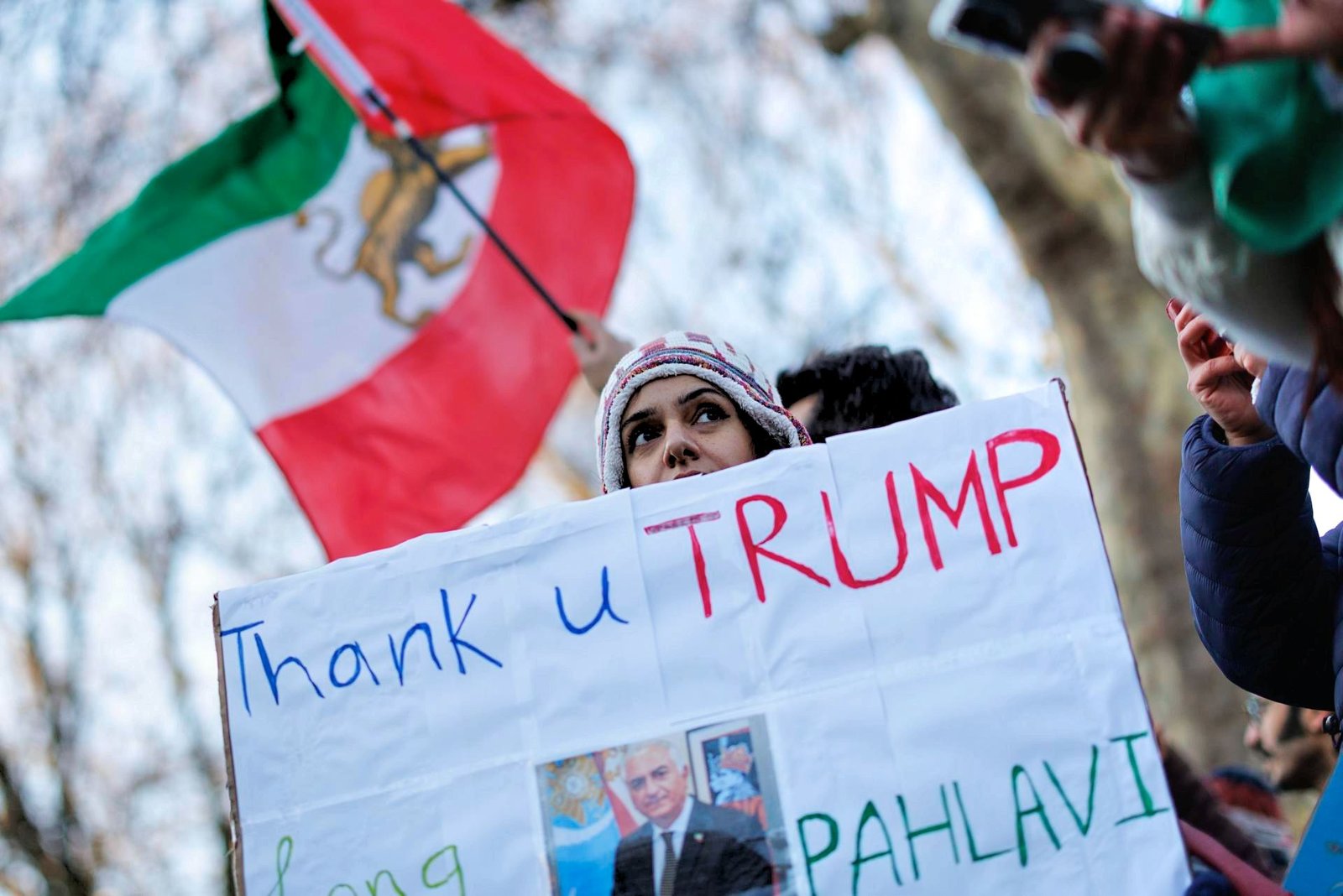
Reza Pahlavi, son of the last shah of Iran, is betting on economic suffocation to overthrow the regime. Exiled in the USA, he calls for strikes in the oil sector while the national currency loses 50% of its value in 2025.
The strategy attracts attention from Donald Trump, who has signaled support for the protests but remains cautious about opposition. The economic scenario, marked by mismanagement, sanctions and military spending, is fueling the biggest wave of demonstrations since 2022, when protests following the death of Mahsa Amini mobilized the country.
Pahlavi defends civil disobedience as a strategy to overthrow the regime. In his messages, he calls on the population to occupy and keep urban centers under the control of the protesters. He promises to return to Iran when the “national revolution” wins, a bet on the imminent fall of the Islamic Republic.
Pahlavi’s strategy targets the heart of the Iranian economy. He has called for nationwide strikes in vital sectors, especially oil and gas, which account for the majority of government revenue. For a regime dependent on commodity exports, the paralysis of these sectors directly threatens its ability to finance the repressive machine.
Fragmented opposition and regime response
But the opposition is far from unified. Although Pahlavi arouses nostalgia in part of the population, today’s Iran is very different from the country his father ruled until 1979. The movement against the regime lacks coordinated leadership within the country and is divided between monarchists, left-wing groups and ethnic minorities, a fragmentation that facilitates government repression.
The regime responds with total repression. Authorities cut off internet access, mobilized the Army to protect strategic infrastructure and expanded mass arrests. The Iranian judiciary has declared that it will not spare protesters, classifying them as “vandals” and “mercenaries in the service of foreign powers.”
Human cost and international caution
The human cost is high. Human rights organizations estimate at least 50 deaths, including children and members of the security forces, in addition to thousands of arrests. Cities such as Tehran, Shiraz and Mashhad are home to the most violent clashes between protesters and regime forces.
The international community is watching carefully. Donald Trump has signaled support for the protests, but keeps his distance from Pahlavi and avoids formal commitment to the opposition. European leaders condemn the violence, but no Western country indicates a willingness to intervene. Iran’s future remains uncertain.
The big unknown is whether Pahlavi will be able to unify a fragmented opposition. Without coordinated leadership and a clear political alternative, Iran could exchange an authoritarian theocracy for a chaotic scenario without clear leadership. Individual freedom and fiscal responsibility depend on an orderly transition, an objective that becomes more distant as repression and clashes intensify.
