
“This is our hemisphere — and the president [Donald] Trump will not allow our security to be threatened,” said American Secretary of State, Marco Rubio, after the operation in which Venezuelan dictator Nicolás Maduro was captured last Saturday (3).
The Trump administration has made it clear that the operation was part of efforts to reduce the influence of China and Russia (Maduro’s allies) in the Western Hemisphere, and since then a theory has returned to circulation on social media.
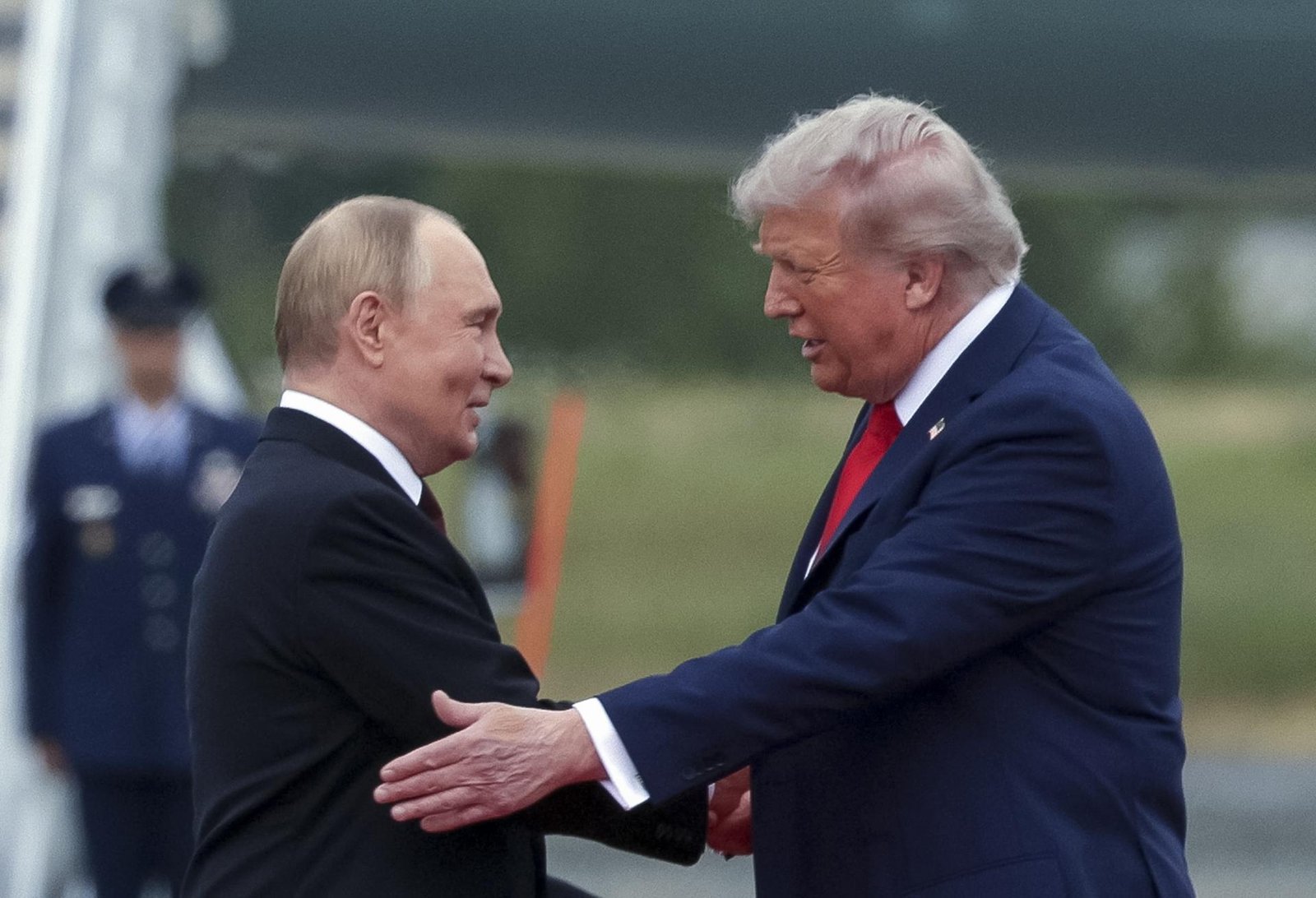
Illustrations show the world divided into three spheres of influence, with the United States dominating the Western Hemisphere; Russia controlling Eastern Europe and Africa; and China “taking over” Asia.
The most recent national security doctrine of the United States, released before Maduro’s capture, gave rise to this theory, by preaching a return to the Monroe Doctrine, from the 19th century, through which the United States gave priority to the Americas in its foreign policy.
On Thursday (8), in his annual speech in Paris to French ambassadors around the world, the President of France, Emmanuel Macron, corroborated the thesis of the spheres of influence of the great global powers, without interference in the space “dominated” by the others.
“The institutions of multilateralism work less and less effectively. We find ourselves in a world of great powers with a real temptation to divide the world,” said Macron.
Experts, however, disagree regarding the argument that the USA, China and Russia would be willing to “divide” the planet.
In an article for The Atlantic magazine published after Maduro’s capture, American journalist and writer Anne Applebaum recalled that in 2019 an official from the National Security Council of the first Trump administration, Fiona Hill, told a committee of the House of Representatives that Russia would be pushing for the creation of spheres of influence and would have offered a kind of “exchange” of Venezuela, Moscow’s closest ally in Latin America, for Ukraine, which would be invaded in 2022.
“Since then, the notion that international relations should promote the dominance of great powers, rather than universal values or networks of allies, has spread from Moscow to Washington,” Applebaum wrote.
“The government’s new national security strategy [Trump] outlines a plan to dominate the Americas, cryptically describing US policy in the Western Hemisphere as ‘engagement and expansion’ and downplaying threats from China and Russia. Trump also made threats [de anexação] in Denmark [da Groenlândia]to Panama [cujo canal poderia ser retomado] and Canada [que o presidente republicano disse querer transformar no 51º estado americano]all allies whose sovereignty we now challenge”, stated the journalist and writer.
SEE ALSO:
- Trump says Venezuela is now an ally and will meet with country representatives
Gideon Rachman, columnist for the British newspaper Financial Times, was in the same vein, writing in an article that the Donroe Doctrine (a pun on the American president’s first name), “combined with Trump’s initiatives towards a rapprochement with Russia and China, suggests that he is attracted to a world order organized around the spheres of influence of the great powers”.
“Both Russia and China condemned Maduro’s ouster. But [o ditador chinês] Xi Jinping would gladly sacrifice Chinese influence in Venezuela if it meant Beijing would have carte blanche regarding Taiwan [que a China considera parte do seu território e planeja incorporar]. Russia would make the same agreement in relation to Ukraine”, Rachman pointed out.
However, in an interview with People’s Gazetteeconomist and doctor in international relations Igor Lucena said he believes that “there is a bit of conspiracy theory” in the comments about “division of the world”.
The expert highlighted that, although Trump is trying to increase his prominence in Latin America and the Western Hemisphere, as explained in the new national security policy, the Republican is not trying to reduce the influence of China and Russia just in these regions, but throughout the world.
“The United States does not want China invading Taiwan, it does not want China expanding its territory or its influence in countries that it considers allies, such as India and Japan. In the same way, it does not want Russia taking over all of Ukraine”, he explained.
“To the extent that they can undermine rising powers, and the great rising power today is China, or even powers that, although in decline, are still great, like Russia, they [Estados Unidos] they will,” said Lucena.
“So, in a way, I agree that it makes sense to say that Trump does want to increase his area of influence in Latin America and the Western Hemisphere. But it is very difficult to believe that there is a plan to divide the world into three areas and that these powers would be organizing this among themselves. I think that is already too much”, concluded the expert.
