
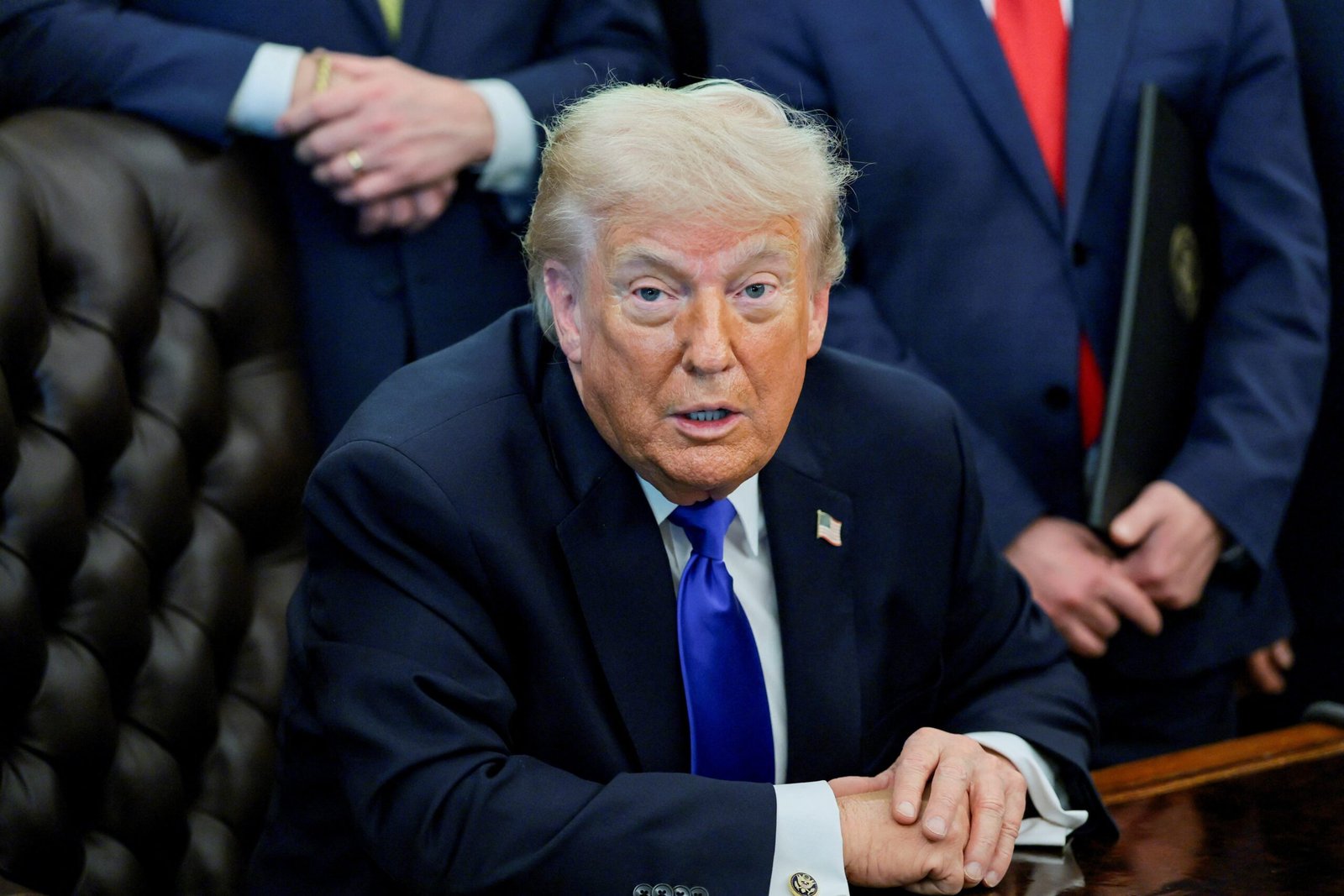
Trump rejects Iran’s proposal and maintains blockade in the Strait of Hormuz This Friday (1st) the deadline set by American law that obliges the President of the United States to stop the war in the Middle East or ask Congress for authorization to continue the conflict ends. But the Trump administration has made clear that it will ignore this obligation and will evaluate the possibility of carrying out new attacks against Iran to force Tehran to negotiate a deal. The Iranian regime, which had to activate the country’s anti-aircraft defense system on Thursday night (30), promises a “painful and prolonged” reaction. According to the American Constitution, only Congress has the power to declare war. However, a law passed in 1973 allows the president to initiate limited military intervention to respond to an emergency situation, as long as, if it involves American troops for more than 60 days, he obtains authorization from the Legislative Branch. This Friday would therefore represent the deadline for this authorization to continue the conflict that began on February 28. But US Secretary of Defense Pete Hegseth argued on Thursday that because of the ceasefire, “the 60-day clock is suspended.” “The hostilities that began on Saturday, February 28, have ended,” a senior US government official added to AFP. “There has been no exchange of fire between the United States military and Iran since Tuesday, April 7,” when the ceasefire came into effect. ‘Disgraceful defeat’ US President Donald Trump during a conversation with journalists at the White House on April 30, 2026 REUTERS/Jonathan Ernst Iranian Supreme Leader Mojtaba Khamenei said on Thursday that the United States suffered a “shameful defeat” against Iran. Iranian President Massoud Pezeshkian denounced the American blockade as an “extension of military operations”. In Tehran, anti-aircraft defense systems were activated on Thursday night against drones and aircraft whose origin was not disclosed. “The noise from the anti-aircraft defense ceased after about 20 minutes of activity and response against small aircraft,” reported the Tasnim and Fars agencies, adding that Tehran was once again in a “normal situation.” The war left thousands dead, mainly in Iran and Lebanon. Despite the truce and the first talks that took place on April 11, in Islamabad, peace negotiations appear to be at an impasse. Double blockage of the Strait of Hormuz While discussions stall, the effects of the blockade of Hormuz are increasingly being felt in the world economy, including gradual shortages of various products, inflationary pressures and downward revisions in growth. Washington imposed a blockade on Iranian ports in retaliation for Tehran’s blockade of the strait. Before the conflict, a fifth of the hydrocarbons consumed in the world passed through the strategic passage. The double blockade sent oil prices soaring. A senior American official mentioned a possible extension of this measure “for months”. Faced with the prospect of a prolongation of the conflict, a barrel of Brent, the global benchmark for crude oil, briefly surpassed US$126 on Thursday, reaching its highest level since the beginning of 2022, during Russia’s invasion of Ukraine. This Friday morning, the product registered an increase of 0.59%, at US$ 111.05. “The world is facing the most serious energy crisis in its history”, said the director of the International Energy Agency, Fatih Birol. ‘On the brink of the abyss’ The UN Secretary-General, António Guterres, also warned of the “strangulation” of the global economy due to the paralysis of the strait. “Now is the time for dialogue, for solutions that move us away from the brink and for measures capable of opening a path to peace”, he argued in a message on platform X. On the Lebanese front, new Israeli attacks in the south of the country left at least 17 dead on Thursday. The American embassy in Beirut called for a meeting between the Lebanese president and Israeli Prime Minister Benjamin Netanyahu, considering Lebanon “at an inflection point”. “Its people have the historic opportunity to regain control of their country and forge its future,” he stated in a publication in * With AFP
Source link
Deadline ends, and Trump administration indicates that it will continue with the war without Congressional approval
9
