
With the benefit of hindsight, it seems that 2006’s The Devil Wears Prada was released at the pinnacle of traditional media’s grip on our attention, a moment when magazines and legacy media seemingly ruled the world and held unbridled influence and power.
The Devil Wears Prada 2, meanwhile, serves as something of a eulogy for the industry’s sad decline, a biting satire that will hit close to home for anyone in media. (Some spoilers from the movie’s media-centric plot are below.)
The internet existed in 2006, of course, but Facebook was still only open to students; Twitter was founded two months before the film’s release; The Huffington Post was only a year old. Blogs like Gawker had a lot of buzz, but it was real-world magazine editors like Anna Wintour that were so often the subject of its focus and curiosity.
If The Devil Wears Prada captured the waning heyday of legacy media, The Devil Wears Prada 2 captures the tumultuous and uncertain current moment.
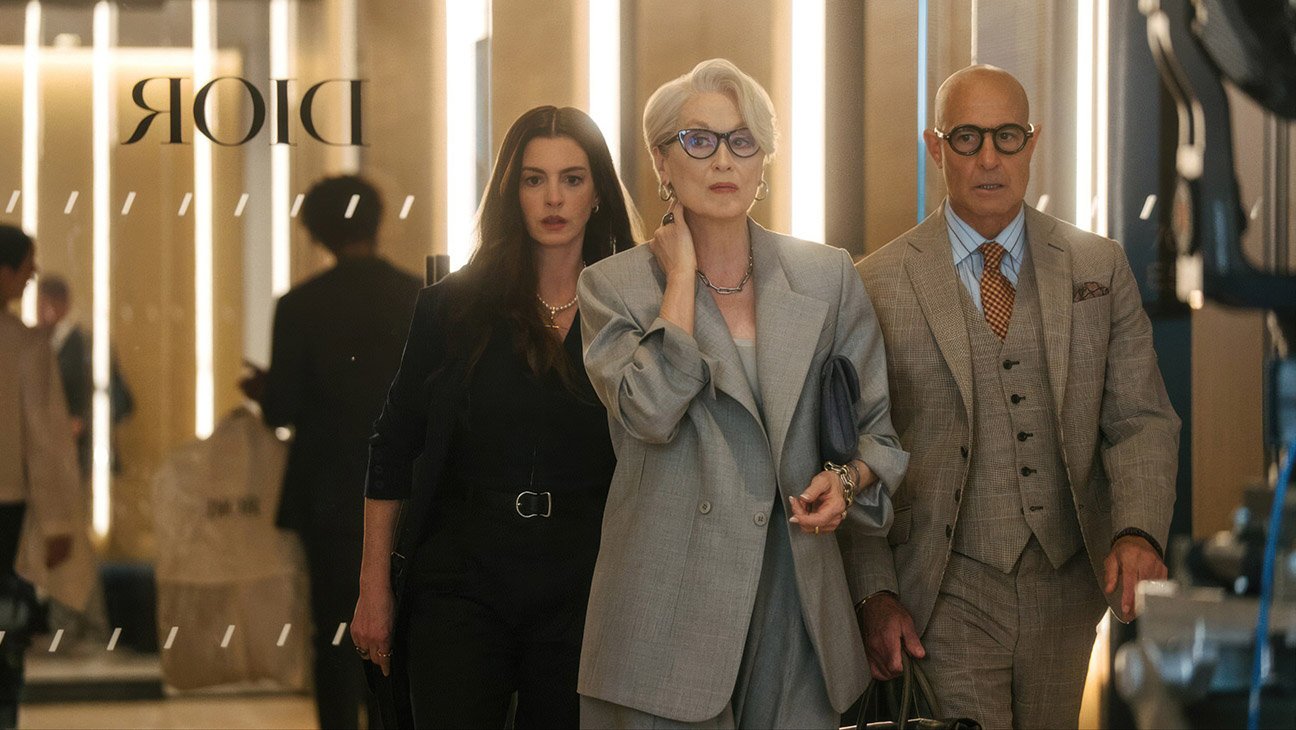
Stanley Tucci, Meryl Streep and Anne Hathaway navigate a Runway strapped with budget cuts in The Devil Wears Prada 2.
Everett Collection
In the first film, Miranda Priestly (Meryl Streep) is not only idolized by fashion icons and journalists, but her role atop Runway magazine effectively makes her the most powerful person in the entire fashion industry. So powerful was the media platform, that Priestly and Runway could define the terms for an entire sector of the economy, and an entire fashion culture.
That power dynamic is punctured early on in the second film, when Priestly is forced to journey to a major fashion advertiser’s office to grovel and negotiate a make-good, after Runway is humiliated in a PR crisis sparked by TikTokers and influencers that expose shoddy reporting in its pages, a nod to where cultural influence has shifted.
The film includes a hunt for a white whale of an interview (something every magazine journalist knows too well), multiple conversations about engagement metrics on stories (ditto), and a feature item is deemed to have met Priestly’s high bar when she declares that it be pinned to the top of Runway’s social accounts.
In the original film, the most meta commentary comes from Priestly, worried that her personal life has become tabloid fodder for Page Six. “Rupert Murdoch should cut me a check for all the papers I sell for him,” she quips. Murdoch, of course, owned 20th Century Fox, the studio that released the first film (he also “laughed out loud” at the line, a spokesperson said at the time).
But the mid-aughts may have been the last time that newspaper sales were relevant to media balance sheets. The world of media has gone digital, and that is the world Priestly and Andrea Sachs (Anne Hathaway) have to navigate in the sequel.
In the first film, the influence and wealth of Runway is unquestioned. The second film is all about the cuts that any working journalist knows too well today.
The opening scene of The Devil Wears Prada 2 sees a local newspaper shut down so that its corporate owner could take a tax write-down, even as he takes home a multi-million dollar payday (sound familiar?). The journalists, led by Sachs, find out by text message as they are accepting an award for their work. Her speech goes viral, sparking the developments in the film.
McKinsey consultants (or maybe they are BCG? Either way, they are definitely Harvard Business School grads, as they remind Priestly) “help” Elias-Clarke rightsize at the urging of an athleisure-clad nepobaby. The Runway features budget is slashed, as is the travel budget (one funny scene sees Priestly walk past business class on a plane and into *shudder*, economy). Runway staffers that had been there for too long would face the chopping block, with Nigel Kipling (Stanley Tucci) seemingly resigned to his fate.
In fact the film is filled to the brim with references to real-life media gossip. A subplot involves Priestly attempting to secure a promotion to chief content officer of Elias-Clarke, the Condé Nast-inspired media company that owns Runway. Anna Wintour, who inspired the Priestly character, was named chief content officer of Condé in 2020.
Wintour seemed to enjoy the film, having attended the world premiere in New York last week, where The Hollywood Reporter spotted her chatting with former Disney CEO Bob Iger in the orchestra level before it started.
And a major plotline involves Benji Barnes (Justin Theroux) a once-nerdy but now buff tech billionaire who laughs exactly like Jeff Bezos, and who (spoiler) is interested in acquiring Runway for his significant other, a clear reference to the long, long rumored interest by Bezos in acquiring Vogue. Will a wealthy vanity owner actually give Runway the freedom it requires to do its job? There’s a whole conversation between Priestly and Sachs about that too (looking at you Washington Post, Time and The Atlantic).
The film is laden with cameos, and while many are mainstream or familiar to fashionistas (Donatella Versace and Lady Gaga make memorable appearances), the filmmakers also squeezed in brief cameos of the likes of Tina Brown, Kara Swisher and Molly Jong-Fast, hardly household names outside of media circles.

This time, Meryl Streep contends with billionaires who would become vanity media owners.
Everett Collection
To be sure, there is plenty to critique, as THR’s David Rooney notes in his review of the film, there is a glorification of wealth and fashion that seems out of place given the moment. And magazine feature editors, even those at Condé Nast, could only dream of getting the apartment that Sachs secures after she gets her new job.
There have been plenty of movies about the media over the years, chronicling the glory days of newspapers, of TV, or media writ large: Spotlight. All The President’s Men. Broadcast News. The Insider. Zodiac.
All of those films reflected the moment they were trying to represent. The Devil Wears Prada 2, it turns out, is very much in that mold, albeit with a satirical approach, high-fashion in every scene, and stakes that are far lower than life or death.
And the ending message, about the willingness of wealthy media benefactors to leave their editorial prizes alone, has taken its fair share of hits in the real world over the last few years, though perhaps Runway will end up more like The Atlantic, rather than The Washington Post.
