
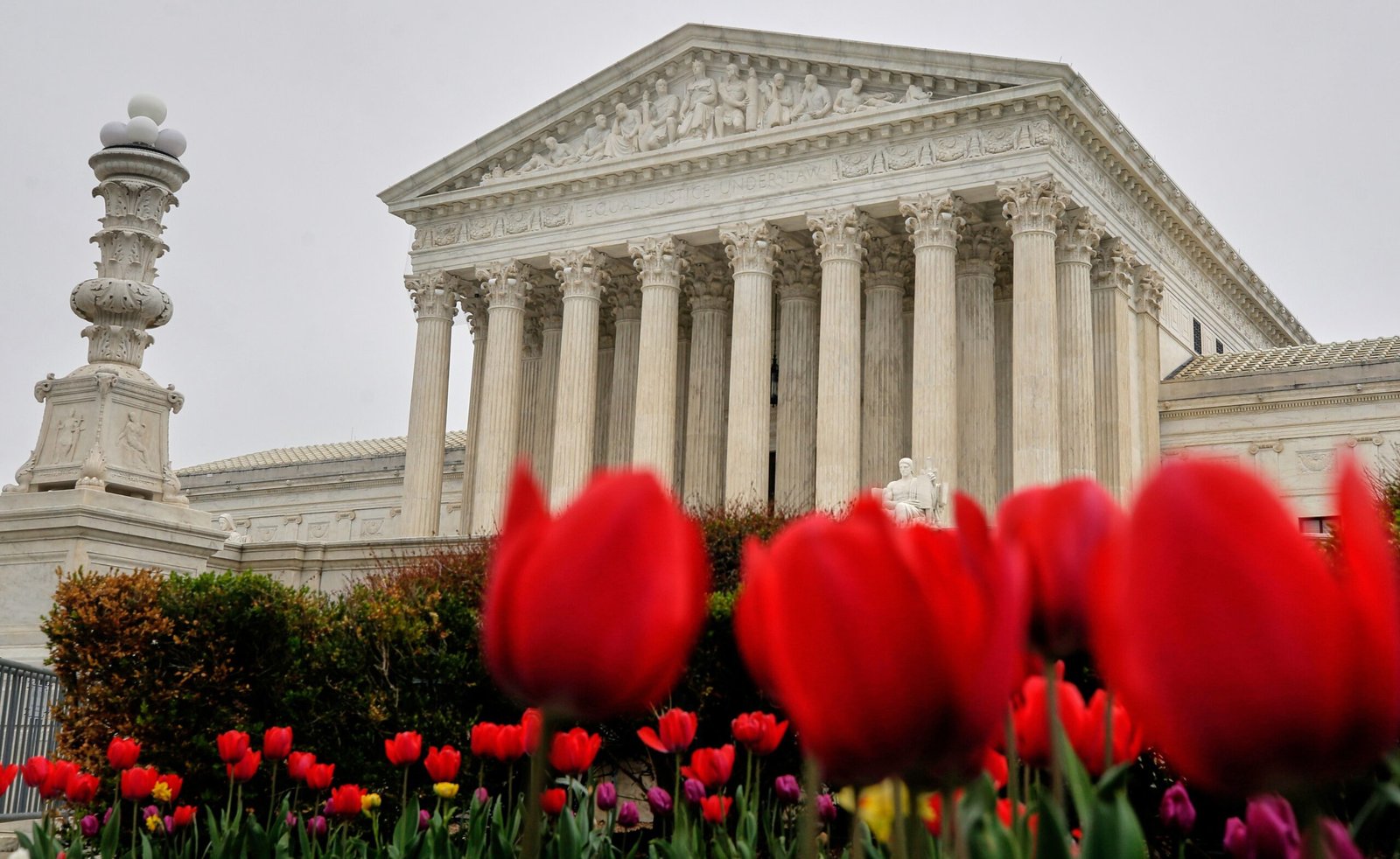
US Supreme Court AP Photo/Rahmat Gul The conservative majority of the United States Supreme Court on Wednesday (29) handed the biggest victory yet to Republicans in the ongoing fight for control of the House of Representatives and state governments across the country. The 6-3 decision all but vacated the Voting Rights Act’s requirement that districts be drawn in a way that gives minority voters the chance to elect representatives of their choice. Map war: the political battle in the US that could strengthen or weaken Trump One practical effect of this requirement was the protection of districts with minorities that consistently vote Democratic, even in heavily Republican states where legislators could favor the Republican Party. With this requirement now practically eliminated, Republican legislators across the country — especially in the South — now have more freedom to eliminate Democratic-leaning districts and thus increase the number of seats, aiming to maintain control of the House. There are more than a dozen such seats in Republican-controlled states. Soon after the decision, Republicans began to push for the revision of electoral maps in Alabama, Louisiana, Tennessee and other states. The immediate challenge is that the decision was made well after the registration deadlines for this year’s primary elections — and, in some cases, after those primaries were held. This means that ballots are already set and, in some states, early and mail-in voting has already begun. Trending videos on g1 ‘No time to waste’ The moment makes it difficult to discard current maps and draw new ones. In Louisiana, where the demand to create a second black-majority, Democratic-leaning district led to this week’s decision, the federal primary election is scheduled for May 16 — and early voting begins on Saturday. Still, the governor, attorney general and state legislative leaders met to discuss how to respond. Republicans have been mobilizing to meet President Donald Trump’s directive to redraw maps to gain seats and avoid losses in the midterm elections. Faced with this pressure, several Republican gubernatorial candidates called for immediate changes. “There is no time to waste,” said Rick Jackson, businessman and Republican candidate for governor of Georgia, as he defended the redesign even with voting already underway for the May 19 primary. “Georgia must act now to ensure secure elections and combat Democrats’ nationwide assault on our election system.” Senator Marsha Blackburn, a candidate for the Republican nomination for governor in Tennessee, also called for a revision of the state’s electoral map to replace the only district with a black and Democratic majority with one more favorable to Republicans — despite the deadline for registering candidates having already closed on March 10. Election calendar is main obstacle Democrats have largely managed to contain the Republican advance since redrawing maps began last year, but it is unclear how they could offset the GOP’s potential gains from weakening the Voting Rights Act. “It should not go unnoticed that the Court makes this decision at a time when Republican leaders are eager to strip Americans of meaningful participation in elections,” said former Attorney General Eric Holder, chairman of the National Democratic Redistricting Committee. “They want to maintain power obtained illegitimately through racial and partisan manipulation now authorized by the Supreme Court,” he added. Only one Republican state has a relatively clear path to gaining seats in time for the election: Florida. Gov. Ron DeSantis has called a special session to approve a new map that could yield four additional seats for the party. The Florida legislature approved the new map this Wednesday, and the primary in the state only takes place in August. Other states face the unprecedented possibility of revising maps while voters are already voting or after the candidacy process has closed. “I don’t know what the implications will be for the fall. It’s pretty short notice,” said Rep. Richard Hudson of North Carolina. Voting Rights Act ‘essentially dead’ In the long term, the ruling paves the way for a drastic reshaping of the country’s political geography, possibly by the 2028 presidential election. “The Voting Rights Act as an instrument to protect minority voters against vote dilution is essentially dead,” said Jonathan Cervas, a political scientist at Carnegie Mellon University. “It’s hard to imagine that this decision won’t lead to the creation of more Republican districts in the future.” Cervas noted that the Voting Rights Act is not necessarily a partisan benefit for Democrats. Its most frequent use occurs in local and non-partisan elections, for positions such as school boards or city councils. Still, Republicans have argued for years that Democrats use the legislation to secure districts favorable to black voters in Republican states. “For decades, the left has spent hundreds of millions of dollars trying to divide Americans by race in pursuit of political power disguised as civil rights,” said Adam Kincaid of the National Republican Redistricting Fund. Democratic states may react Although the law helped preserve Democratic districts, those voters do not disappear with the decision. In some states, Republicans cannot simply eliminate all of these districts without hurting their own candidates by scattering Democratic voters. On the other hand, the concentration of minority voters in certain districts may also have harmed Democrats in states like Michigan by reducing the number of competitive districts. The party can try to react by better distributing these voters where it has control. But there will be counterpolitical pressure from black and Hispanic Democrats who want to maintain districts where their communities are in the majority. States controlled by Democrats also tend to have independent commissions and laws designed to protect minorities. This will take time, but it indicates a much less regulated landscape for district design in the coming years. The prospect worries voters like Thomas Johnson of New Orleans. “We will do everything we can and continue fighting to make our voices heard,” he said. “That’s all we want: to be heard.”
Source link
US Supreme Court Limits ‘Voting Rights Act’; decision could affect districts with a black or Latino majority
12
