
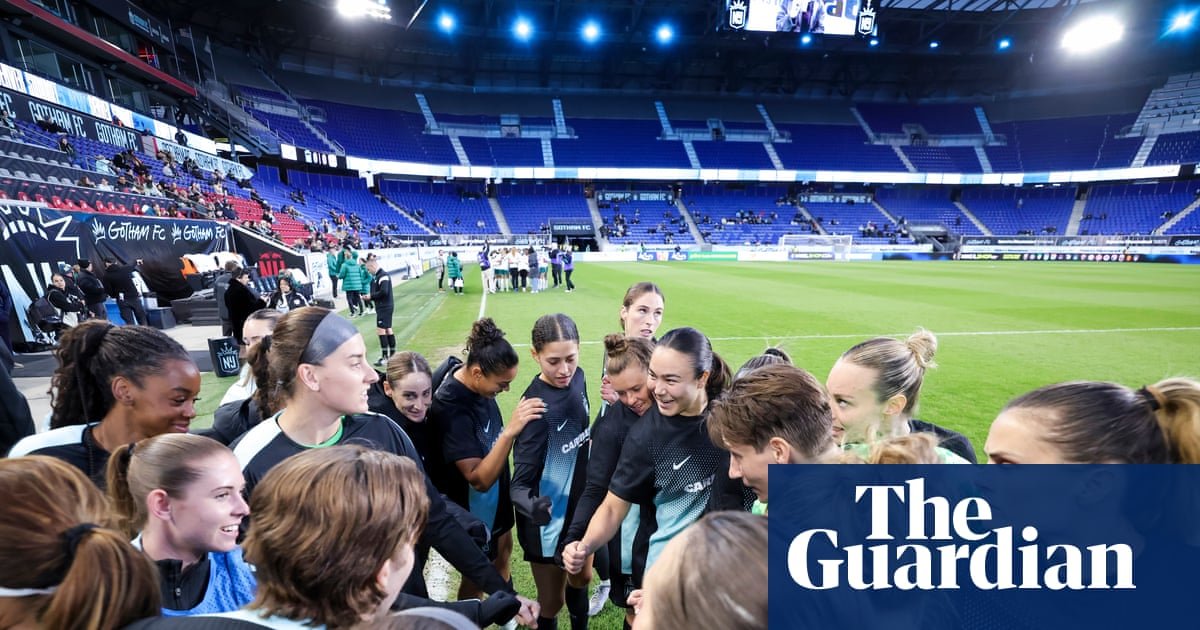
The National Women’s Soccer League is joining the Women’s Super League and the sport’s global players’ union in a three-year research initiative aimed at reducing anterior cruciate ligament (ACL) injuries in the women’s game.
ACL injuries are between two and six times more likely to occur in women than men. While that disparity has often been attributed to biological differences, many in the sport have advocated for a zoomed-out understanding that considers the environmental factors that could contribute to higher injury rates, from pitch standards and weight-room access to schedule congestion and cleat quality.
This effort, termed Project ACL x NWSL, follows that holistic approach. It is an expansion of the initiative launched in 2024 between the WSL, Fifpro, England’s Professional Footballers’ Association, Nike and Leeds Beckett University.
“The NWSLPA is proud to join Project ACL, which brings together players, leagues and researchers to better understand ACL injuries,” Tori Huster, deputy executive director of the players’ union, said in a release on Wednesday. “That understanding requires looking beyond the individual and examining the conditions players compete and train in every day. Project ACL is an opportunity to build the kind of player-centric evidence that can lead to meaningful changes across women’s professional soccer.”
ACL injuries are not new to women’s soccer – nor to men’s soccer or other sports – but calls for greater research into the gender disparities intensified in the lead-up to the 2023 World Cup. Several high-profile players, including England duo Leah Williamson and Beth Mead, Dutch striker Vivianne Miedema and US attacker Catarina Macario, missed that tournament due to ACL tears. Australia’s Sam Kerr and Germany’s Lena Oberdorf missed the 2024 Paris Olympics with ACL injuries; of the 20 gold medalists for the United States at that tournament, seven had suffered the injury at some point in their career.
The injury is no longer considered career-ending, but recovery times can vary. Kerr tore her ACL in January 2024 and returned to play in September 2025, nearly 20 months after the injury; Oberdorf also missed last summer’s Euro 2025, then tore her ACL again just eight matches into her return in October.
Existing research shows that certain biological factors put female athletes at greater risk of ACL injuries – roughly 70% of which result from noncontact situations – before they even take the field. Women have wider hips and narrower bone structure in the knee; they also tend to land flat-footed on jumps and have more strength in their quads than in their hamstrings. Some studies have suggested the menstrual cycle can play a role, but much of that research is still in the early stages.
Biology is the source of some insights, but some researchers have also called for an examination of societal and environmental circumstances. Girls and women participate in strength-building resistance training at less frequent rates than men. Studies have highlighted increased injury rates from playing on artificial turf or in cleats designed with a male foot in mind. Fifpro has led research into how fatigue from the rapidly expanding match calendar affects player performance.
Fifpro describes Project ACL as the first initiative of its kind to cover multiple professional leagues. Less than 10% of sports science research is centered on women, with most existing studies focused on amateur athletes instead of those at the professional levels.
Such cooperation could produce injury-prevention programs and protocols that are embedded and regulated by clubs and leagues, similar to the frameworks that exist for brain injuries and concussions.
“We believe that player-centricity and collaboration with key stakeholders are central to establishing meaningful change in the soccer ecosystem and that players, organizers and stakeholders around the world will benefit from Project ACL’s outputs and outcomes,” Dr Alex Culvin, director of women’s football at Fifpro, said.
Since the 2024 launch, the Project ACL team has conducted interviews with more than 30 players and led surveys across all 12 WSL clubs about resources and injury prevention strategies, with plans to do the same for the NWSL’s 16 clubs. Players will be able to track their workload, travel and recovery schedules through Fifapro’s workload monitoring tool.
“Player health and performance are fundamental to the future of our league, and this is an area where we intend to lead,” said Sarah Gregorius, the NWSL’s vice-president of sporting. “By continuing to invest in this work, we can help build environments where our players are better supported and able to perform at their best.”
