
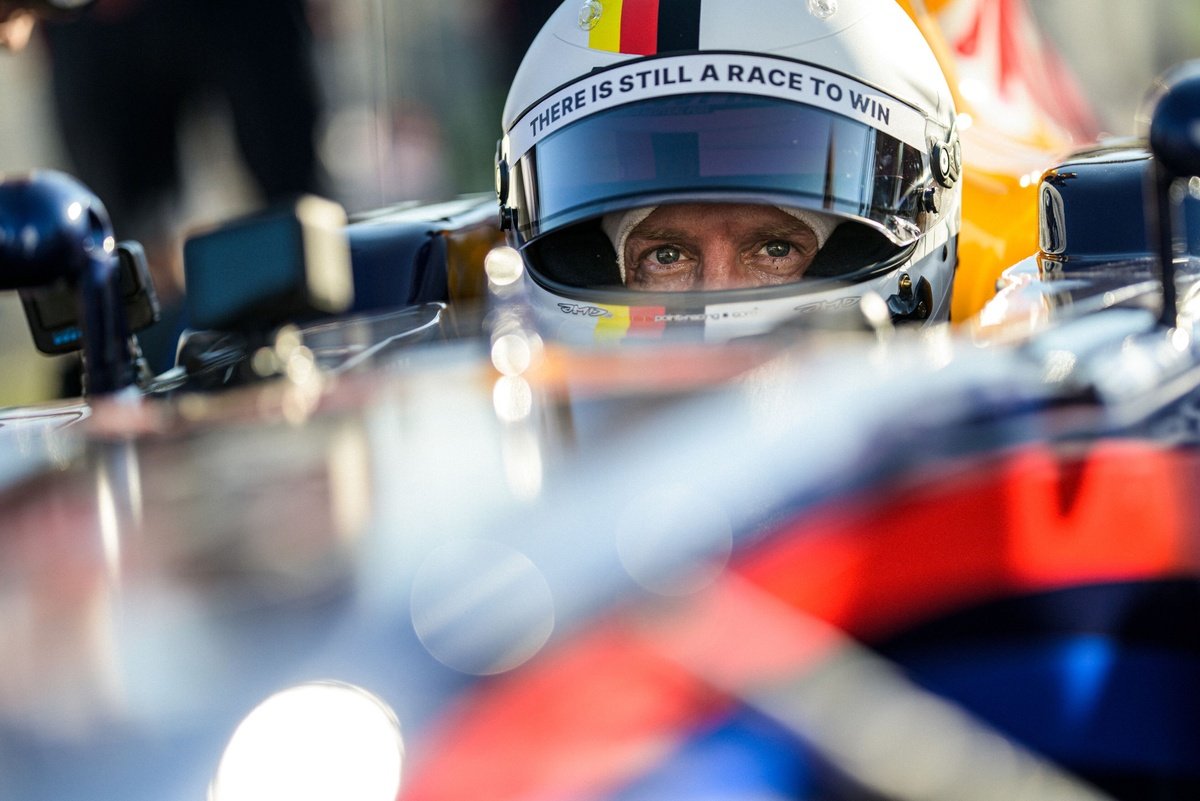
“I sympathise with the drivers; I’m very critical not to lose the DNA and the heart of the sport, which is finding the fastest driver in the fastest machine to win the race.”
Like many in the paddock, Sebastian Vettel simply isn’t a fan of Formula 1’s new-for-2026 regulations. The four-time world champion has made that much clear on Swedish TV channel SVT.
The greater emphasis on electrical power and consequent preponderance of energy management, both in qualifying and races, has drawn much criticism. Drivers don’t push as much as they used to on one lap, especially in high-speed corners; the increased race action has got a mixed reception due to the overtaking being viewed as somewhat ‘artificial’; concerns about closing speeds were unfortunately vindicated by Oliver Bearman’s scary accident in the Japanese Grand Prix.
“I hear and I echo the criticism, because the cars are probably fun to drive but probably not so much fun to race, because of the regulations and the difficulties that come with that,” Vettel added.
The FIA, F1, teams and manufacturers have already agreed tweaks to the regulations ahead of the next grand prix, which should improve the situation in all areas.
Interestingly, drivers and team members alike have long complained about F1 allegedly losing its DNA.
When F1 CEO Stefano Domenicali suggested shorter races last year, Haas team principal Ayao Komatsu commented: “For me Formula 1’s DNA is that 300km race, but that’s my personal opinion”. Granted, it has been a while since there last was a grand prix longer than 325km – 56 years, actually – but wasn’t F1’s longest-ever race, the 1951 French GP, 602km long?
Giuseppe Nino Farina, Maserati
Photo by: Universal / Corbis / VCG via Getty Images
When reverse grids were suggested as a way to improve the show, Charles Leclerc dismissed them as “really not something that I see should be part of Formula 1’s DNA”, simply because it hasn’t been done before.
When a late standing start setting up a two-lap sprint turned the 2023 Australian Grand Prix upside down, Nico Hulkenberg said: “I’m not sure this is the DNA that I’ve known F1”. No doubt the same argument could have been made with the introduction of the safety car – and consequently safety car restarts.
When the idea of the halo was mooted in order to finally protect drivers’ Achilles heels – their heads – it got quite a negative reception.
Four-time world champion Alain Prost told Motorsport it was “against the spirit of the design and beauty and DNA of Formula 1 and the single-seater DNA”, while three-time title winner Niki Lauda said it was “going to destroy” F1’s DNA.
These two hadn’t raced in decades, but most contemporary drivers would have agreed with Romain Grosjean when he said: “I don’t want to stop safety in Formula 1, but racing drivers make a choice to come to a dangerous sport, and I’m not at all in favour of halo. I think it goes against the DNA of Formula 1, against all I’ve seen since I was a kid and since it started in 1950.”
Needless to say Grosjean’s opinion – like many others’ – has changed since then, as the halo most likely saved his life in his 2020 Bahrain GP crash.

Marshals remove the wreckage after Romain Grosjean, Haas VF-20 crash
Photo by: Zak Mauger / LAT Images via Getty Images
When quieter hybrid power units were introduced into F1 for 2014, Red Bull team boss Christian Horner claimed: “The noise is part of the emotion. It’s part of the DNA of the sport.” And so on, as one goes further and further back in time…
In the end, human nature means people are just averse to change. There’s comfort in things staying the way they’ve always been. Nostalgia means folks will wear their prettiest rose-tinted glasses without even realising it and idealise a version of the past that may never have truly existed, then use it as an argument against change.
In other words, that nebulous, somewhat lazy DNA argument merely equates to a relic of a glorified past.
The bottom line is, if you’re unhappy with something, then do come up with real arguments to explain why. It shouldn’t be too difficult with F1’s new rules, really.
This isn’t meant as a dig at Vettel; he’s not wrong in that, to some extent, we all want to see the fastest driver in the fastest machine win, though this is a slightly simplistic statement given there are a myriad of reasons why this doesn’t necessarily happen in motorsport – reliability, strategy, human error… So whether the new rules put this concept at risk is debatable.
Plus, F1 cars have evolved beyond recognition over the past 76 years.
So, generously assuming F1’s DNA does exist, it might be best summed up as ‘a motor race featuring five-wheeled cars’ – four regular wheels and a steering wheel.
Oh, wait – the Tyrrell P34 would like to have a word…

Patrick Depailler, Tyrrell
Photo by: Rainer Schlegelmilch / Getty Images
We want to hear from you!
Let us know what you would like to see from us in the future.
– The Autosport.com Team
