
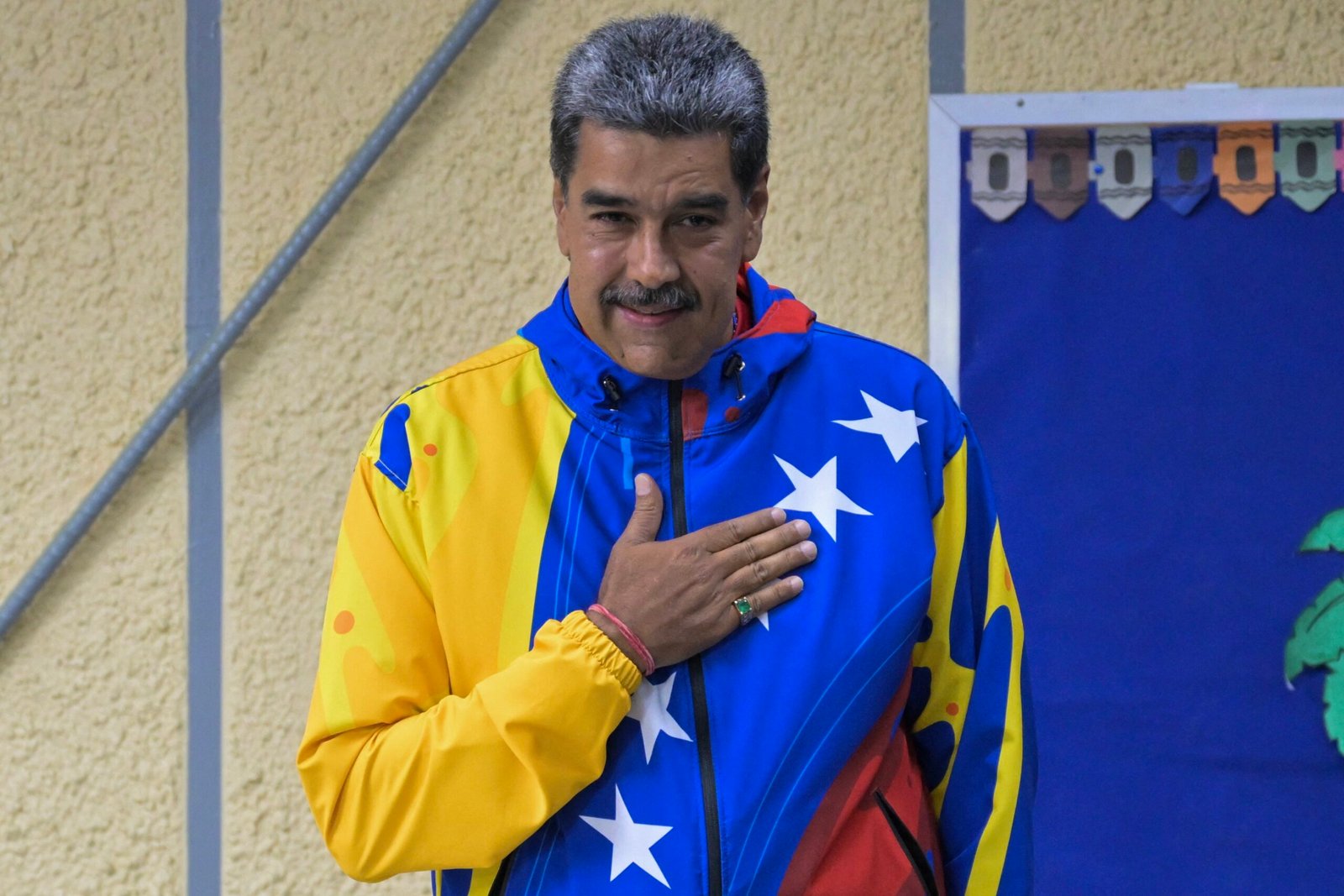
A month without Maduro – expectations about the future dominate Caracas The first bombs fell in the early hours of January 3, a month ago. The noise of the propellers, the explosions and flashes woke up Venezuelans still unaware of the outcome of the United States offensive: Nicolás Maduro was leaving power. ✅ Follow the g1 international news channel on WhatsApp Maduro was captured along with his wife, Cilia Flores, and taken to New York to be tried for drug trafficking. Command of the country passed to Delcy Rodríguez, then vice president. Under pressure, she carries out changes demanded by the President of the United States, Donald Trump, while maintaining the Chavista discourse. Rapprochement with Washington, opening of the oil sector and announcement of a general amnesty changed the political scenario. What has changed in Venezuela without Maduro? What stays the same? ‘Stability protected’ Nicolás Maduro votes this Sunday (28) in Caracas, Venezuela. JUAN BARRETO/AFP Trump ordered the bombing that resulted in the capture of Maduro and the death of almost 100 people, including civilians and military personnel. Unlike previous US interventions, such as in Iraq, there was no total rupture. Rodríguez kept Chavismo in power, under the direct influence of Washington. It is a “guarded stability”, assessed Guillermo Tell Aveledo, professor of Political Studies at the Metropolitan University. Trump called Rodríguez “formidable” and invited her to the White House, on a date yet to be determined. “Everything is going very well with Venezuela,” he said on January 14, after the first phone call between the two. The countries made progress in resuming diplomatic relations, which were severed in 2019. US Secretary of State Marco Rubio warned that Rodríguez could suffer the same fate as Maduro if he does not meet Washington’s objectives. On Monday (2), she received the new head of the American diplomatic mission, Laura Dogu, who stated that the “transition” is part of the bilateral agenda. READ ALSO US shoots down Iranian drone that approached aircraft carriers; Iran talks about ‘surveillance mission’ Cuba has a record low of 0°C and sees the crisis worsening with new sanctions and blackouts Bill Gates’ ex-wife comments on alleged betrayal and STI by the founder of Microsoft after quotes in the Epstein case: ‘Happy to be away’ Opening of the oil sector President Donald Trump Brendan Smialowski/AFP Venezuela approved a reform of the oil law, attributed by analysts to pressure from the United States. The legislation repeals, in practice, the 1976 nationalization and the statist model implemented by Hugo Chávez three decades later. Private companies begin to operate independently, without the requirement for minority participation from the state-owned PDVSA. The Trump administration’s plan is to attract American oil companies, such as Chevron. The new law reduces royalties, simplifies taxes and eliminates exclusivity in primary exploration. “It’s the only way to obtain relevant investments,” said analyst Francisco Monaldi, a professor in the United States. Experts estimate that Venezuela needs around US$150 billion (R$788 billion) to recover the industry, affected by corruption and mismanagement. Trump took control of part of Venezuelan oil sales on the international market, without the discounts imposed by the 2019 embargo. The first operation generated US$500 million (R$2.62 billion). Government and propaganda A woman holds toys of the caped superhero called Super-Mustade and Cilita while participating in a march Pedro Mattey/AFP Theoretically, Rodríguez leads Maduro’s government on an interim basis. She has replaced ministers and senior military officers since taking power, although Diosdado Cabello and Vladimir Padrino, the influential interior and defense ministers, remain in their posts for now. “It is a phase of readjustment for a system that preferred not to change its hegemony,” said Aveledo. The rapprochement with the United States contrasts with the historically “anti-imperialist” rhetoric of Chavismo, which permeates the Armed Forces. The ruling party organizes frequent marches against what it calls Maduro’s “kidnapping”. State TV airs a song calling for his release. Maduro and Cilia Flores’ faces were displayed in a drone light show at Fort Tiuna, the country’s main military complex, where they were staying in the early hours of January 3. The place was bombed during the American incursion. The drones also displayed excerpts from his statement to the New York court, where he defined himself as a “prisoner of war”. Amnesty and fear El Helicoide Prison, in Caracas RONALDO SCHEMIDT / AFP Rodríguez announced a general amnesty, which needs to be voted on by Parliament this week. The scope of the measure is still uncertain. “Freedom, freedom!” shouted family members of political prisoners outside the prisons when they received the news. She also announced the closure of Helicoide, a prison denounced for years as a torture center. The expectation is that the amnesty will result in the release of political prisoners. As of Monday, 687 people remained detained for political reasons, according to the NGO Foro Penal. “Amnesty, in principle, means oblivion, not forgiveness,” said Alfredo Romero, director of the NGO, who rejects any measure that results in impunity. The fear imposed by Maduro has diminished, but has not disappeared. People still criticize the government in whispers. There is a “tactical liberalization”, assessed Aveledo. “The system is recalibrating the cost of repression.” VIDEOS: most watched on g1
Source link
A month without Maduro in power: what has changed in Venezuela?
41
