
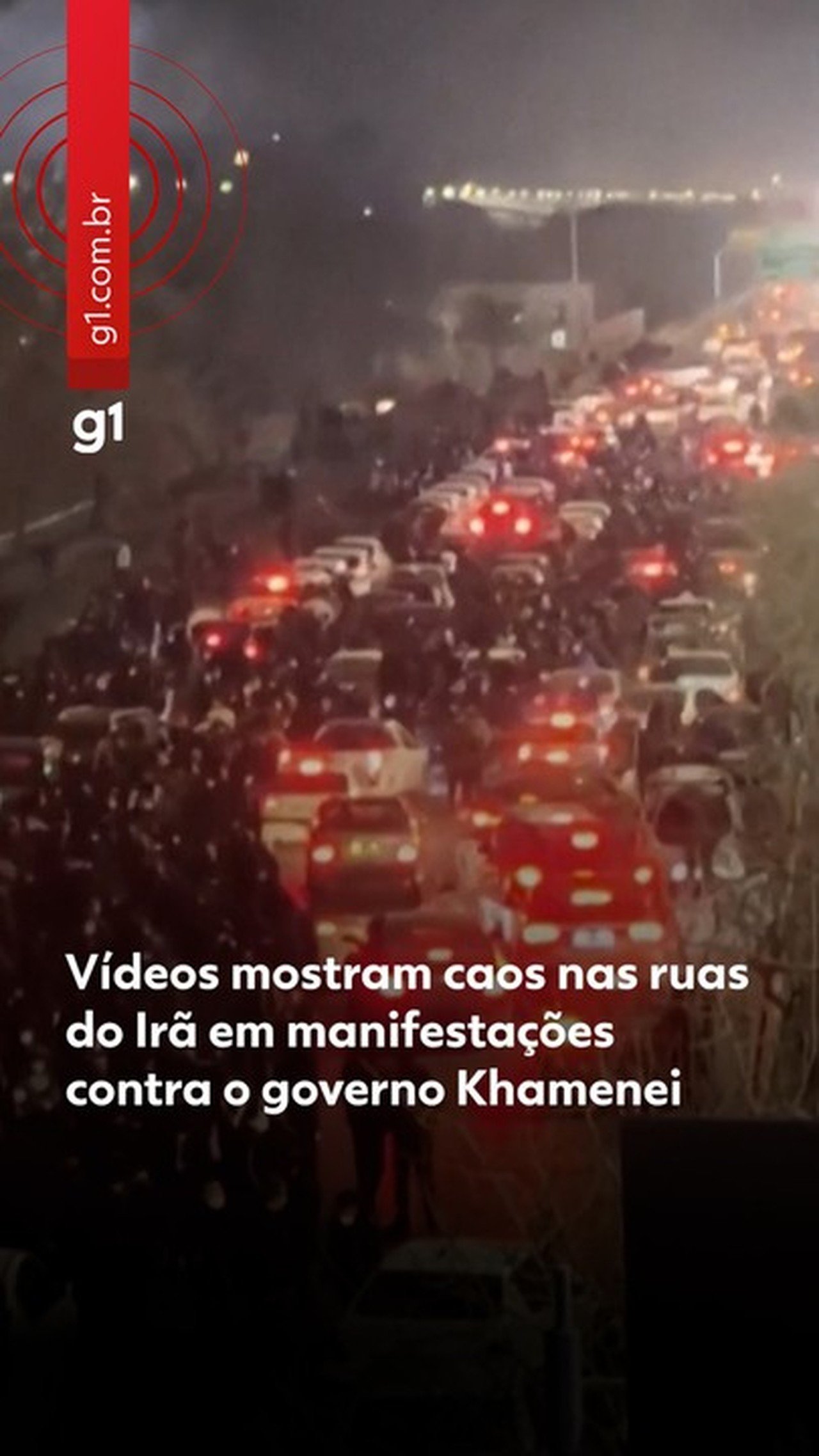
Videos show chaos on the streets of Iran in demonstrations against the Khamenei government. US Secretary of State Marco Rubio discussed with Israeli Prime Minister Benjamin Netanyahu the possibility of intervention in Iran, Reuters news agency revealed this Sunday (11). They spoke on the phone on Saturday. The discussion between representatives of the US and Israel — the countries are historic allies — comes amid widespread protests against the Iranian government recorded in recent days, which have been escalating in both scale and violence. ✅ Follow the g1 international news channel on WhatsApp Due to the situation, Israel is on high alert regarding the possibility of any US intervention in Iran, three Israeli sources told Reuters. On Saturday, US President Donald Trump renewed the threats by saying that Iran is “seeking freedom” and that the US is “ready to help”. The North American media stated that Trump is thinking about what to do in relation to the Middle Eastern country: according to “The New York Times”, he was informed by members of his government about options available for a military attack, and according to “Axios”, he is considering different alternatives to support the Iranian protesters. In response, Iranian President Masoud Pezeshkian on Sunday accused the US and Israel of “sowing chaos and disorder” in the country by fomenting street clashes. The Iranian government had already accused “mercenaries” from both countries of participating in the protests. Iran has also threatened to retaliate against Israel and US military bases if the country is the target of US bombing. This Sunday, the death toll from protests in Iran rose to at least 192 people, according to the NGO “Iran Human Rights”, based in Norway, and Iran’s police chief said that “the level of confrontation against protesters has intensified.” Previously, Trump threatened to attack Iran if the regime kills peaceful protesters. Pezeshkian also asked the population to distance themselves from what he called “troublemakers and terrorists”. At the same time, Pezeshkian sought conciliation with the population by saying that the government is ready to “listen to its people” and is determined to resolve economic issues. READ ALSO: UNDERSTAND: Calls for Khamenei to resign, repression and deaths: understand the crisis in Iran, which is experiencing the biggest wave of protests since 2009 VIDEOS: Cars set on fire, flag torn up and crowds in the streets: See the chaos in Iran with protests against the Khamenei regime INTERFERENCE: Iran accuses ‘US and Israeli mercenaries’ of participating in protests against the Khamenei government The country is at war, says the Iranian regime Image taken from a video released in January 9 shows a car on fire during a night of protests in Zanjan, Iran Iran state TV via AP Since the start of widespread protests against the regime of Ayatollah Ali Khamenei in Iran in the final days of 2025, the movement has expanded in scale and violence. Khamenei said on Friday (9) that his government “will not back down” in the face of widespread protests, which have escalated in proportion and violence in recent days. In a statement broadcast on state TV, the Iranian supreme leader called the protesters “vandals” and “saboteurs”. Ali Larijani, an advisor to the ayatollah and head of the country’s main security agency, said that Iran is “in the midst of war” and that some “incidents” were “orchestrated abroad”. The Iranian regime also accused the United States of inciting the protests. The US called the accusations “delusional” and said they reflect an attempt to divert attention from the Iranian regime’s internal challenges, according to a State Department spokesperson. The Iranian government’s repression increased this Saturday, according to the AFP agency. Iran has not faced a movement of this magnitude since the 2022 protests following the death of Mahsa Amini, arrested for allegedly violating the women’s dress code. The demonstrations occur at a time of fragility in Iran, following the war with Israel and the blows suffered by some of its regional allies. Furthermore, in September, the United Nations (UN) reinstated sanctions linked to the country’s nuclear program.
Source link
Trump’s secretary and Netanyahu discussed intervention in Iran, and Israel is on high alert with the possibility, says agency
47
