
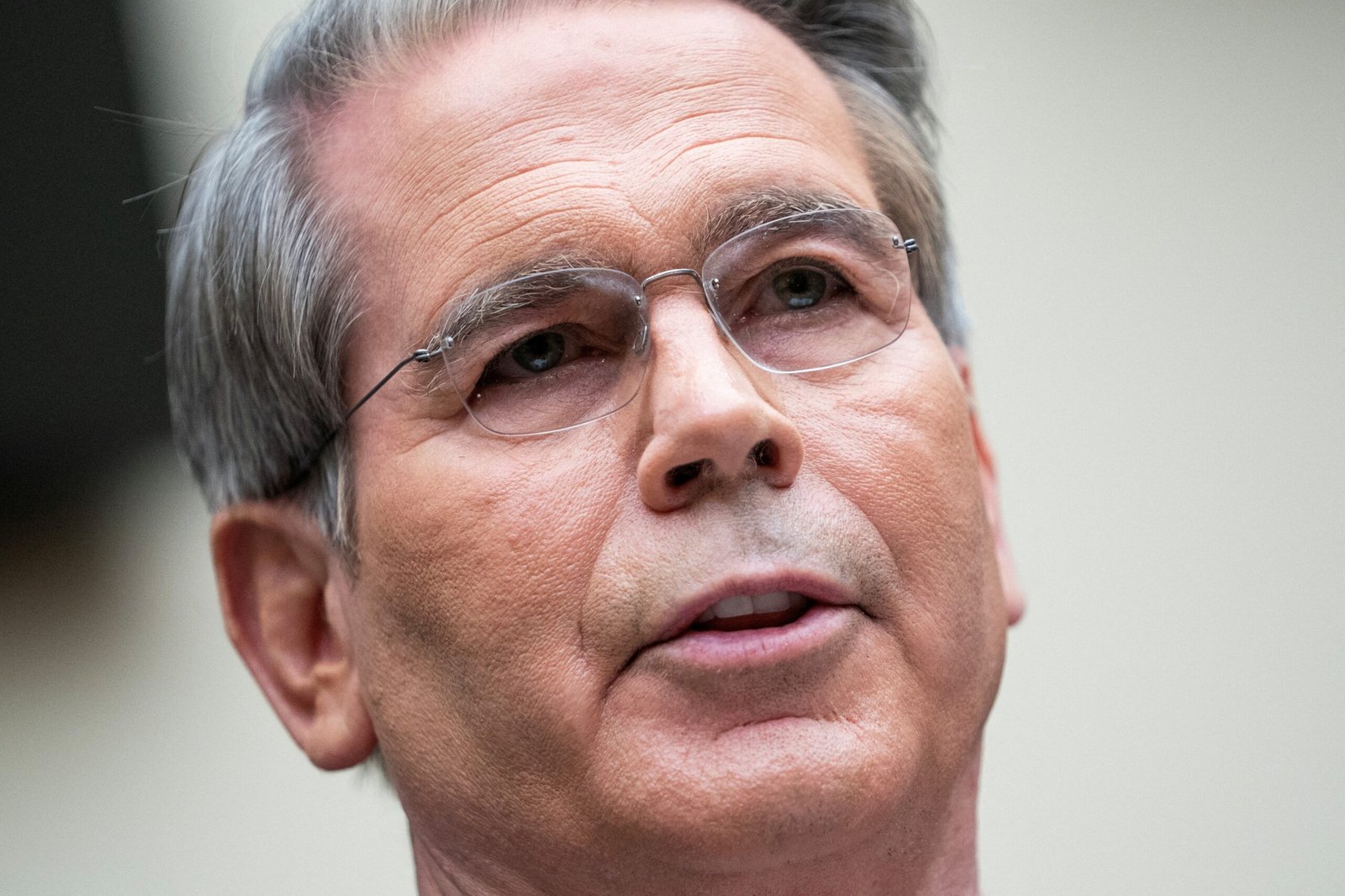
Scott Bessent, US Treasury Secretary, participates in trade negotiations with China Nathan Howard/File Photo/Reuters United States Treasury Secretary Scott Bessent said this Saturday (10) that the country is considering removing new economic sanctions imposed on Venezuela next week, with the aim of facilitating oil sales. The information is from the Reuters agency. Last week, the US carried out a military operation to arrest and remove Nicolás Maduro from power in Venezuela. Since then, the Americans have resumed trade in Venezuelan oil, which was interrupted after relations between the two countries broke down. 📱Download the g1 app to see news in real time and for free US sanctions on Venezuela prohibited, for example, international banks and other creditors from negotiating with the Venezuelan government without a license. Institutions point to this restriction as an obstacle to restructuring the US$150 billion debt, seen as essential for the return of private capital to Venezuela. Bessent stated, in an interview with Reuters, that almost US$5 billion in Venezuela’s monetary assets, currently frozen at the International Monetary Fund (IMF) in the form of Special Drawing Rights (SDRs), could be used to help rebuild the country’s economy. See the videos that are trending on g1 The secretary also said that the Treasury is analyzing changes to facilitate the repatriation of revenue from oil sales — currently stored mainly on ships — back to Venezuela. “How can we help this return to Venezuela, to maintain the government, the security services and reach the Venezuelan people?” he said, in an interview with Reuters, without specifying what measures would be taken. For this reason, the secretary must also meet with authorities from the IMF and the World Bank to discuss the resumption of commercial relations with the South American country. He also states that he believes smaller, private companies will move quickly to return to Venezuela’s oil sector. US President Donald Trump has asked industry giants to invest at least US$100 billion in Venezuela, as part of a strategy to expand US influence in the region. Executives, however, have made it clear they are not ready for that. Darren Woods, CEO of ExxonMobil — the largest American oil company — stated that Venezuela today is “uninvestable”. “We’ve already had our assets seized there twice, so you can imagine that re-entering a third time would require some pretty significant changes,” he said. “We are confident that with this administration and President Trump, working hand in hand with the Venezuelan government, these changes can be implemented,” he added. Chevron’s vice president, Mark Nelson, stated that the company is committed to investing in Venezuela. The company is the only major US oil company still operating in the country. Control over revenues After Maduro’s withdrawal, trade between the US and Venezuela resumed. All proceeds from the sale will initially be deposited into US-controlled accounts at globally recognized banks. “We count on the financial support of the world’s leading commodity trading companies and important banks to facilitate and complete these sales of crude oil and derivatives”, informed the US Department of Energy. According to the agency, the resources will be deposited in contras controlled by the US to “guarantee the legitimacy and integrity of the final distribution of the resources”, which will be made “for the benefit of the American people and the Venezuelan people, at the discretion of the US government”. On Tuesday (6), President Donald Trump stated that the US would refine and sell up to 50 million barrels of crude oil held in Venezuela due to the American blockade. Sales, according to the Department of Energy, begin “immediately” and will continue indefinitely. Trump said Venezuelan oil will be sold at market price. He further stated that he will be responsible for controlling the money obtained to ensure that the resources are used “for the benefit of the people of Venezuela and the United States.” “The oil will be transported by storage ships and taken directly to discharge terminals in the United States,” he said. The total amount of oil that will be delivered to the US corresponds to around two months of current Venezuelan production. Since December, Venezuela has accumulated millions of barrels of oil in ships and storage tanks, without being able to export them, due to a blockade imposed by Trump. The embargo was part of the American pressure that resulted in Maduro’s ouster. This Wednesday, the US seized an empty Russian-flagged oil tanker with links to Venezuela, in the Atlantic Ocean. The seizure is part of Trump’s strategy to control the flow of oil in the Americas and force Venezuela’s socialist government to become an ally. Why Venezuela’s oil is so important to the US US interest On Saturday, shortly after Maduro’s arrest, Trump stated that he intended to open Venezuela’s oil sector to large US companies. “Our gigantic US oil companies, the biggest in the world, are going to come in, spend billions of dollars, fix the oil infrastructure, which is in terrible shape, and start generating profits for the country,” he declared. American refineries on the Gulf Coast can process Venezuela’s heavy grades of oil. Before the first sanctions imposed by Washington, companies imported around 500,000 barrels per day. Despite having the largest oil reserves in the world, Venezuela currently produces little — around 1 million barrels per day — due to sanctions and infrastructure problems. US President Donald Trump. REUTERS/Evelyn Hockstein
Source link
US considers removing more economic sanctions against Venezuela next week, says agency
27
