
In a world fragmented by conflicts in Eastern Europe and the rise of China, Brazil has become an essential strategic piece for Brussels — guaranteeing security of supplies and geopolitical diversification with the EU-Mercosur agreement while the political debate remains at a standstill.
The European Union is not just looking for a new consumer market of 720 million people by approving a preliminary version of the EU-Mercosur agreement this Friday (9). The pact, which is expected to be signed this week in Paraguay by the president of the European Commission, Ursula von der Leyen, represents a strategic turning point for the European bloc.
Brussels understood that dependence on unstable suppliers represents a systemic risk to its economy. According to José Carlos de Souza Filho, professor at FIA Business School, the European Union is watching Russia exercise hegemony in Eastern Europe and China advance in markets in Africa and Latin America. In this context, the agreement went from being just an instrument of trade liberalization to becoming a strategic survival tool — a protection against risks of excessive dependence, the so-called hedging geopolitical.
João Alfredo Lopes Nyegray, professor at the Pontifical Catholic University of Paraná (PUC-PR), states that Europe is not just seeking to increase the volume of purchases, but to build predictability in an unstable international environment. He highlights that Brazil is a rare partner: it combines agro-industrial scale with a diversified industrial base — albeit with bottlenecks — and serves as an anchor for Europeans.
This combination transforms the country into a reliable supplier for a high-income market with high regulatory standards.
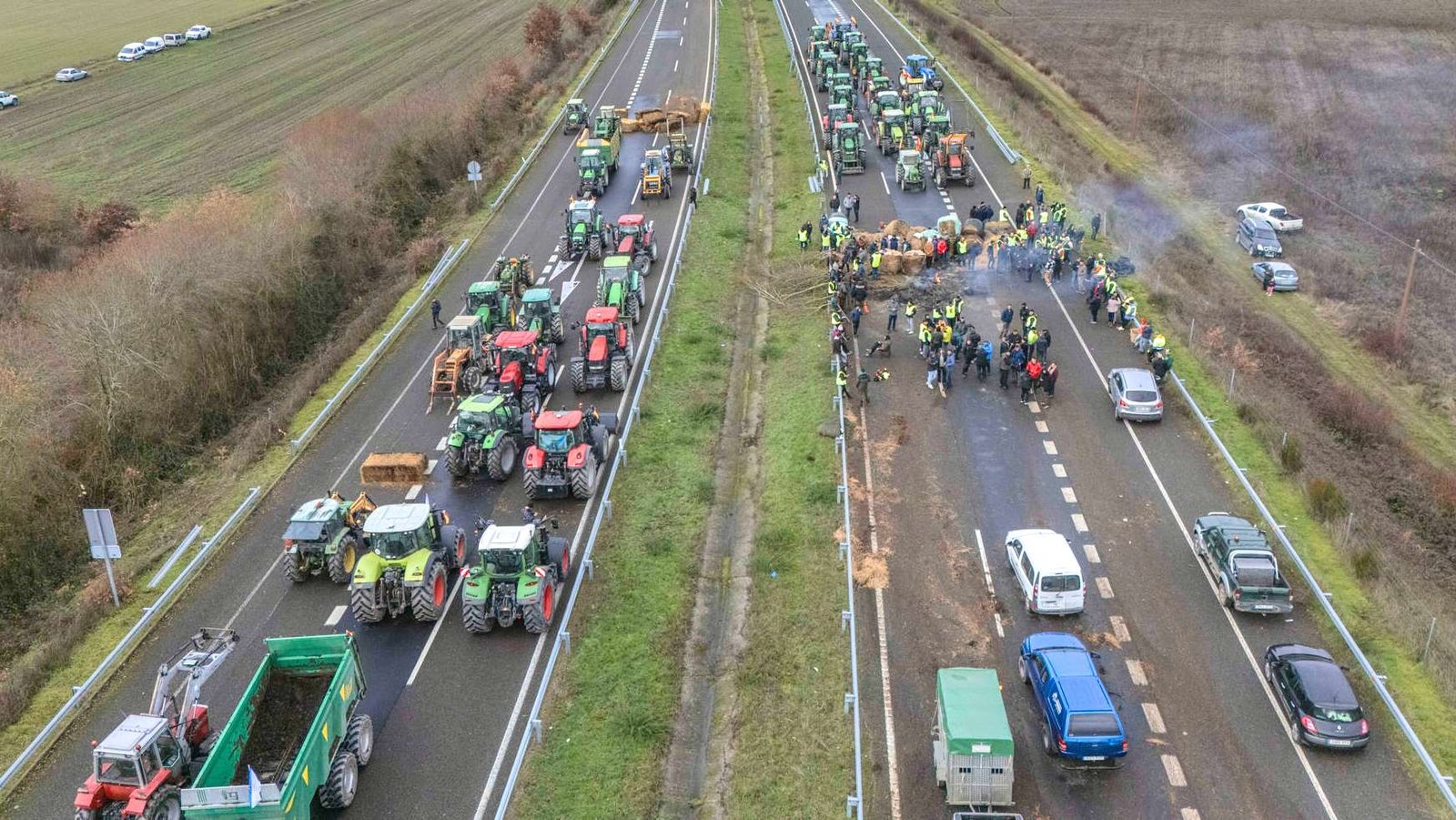
Brussels’ strategy, however, faces significant resistance. The pragmatism of Berlin and Madrid collides with the agrarian protectionism of Paris and Warsaw. Governments like France use environmental criteria as a pressure weapon — invoking deforestation and the need not to be held hostage by a single center of global power.
“France is against it due to intense pressure from its farmers, who feel threatened by Brazil’s competitive differential”, recalls Souza Filho.
Legal strategy: the “slicing” of the EU-Mercosur agreement
Faced with this political impasse, the European Commission designed a legal strategy to overcome the risk of blockages in national parliaments: the slicing of the agreement, which divides the treaty into parts with different approval regimes.
The agreement was divided into two distinct legal blocks. Commercial clauses — tariffs, quotas and trade in goods — fall under the exclusive competence of the European Union and only require the consent of the European Parliament and conclusion by the Council by a qualified majority: 55% of countries representing 65% of the population.
The clauses involving investments, data protection, government purchases and regulatory cooperation depend on ratification by the 27 national parliaments.
Critics point out that slicing reduces the oversight power of national parliaments on sensitive issues. The summit in Brussels argues that the model is necessary to guarantee legal security for investors.
Economic benefits and legal security for Brazil
On the Brazilian side, this agility means that the reduction of tariffs and the opening of quotas for products such as meat and ethanol can be implemented without waiting for years of debates in distant assemblies.
Legal predictability is the main attraction for European productive capital, which already has a stock of US$321.4 billion invested in the country in 2023, according to the Central Bank. The agreement strengthens Mercosur as a platform for international insertion and incorporates commitments to trade defense and regulatory cooperation, creating a safer business environment for investors.
More than that, Brazil gains an institutional asset: the agreement locks in long-term commitments that transcend governments, reduces the space for arbitrary measures, increases regulatory transparency and signals that the country is willing to enter complex global production chains.
The impact on Brazilian agribusiness with the EU-Mercosur agreement
Brazilian agribusiness is the clear protagonist of the agreement. Around 99% of Mercosur’s agricultural exports will have some level of tariff liberalization, which will allow Brazil to compete on equal terms in a market with high purchasing power.
Instant coffee, orange juices, fresh fruits and vegetable oils lead the list of winners, with the elimination of tariffs increasing profit margin and investment capacity. The agreement also includes quotas for sensitive sectors: 99 thousand tons of beef with reduced tariffs and ethanol for industrial use with zero tariffs.
“Preferential access to the European market encourages the integration of Brazilian companies into global value chains”, highlights Rafael Cervone, president of the Center for Industries of the State of São Paulo (Ciesp).
Environmental requirements as a trade barrier
But the benefit will not be uniform. Environmental clauses are no longer diplomatic props to become the center of the trade dispute. The French government uses environmental criteria as a pressure weapon — suspending imports of products that use pesticides banned in Europe and transforming the tariff debate into a costly regulatory barrier.
“The agreement rewards efficiency and international standards. Those who operate under traceability and environmental control will capture more value”, highlights José Luiz Mendes, strategy and M&A consultant at StoneX. Sustainability needs to be seen as a business strategy, not just as a cost.
National industry: caution and modernization
If agriculture celebrates, the industry views the agreement with caution and hope. The pact represents a chance to stop the decline in industrial exports to Europe and reposition the country in a strategic market with high added value — opening up space for knowledge-intensive sectors and highly specialized services, such as engineering and technical services.
Preferential access opens doors to productive modernization and scientific cooperation with the EU. “It is essential that implementation considers periods of adaptation and instruments to support competitiveness”, says Flávio Roscoe, president of the Federation of Industries of the State of Minas Gerais (Fiemg).
For the industry, diversifying markets is a strategy to reduce external vulnerabilities and strengthen production chains.
Competitive challenges and the internal market
There is a price to pay: the free market works both ways. European cheeses, powdered milk and dairy ingredients will hit Brazilian shelves, along with premium wines and drinks, putting pressure on prices and profit margins for national producers.
This reality will require forced restructuring of the internal market. Analysts predict an acceleration in the consolidation process of dairy companies in Brazil — anyone who does not seek productive efficiency and international standards will face difficulties in surviving.
Faced with this competitive pressure, the role of the State and professional associations will be fundamental to reduce the cost of adaptation. Industrial modernization policies, access to subsidized credit, innovation programs and support for technical certification can determine who will emerge stronger from this process — and who will be left behind.
In addition to consumer goods, European industry dominates the supply of high technology: chemical, pharmaceutical inputs and precision machinery essential for the Brazilian production chain. In 2025, 98.8% of Brazilian imports from the EU (US$49.7 billion) were industrial goods, according to the Secretariat of Foreign Trade (Secex).
The agreement preserves essential industrial policy instruments and ensures adaptation deadlines for sensitive sectors such as the automotive sector, allowing automakers and the supply chain to restructure. Protection goes hand in hand with facilitated access to European technologies, vital for global competitiveness.
The objective is to integrate the industry into global value chains and raise production standards without sacrificing qualified employment. “It is a necessary structural advance for long-term economic growth”, says Rafael Cervone, from Ciesp.
The big issue for Brazil is not just to export more, but to export better — taking advantage of the agreement to climb the value chain and strengthen sectors with greater technological sophistication.
