
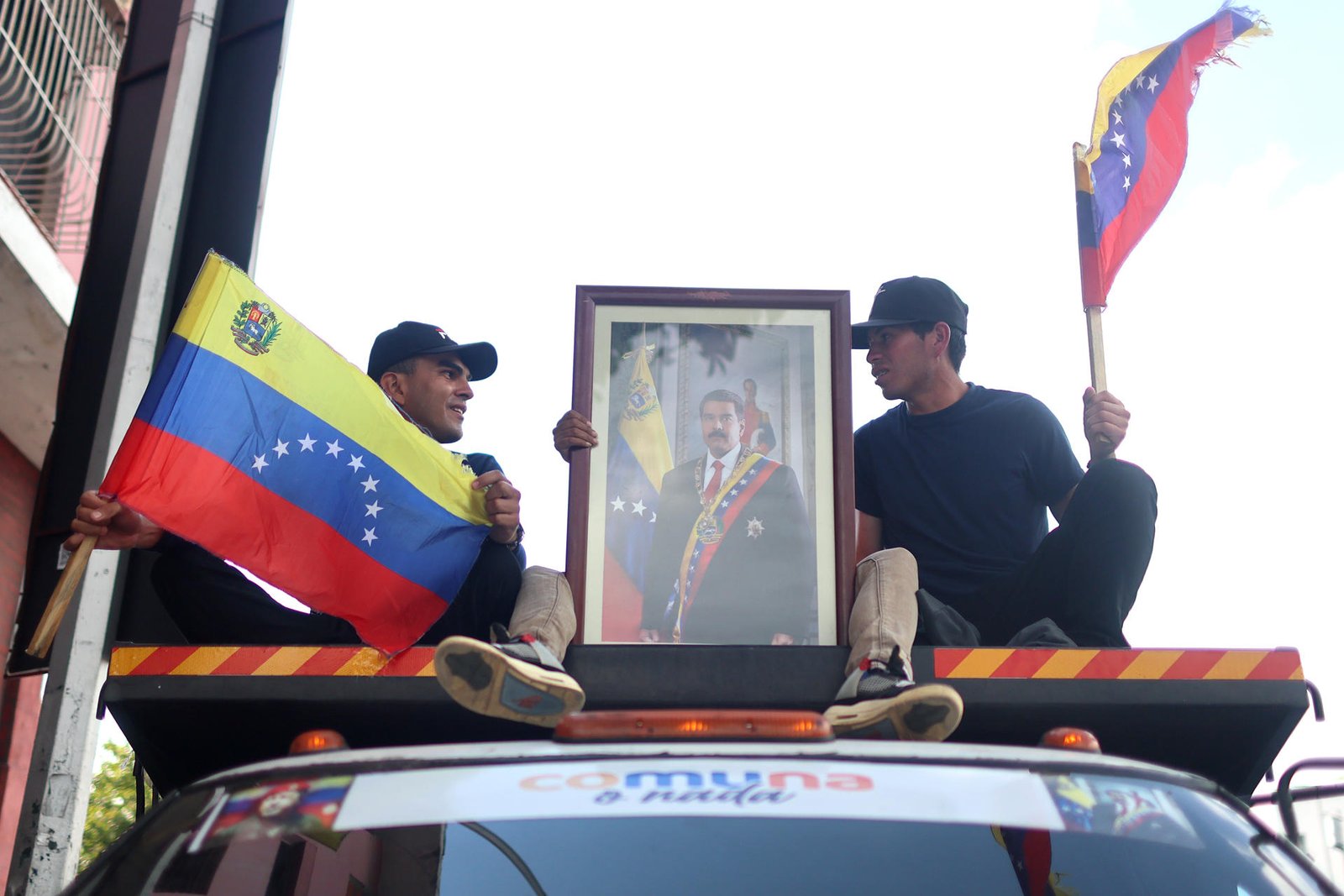
Captured last weekend in a United States military operation, former Venezuelan dictator Nicolás Maduro, in addition to promoting intense political repression, also generated one of the biggest economic and humanitarian crises in recent world history.
The situation in Venezuela had already been deteriorating since the regime of Maduro’s predecessor, Hugo Chávez (1999-2013), but his disciple accentuated the process.
A mixture of failed economic measures, sanctions (applied due to human rights violations committed by Chavismo) and the deterioration of the Venezuelan oil industry, the source of the country’s main revenue and victimized by incompetence, corruption and lack of investment, led the Gross Domestic Product (GDP) to plummet.
According to statistics from the International Monetary Fund (IMF), in 2012, the year before Maduro came to power, Venezuela had an economy of US$372.6 billion. Eight years later, it had suffered an impressive drop and reached US$42.8 billion.
Since then, there has been a recovery, but the 2025 GDP, at US$82.8 billion, remains well below the level recorded before Maduro became the country’s dictator.
The impressive inflation data also illustrates the Chavista disaster. In 2012, Venezuela had a price variation of 20.1% – high, but well below the catastrophe that would come in the following years.
In 2018, according to IMF data, the country had an incredible inflation of 130,060% (yes, you read that right: 130,000 percent). Price variation slowed down, but in 2025 it remained in a frightening range, remaining at 548.6%.
According to data from the Statista platform, the poverty rate for Venezuelan households rose from 29% in 2012 to 82.4% in 2023.
With the decline of the oil industry under Maduro, Venezuela is unable to extract wealth from the world’s largest known reserves of the commodity.
According to the Statbase platform, which gathers international data, in 2012, before Maduro became leader of the Caribbean country, Venezuela produced 2.67 million barrels of oil per day (already a significant drop compared to 1998, before Chávez came to power, when production was 3.4 million per day).
With Maduro, production hit rock bottom (pun intended) in 2020, when it stood at 544,522 barrels per day. In 2024, the index had improved, but remained at just 893,470 barrels per day, well below the level before Chavismo.
With the political repression, the rampant violence tolerated (and, according to accusations by the American Department of Justice, even encouraged) by Maduro and this economic disaster, millions of Venezuelans left in search of a better life.
According to a report last month from the United Nations High Commissioner for Refugees (UNHCR), more than 7.9 million Venezuelans have left the country since 2014, representing 23% of the population and “the largest exodus in recent Latin American history and one of the largest displacement crises in the world.”
Around 6.9 million of these Venezuelans are in other countries in Latin America and the Caribbean, according to the UN agency.
“Runaway violence, inflation, gang warfare, a steep rise in crime, as well as shortages of food, medicine and essential services, have forced millions of people to seek refuge in neighboring countries and elsewhere. An estimated 2,000 people leave Venezuela every day,” highlighted the UNHCR.
It is still unclear what the Venezuelan future will be like, but at least one nightmare (Nicolás Maduro) seems to have come to an end.
