
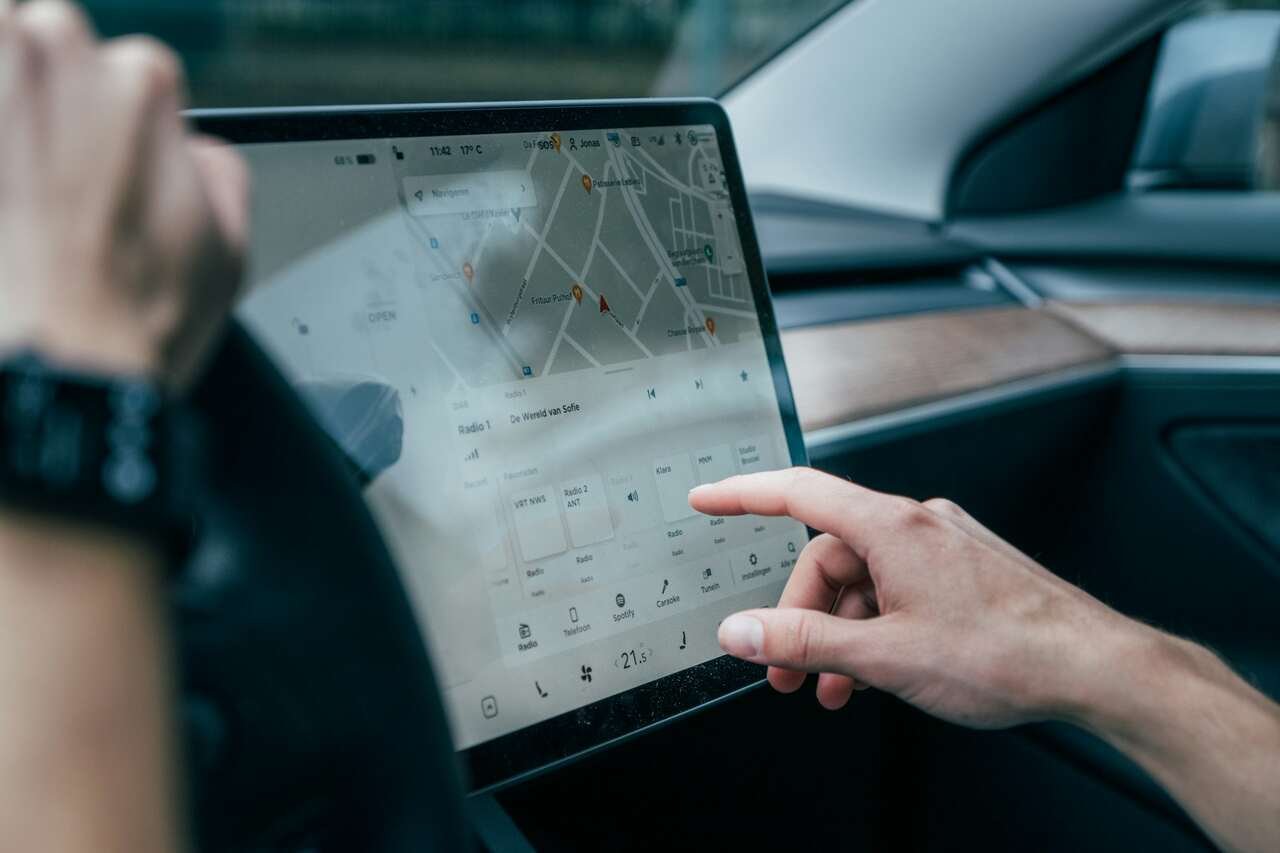
A new study conducted by the University of Washington in partnership with the Toyota Research Institute (TRI) highlights the dangers of touchscreens in modern cars.
Infotainment screens have become almost essential in modern cars. In recent years, very few cars have been shipped without a multimedia system mounted in the center of the dashboard.
But while they offer drivers conveniences such as navigation and integration with media apps, new research highlights that they can pose significant risks to driver safety.
In the study, 16 participants were placed in a simulator and had to interact with targets on a 12-inch touchscreen similar to those used in real cars. At the same time, a memory test was also conducted to simulate the cognitive load of real traffic situations.
Using sensors that track physiological signals related to gaze, hand movements, and mental workload, researchers found that lateral in-lane deviations increased by 42% while participants interacted with the screen.
However, the accuracy and speed of touch operations while driving decreased by 58%, and worsened as mental load increased. Increasing the button size did not improve performance.
Researchers say many drivers reach out and interact with the screen before looking at it. Ideally, automakers would therefore focus on implementing simple eye-tracking sensors in future models to measure driver attentiveness.
This allows the interface to adapt in real-time to emphasize important actions while reducing unnecessary distractions, making touchscreen use safer while driving.
Photo: Unsplash. This content was created with the help of AI and reviewed by an editorial team.
