
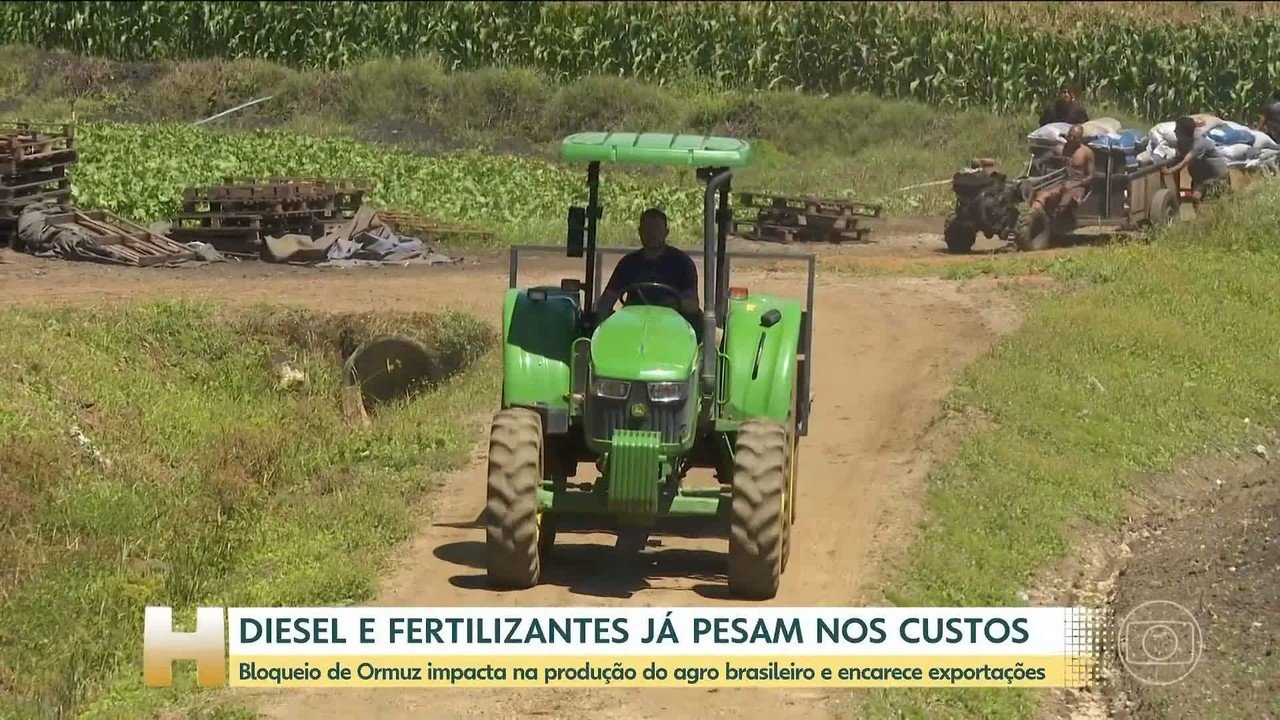
Child with plate of food Getty Images Disruption of supplies of fertilizer and its key ingredients due to the war in Iran could cost up to 10 billion meals a week worldwide and will hit poorer countries the hardest, according to the head of one of the world’s biggest fertilizer producers. Svein Tore Holsether, chief executive of Yara, told the BBC that hostilities in the Gulf, which have blocked shipping through the Strait of Hormuz, are putting global food production at risk. Reduced crop yields as a result of less fertilizer use could lead to fierce competition for food, he warned. Holsether called on European countries to carefully consider the impact of a price war on the “most vulnerable” in other countries. While the UK is very unlikely to face food shortages, it is expected that the rising costs faced by food producers will start to show up in supermarket bills in the coming months. Brazilian agriculture feels the impacts of rising diesel prices and reduced fertilizer supply “Up to half a million tons of nitrogen fertilizer are not being produced in the world at the moment due to the situation we are in,” said Holsether. “What does this mean for food production? I would estimate up to 10 billion meals will no longer be produced each week as a result of the lack of fertilizer.” Not applying nitrogen fertilizer would reduce the yield of some crops by up to 50% in the first harvest, Holsether said. “The fertilizer market is very global, so these parts are moving around the planet, but the main destinations would be Asia, Southeast Asia, Africa and Latin America, where you would see the most immediate impact of this.” Parts of the world where there is already underfertilization, such as several countries in sub-Saharan Africa, could see an even greater impact on agricultural production, he added, saying “significant declines” are possible in these locations. Planting times vary around the world. The UK is in peak planting season, while in Asia farmers are just getting started. The consequences of Asia’s fertilizer shortages won’t show up in food prices until the end of the year, when crops that should have been planted this spring are smaller than expected, or simply non-existent, according to analysts. Professor Paul Teng, a senior food security researcher in Singapore, said some countries may have enough fertilizer for the immediate planting season, “but if the crisis drags on for longer, we will see an impact on crops like rice in the coming months.” Farmers around the world are facing a daunting array of challenges, Holsether said, as the prices they can charge for the food they produce have not yet been adjusted to cover the higher bills they are facing. “They face higher energy costs, tractor diesel is increasing, other inputs for farmers are increasing, the cost of fertilizer is increasing, but still crop prices have not yet increased to the same extent,” he said. Fight for food According to the United Nations, about a third of the world’s fertilizers — such as urea, potassium, ammonia and phosphates — normally pass through the Strait of Hormuz. The price of fertilizer has risen 80% since the start of the US-Israeli war against Iran. Continuing the conflict could result in a scramble for food between richer and poorer nations, Holsether added. “If there is a dispute over food and one that Europe is robust enough to deal with, what we need to keep in mind in Europe is: in this situation, who are we taking food from when we buy it?” “This is a situation where the most vulnerable people pay the highest price for this, in developing nations that cannot afford to keep up.” This would have implications for “food accessibility, food shortages and hunger,” the Yara chief said. In the UK, the Food and Drink Federation recently predicted that food inflation could reach 10% in December. The Bank of England said this week it thinks food price inflation could rise to 4.6% in September and even higher later in the year. The UN World Food Program estimates that the combined consequences of conflict in the Middle East could push 45 million more people into acute hunger by 2026. In Asia and the Pacific, food insecurity is expected to increase by 24% — the largest relative increase of any region. This text was translated and reviewed by our journalists using AI, as part of a pilot project.
Source link
Billions of meals around the world are at risk because of the war in Iran, says president of fertilizer company
1
