
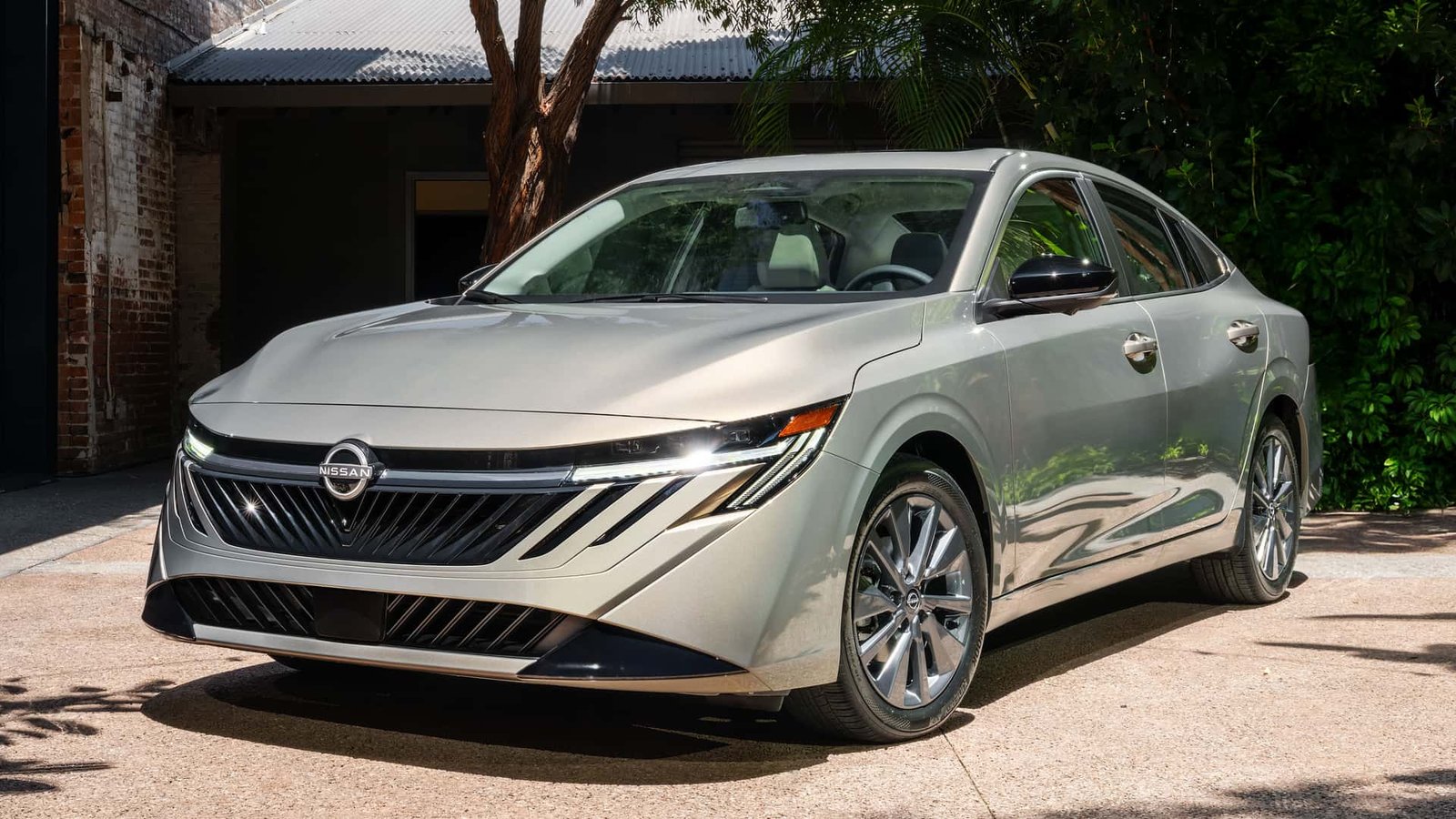
- Nissan says CVTs still have a role in small, light-duty cars.
- The company is already moving bigger models like the Murano and Pathfinder to traditional automatic transmissions.
- CEO Ivan Espinosa confirmed CVTs won’t be used in future performance cars.
Nissan has had its fair share of issues surrounding its continuously variable transmission—also known as the dreaded CVT. In 2025, the company settled a class-action lawsuit with owners, paying out $3 million to Maxima and Murano drivers and extending warranties on affected vehicles.
Even so, Nissan isn’t ready to abandon the CVT entirely. Speaking with journalists at the company’s headquarters in Yokohama, Japan, CEO Ivan Espinosa said the transmission still plays a role—particularly in smaller cars. He notes:
‘The [CVT] still works in small cars—it’s a transmission that works well in light-duty cars, up to C segment. We have improved the technology a lot.’
Photo by: Nissan
At the same time, Nissan’s CTO understands the CVT’s limitations. On heavier vehicles, for example, Espinosa acknowledges that CVTs may not be the best fit. He says:
‘We also understood that for heavier applications, it’s probably not ideal, and that’s why we moved to a conventional transmission for the E segment.’
Nissan has already started making that shift. Newer versions of the Murano and Pathfinder, for example, have replaced their CVTs with more refined nine-speed automatic transmissions. That’s likely to continue in upcoming models like the Xterra, as well.

Photo by: Nissan
When it comes to performance models, Espinosa made the company’s position clear: CVTs won’t be part of the equation. Espinosa states:
‘I’m not gonna put a CVT in a Skyline… If I want to make an affordable car that is sporty, instead of making a Spicy Sentra, I will probably go and make a Sylvia. A real affordable sports car.’
Motor1’s Take: This is great news for CVT haters. The transmission will still serve a purpose in Nissan’s smaller, budget-friendly vehicles like the Kicks and Sentra, but for larger or more performance-oriented models, the company is moving in a different direction.
