
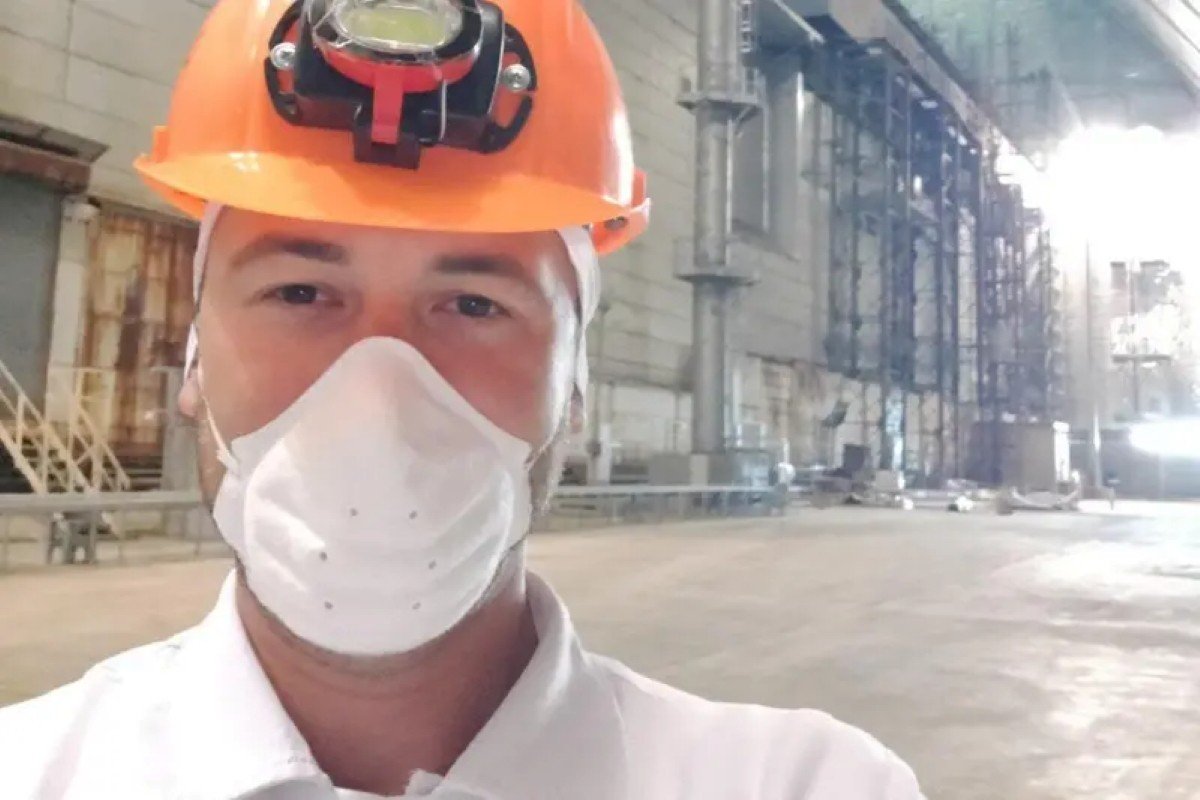
Anatolii Doroshenko is a researcher at the Institute for Safety Problems of Nuclear Power Plants, in Ukraine Getty Images via BBC Reactor 4 at the Chernobyl nuclear power plant, in Ukraine, was completely destroyed by the fatal explosion on April 26, 1986. 🗒️ Do you have any suggestions for a report? Send it to g1 But, around 10 meters deep, the control and monitoring centers remain, which survived the disaster. “It’s like a big labyrinth underneath the reactor”, explains researcher Anatolii Doroshenko, 38, from the Institute for Nuclear Power Plant Safety Problems (ISPNPP) to the BBC. Trending videos on g1 His job includes walking through this maze at least once a month — a mission that, according to New Scientist magazine, “could be considered the most dangerous job in the world.” In that network of underground rooms and corridors, everything is contaminated by radiation: the floor, the equipment, the walls and even the air. The explosion on April 26, 1986 destroyed reactor 4 at the Chernobyl nuclear power plant, in Ukraine Getty Images via BBC There, Doroshenko is in charge of reviewing the equipment, collecting data, installing meters, taking samples and monitoring the state of the nuclear fuel. In some rooms, the radiation is so high that researchers have to complete their tasks in less than four minutes and leave immediately. In others, the radiation levels do not even allow it to stay there. Their work is essential to ensure that reactor conditions remain stable. Doroshenko recognizes that his work generates fear, but he uses this fear as his ally. “Fear helps you maintain control and follow guidelines to ensure low doses of radiation,” he explains. “Here, the biggest risk is getting used to the conditions of the place. If you get used to the fear, you start to ignore that you are surrounded by radiation. Anything, a glove, a metal piece, can be contaminated, even if you don’t notice it.” Doroshenko (left) has worked at the Chernobyl nuclear power plant for 12 years Personal Archive Under the ruins The labyrinths traversed by Doroshenko are the facilities from which the Chernobyl power plant was controlled. The place is dark. Some corridors have lighting, but the researcher and his colleagues always carry flashlights. Some passages are so narrow that they have to walk in a crouch. All rooms and corridors are signposted, but you need to know the way well to avoid getting lost in the passages. They also have contamination maps, which indicate which areas have the highest radioactivity. “Here, all scientists know where we can work and where not,” explains Doroshenko. Visitor to the Chernobyl nuclear power plant records in the control room of the destroyed block 4 of the plant Getty Images via BBC The site is full of tubes with radioactive water and dangerous formations of corium, a substance produced when nuclear fuel, at temperatures of thousands of degrees Celsius, mixes with the structure of the reactor core. This substance seeped into the ruins, as if it were lava, forming peculiar figures. One of the best known is the so-called “elephant foot”. The ‘elephant’s foot’ is a highly radioactive corium formation Getty Images via BBC Unreachable locations There are still around 200 tonnes of nuclear fuel in unit 4, according to the International Atomic Energy Agency. It is expected that recovering this highly radioactive material will take around 40 years. Everything is covered by a sarcophagus which, in turn, is surrounded by the New Safe Confinement, a steel dome taller than the Statue of Liberty. It was designed to hermetically seal reactor 4 for 100 years and protect the world from Chernobyl radiation. Much of this nuclear fuel is in locations unattainable to Doroshenko and his colleagues. Corridor inside the Chernobyl nuclear power plant Getty Images via BBC After the 1986 explosion, unit 4 was covered with large volumes of cement to stop the infiltration of radiation. “If we could take samples from the destroyed reactor, we could precisely determine its level of nuclear risk,” explains Doroshenko. “But it is under a huge layer of cement and human access is impossible. So we carried out measurements to understand what processes occur in the nuclear fuel.” Everything inside Chernobyl reactor 4 is contaminated by radiation. Getty Images via BBC ‘Almost euphoric’ To descend into the maze, Doroshenko uses several layers of protective clothing. They include arm protectors, shoe protectors and an FFP2 respirator with a valve. In some narrower areas, where it is necessary to clear a path through the rubble, he adds a special polyethylene suit. When leaving, he must pass through several control points and a “dirty zone”, where he takes off his clothes, which are then decontaminated or directly destroyed, if the radiation cannot be removed. Next comes a mandatory shower and dosimetry station to confirm there are no radioactive particles in your body. Doroshenko says that, to maintain safety at the reactor, it is necessary not to panic. Personal archive Doroshenko enjoys his work. He says that visiting unit 4 takes him to a state of “almost euphoria”, an emotion that, he believes, can be compared to climbing Everest. But even so, he insists that it is essential to maintain control. “The main thing is not to panic. Panic makes you make mistakes.” About 10 meters below Chernobyl’s reactor 4, there is a network of rooms and corridors that Doroshenko walks through once a month Getty Images via BBC “This place is full of myths and is often demonized, but it is not as scary as many try to present it,” explains the researcher. “When you are there, you realize that it is a structure created by human beings. You understand that that space requires constant vigilance and supervision.” “If people like us stop going down there, an uncontrolled process will begin, which is dangerous,” he says. Reactor 4 is covered by the New Safe Confinement, a steel dome designed to last 100 years Getty Images via BBC Against Oblivion Once a year, Anatolii Doroshenko undergoes mandatory medical examinations and, on his holidays, he always tries to go to sea. “I’ll keep going down into the reactor labyrinths as long as I can,” he says. “They didn’t impose a limit on me. If a generation comes along that can replace me, I’ll think about retiring. But for now, I’m not thinking about that.” For him, the most important thing is that people keep in mind the challenges faced at Chernobyl: containing radiation from nuclear fuel waste and maintaining control of the facilities. “It’s hard work. Chernobyl must not be forgotten.” Top image by Caroline Souza of the BBC Americas Visual Journalism Team, with photos from Getty Images and the Ukrainian National Academy of Sciences.
Source link
‘Most dangerous job in the world’: the scientist who navigates the radioactive labyrinth of Chernobyl
2
