
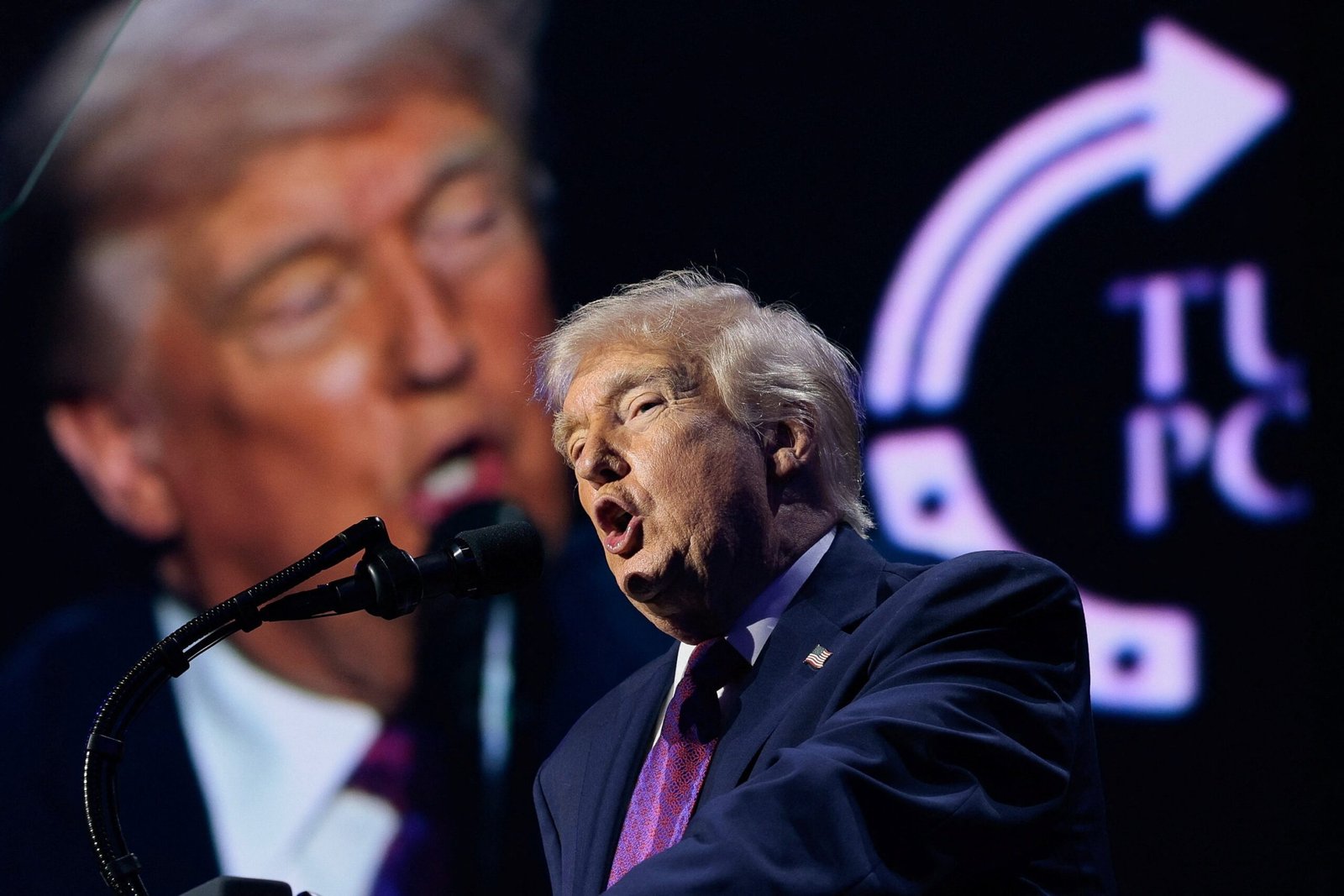
Iran reopens Strait of Hormuz to navigation Iran announced this Friday (17) the full reopening of the Strait of Hormuz. The statement was followed by speeches from the President of the United States, Donald Trump, who stated that there were no longer “conflicting points” for an agreement between the two countries. The version, however, is contested by Tehran. ✅ Follow the g1 international news channel on WhatsApp LIVE: Follow the latest news on the war ▶️ Context: The Strait of Hormuz has become one of the main sources of tension in the war between the USA, Israel and Iran. Much of the world’s oil, in addition to a relevant portion of fertilizers, passes through the maritime route. The closure put pressure on the global economy. Hormuz lies between Iran and the Arabian Peninsula and is largely controlled by Iranian forces. On April 7, the United States and Iran signed a ceasefire that provided for the full reopening of the crossing. Even so, the strait remained closed. Faced with this scenario, the US began a naval blockade against ships in Iranian ports to put pressure on the country’s economy and force the route to open. Iran says that the reopening announced this Friday is linked to a ceasefire agreement between Israel and the Lebanese group Hezbollah, in force since Thursday (16), without mentioning the US naval blockade. Also according to the Iranian government, all ships will be able to circulate freely at least until April 22, when the truce ends. Hours after the announcement, however, statements from Trump and the Iranian government itself raised doubts about maintaining the opening of the sea route and the proximity of an agreement. 🔵🔴 US version: Trump used social media, interviews and a speech to supporters to say that negotiations have progressed and are close to an end. At the same time, he stated that American forces will continue to pressure Iran. The president said he will maintain the naval blockade until negotiations are “100% completed.” He also stated that the US will enter Iran at a “smooth pace” to recover the enriched uranium and take it to US territory. According to Trump, Iran has already agreed not to develop nuclear weapons. In an interview with AFP, he declared that there were no more “conflicting points” left and that an agreement was close. “We are very close. It seems like it will be something very good for everyone. And we are very close to closing an agreement,” he said. “Things are going very well.” 🟢🔴 Iran version: Trump’s statements were not well received in Tehran. Authorities used state media and social networks to counter the US president and make new threats. Shortly after Trump’s first speeches, Iran stated that it could close the Strait of Hormuz again if the US maintains the naval blockade. Regarding uranium, the Iranian Foreign Ministry spokesman said the material “will not be transferred anywhere.” Iranian Parliament Speaker and senior negotiator Mohammad Baqer Qalibaf accused Trump of lying about the negotiations. Speaking to Reuters, an Iranian official stated that there are still “significant differences” between the two countries, mainly on the nuclear issue. According to this source, a preliminary agreement could be reached to extend the ceasefire and negotiations. The official says Iran wants sanctions relief and compensation for war damage. “In return, Iran will provide assurances to the international community about the peaceful nature of its nuclear program,” he said. The official added that any other narrative about the negotiations “is a misrepresentation of the situation.” READ ALSO Trump says UFO analysis revealed ‘interesting’ documents Pope Leo criticizes use of AI to spread ‘conflict, fear and violence’ More than 38,000 women and girls died in the war in Gaza, says UN Is Hormuz really open? US President Donald Trump speaks during a Turning Point USA event at Dream City Church in Phoenix, Arizona, USA, on April 17, 2026 REUTERS/Evan Vucci The reopening of the Strait of Hormuz excited the international community and the market, with a drop in the price of oil following the announcement. Still, there are signs that the route is not completely open. Maritime traffic data obtained by Reuters shows that about 20 ships advanced through the Persian Gulf toward the strait on Friday evening, but most retreated. The reason is unclear. The Iranian government itself also gave contradictory signals. The state agency Tasnim, linked to the Revolutionary Guard, classified the reopening as incomplete and criticized the country’s chancellor, Abbas Araghchi, who had announced the total release. According to the agency, Araghchi’s statement was “in extremely bad taste”, as it was “published without the necessary and sufficient explanations” and “created ambiguities about the conditions of passage”. “Several conditions were considered for this issue, one of the most important being the Iranian Armed Forces’ complete supervision over the passage and navigation of ships. This passage will be considered canceled if the alleged naval blockade continues,” he said. Iran also began requiring commercial ships to notify and coordinate with the Revolutionary Guard before crossing the Strait of Hormuz, something that did not occur before the war. Furthermore, the Ministry of Defense reported, in a statement cited by state TV, that military ships and vessels linked to “hostile forces” remain without permission to cross. Blockade of the Strait of Hormuz Editoria de Arte/g1 VIDEOS: most watched on g1
Source link
Hormuz reopened, uranium impasse: what has progressed and what is holding back negotiations between the US and Iran
8
