
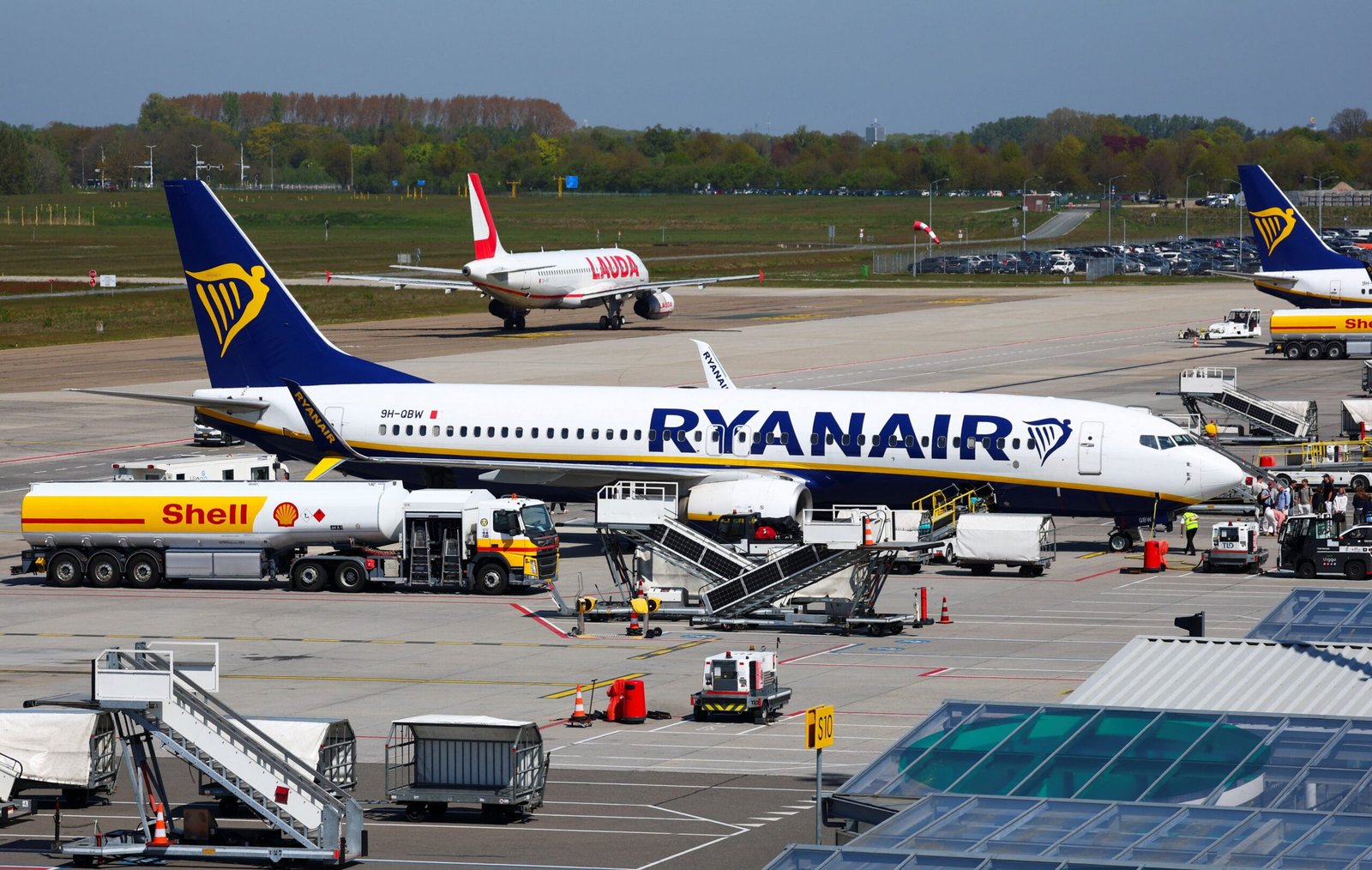
Ryanair plane at Eindhoven airport, in the Netherlands REUTERS/Piroschka van de Wouw While world leaders avoid publicly addressing the direct economic impacts of the war in the Middle East, a European minister decided to break the silence. On Monday (27), the Spanish Minister of Industry and Tourism, Jordi Hereu, issued an unusual warning to the population: buy airline tickets as soon as possible, anticipating an increase in prices seen as inevitable, driven by the increase in the cost of oil and aviation kerosene. Driven by the war between the United States and Iran, the threat of a meteoric rise in the price of kerosene could cause a general increase in air fares, especially at the beginning of summer in the northern hemisphere. Videos trending on g1 The warning, made in an interview with the economic newspaper Expansion, placed at the center of the debate a topic that governments and companies had been talking about only in a technical tone – or deliberately avoiding: the concrete risk of an abrupt increase in air transport, and even chain cancellations due to lack of fuel. Record tourism, but with a fragile base Spain is experiencing a paradox. In 2025, the country received a record number of 97 million tourists, an increase of 3.5% compared to 2024, consolidating itself as one of the main tourist destinations in the world. According to Jordi Hereu, the country could maintain a similar growth rate in 2026, supported by strong international demand. But this optimistic scenario is beginning to be strained by an external factor over which the sector has no control: the cost of aviation fuel. The minister was explicit in stating that the rise in kerosene threatens to increase air fares and negatively pressure demand, especially on medium and long-distance flights. “Buy now” The recommendation made by Hereu was direct and unusual for a member of government: “What we recommend is that people buy their tickets now, because it is true that airlines are currently using kerosene purchased some time ago. There is, therefore, a real risk of price fluctuations.” The minister added that it is already evident that prices have risen and that this could affect consumers’ willingness to travel, despite the strength of Spanish tourism. He also stated that Spanish and European authorities are taking measures to avoid a fuel shortage, signaling that the problem is already treated as structural, and not hypothetical. According to the European organization Transport & Environment, the recent rise in oil prices has already added more than US$100 (around €85) to the cost of long-distance flights originating in Europe. This increase tends to be passed on to the final ticket price, fueling a spiral of adjustments in the middle of high season. Airlines, until now, have been absorbing part of the impact thanks to advance fuel purchase contracts. But this shock absorber has an expiration date. Companies begin to cancel flights The scenario left the theoretical plan and entered practice. Transavia, a low-cost airline from the Air France‑KLM group, confirmed that it will adjust its route network in May and June to optimize costs in light of the soaring price of kerosene, a direct consequence of the war in the Middle East. The company informed that it will be forced to cancel part of the flights scheduled for May and June 2026, even though these cancellations represent less than 2% of the total schedule in that period. According to Transavia, affected customers are being notified individually via SMS and e-mail, with the right, depending on their choice, to a free rebooking, credit or full refund. For most canceled flights, an alternative to rebook within 24 hours is being offered. In a statement to AFP on Sunday, confirming information released by RMC radio, a company spokesperson stated that, “due to the current geopolitical context in the Middle East and its repercussions on the price of aviation fuel, Transavia France is adapting its flight schedule and is forced to cancel several flights scheduled for the months of May and June 2026”. Ryanair warns: June is the critical point Ryanair’s executive director, Michael O’Leary, stated that a shortage of kerosene is not expected in May in Europe, but that June is already unknown. According to him, the oil companies themselves admit that they are unable to fully guarantee supply for this period. O’Leary was blunt in linking high prices to the conduct of the conflict: “As long as the war in the Middle East continues and Trump continues to handle it so poorly, gas prices will necessarily remain higher.” According to the executive, 10% to 20% of Ryanair’s supply is at risk. He highlighted that the United Kingdom is the country most exposed to cancellations, as it depends in part on supplies from Kuwait, directly impacted by the blockade of Hormuz. France, for now, says it does not face immediate supply difficulties, but the government admitted that it could release part of its strategic stocks if volume problems arise. The statement was made by French government spokeswoman Maud Bregeon on April 19. Even so, uncertainty grows, especially in relation to the month of June. European dependence on the Gulf and the blockade of the Strait of Hormuz The structural problem is known: Europe normally imports around half of its kerosene from the Gulf countries. Since the start of the war between the United States and Iran at the end of February, this dependence has become a critical point. The Strait of Hormuz, through which approximately 20% of all world hydrocarbon production passes, is blocked by Tehran, interrupting essential logistical flows for global energy supply — and, consequently, for civil aviation. In Brussels, European Commissioner Dan Jorgensen acknowledged that the European Union is “very quickly” approaching a potential supply crisis, with the concrete risk of a summer marked by more expensive tickets and flight cancellations. With AFP
Source link
‘Buy now’: Spanish minister warns that war could skyrocket air ticket prices
5
