
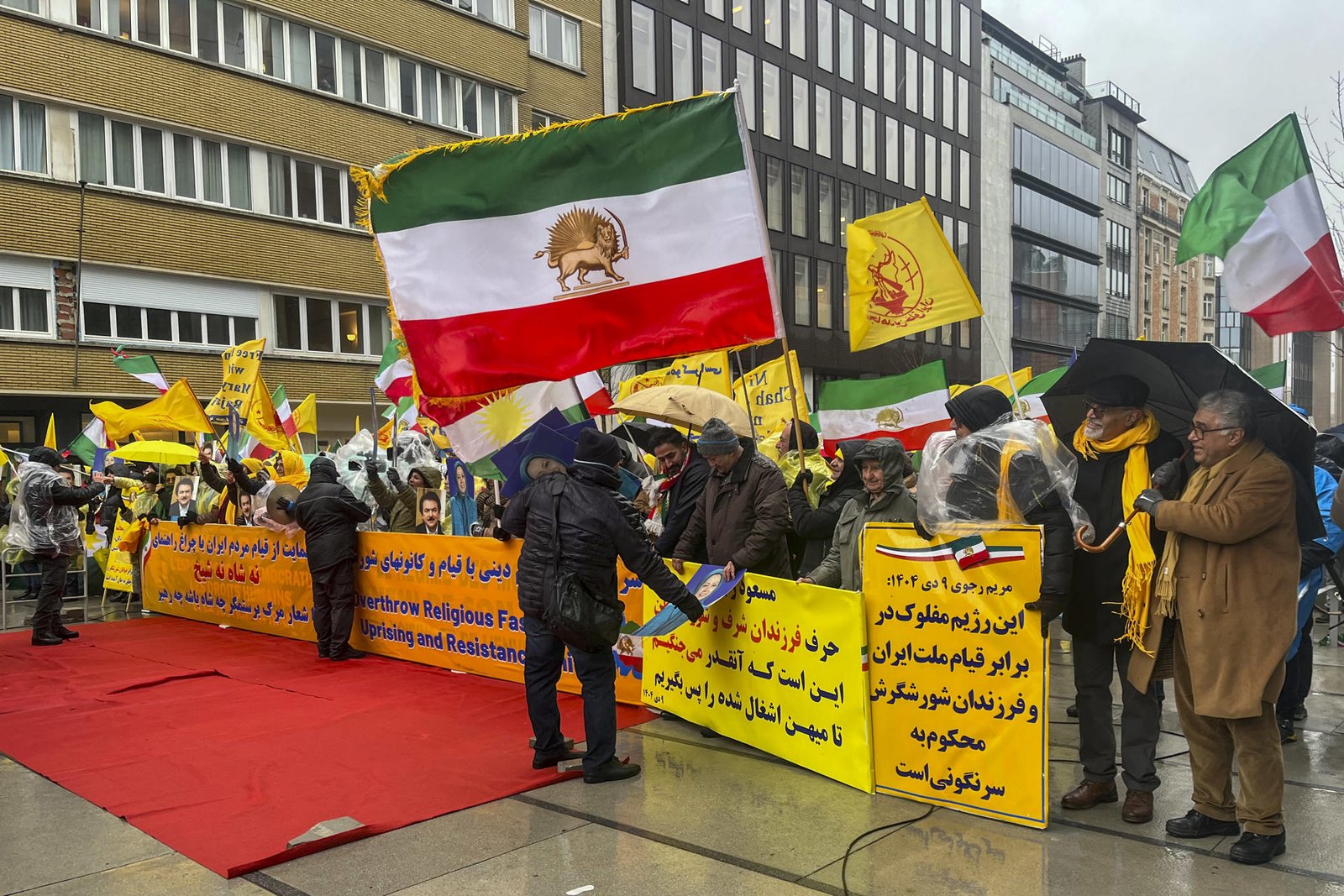
Protests against Iran’s regime gained strength in numbers and violence this weekend, leaving a trail of hundreds of deaths so far, according to human rights observers.
The large demonstrations in the country even increased tensions with the USA, especially after President Donald Trump threatened Tehran with military intervention to stop the murders committed by security agents linked to the Ayatollah regime.
Mass protests began two weeks ago due to economic problems facing the country. Opposition movements quickly joined the actions inside and outside Iran and protests gained momentum, challenging authoritarian religious leaders.
Hundreds of people, mostly Iranian exiles, demonstrated on Sunday (12) in London in favor of the return to Iran of Reza Pahlavi, heir to the Shah deposed in 1979, and asked for support from the USA and Israel to overthrow the current Islamic regime.
The same movement was recorded in Berlin, where hundreds of people gathered at the Brandenburg Gate and in front of the Iranian Embassy to demand an end to the repression of protests in Iran and a return to freedom in the Islamic Republic. Some posters read “Women, Life, Freedom in Iran” and “Free Iran from the occupying Islamic regime.”
Inside Iran, the peak of the protests was reached last Thursday (8), after at least 96 demonstrations in 27 of the country’s 31 provinces were recorded by the Human Rights Activists News Agency (HRANA), an Iranian human rights monitoring organization based in the USA. The large mobilization led the Tehran regime to cut off access to the internet, fearing the spread of demonstrations internally and externally. The blackout remains in effect.
The most recent estimates from human rights observers point to at least 200 deaths since the protests began. Organizations, such as HRANA, report a much higher number, close to 500 deaths.
On Friday, Iran’s Supreme Leader Ayatollah Ali Khamenei emphasized that the government would “not back down” and called the protesters vandals who were trying to “please” Trump. The US had previously suggested it could intervene in the Middle Eastern country to protect protesters.
Why did the Iranians take to the streets?
In December, Iran’s official currency – the Rial – lost half its value against the US dollar and inflation exceeded 40%. This economic deterioration and persistent high inflation were the trigger for massive protests in the country.
The growth of these demonstrations took other demands to the streets, such as discontent with the ayatollahs’ regime. Social media and images shown on television showed growing opposition to Khamenei’s authoritarian government, through slogans such as “Death to the dictator” and “Iranians, raise your voices, demand your rights.”
The response was harsh and immediate from the regime’s repression forces. Videos verified by The New York Times show gunmen shooting into empty streets of two Iranian cities on Friday and Saturday, in an apparent attempt to intimidate residents and potential protesters.
Other videos posted on social media and verified by the newspaper show dozens of what appeared to be black body bags lined up on the floor or on stretchers outside a morgue on the outskirts of Tehran.
To hinder the spread of demonstrations outside the country and communication between Iranians themselves, the regime chose to interrupt access to the internet. For Amir Rashidi, director of digital rights and security at Miaan Group, a human rights organization focused on Iran, this was the worst blackout ever carried out by authorities. He told CNN that he had “never seen anything like this”.
“In 2019, we experienced the worst internet blockage in history, but the local network was working, the home network was working,” he said. “In all the other blockades they made [o corte]the home network was working, text messaging was working, phone calls were working,” he continued.
This time, however, even media outlets affiliated with the Iranian state and security apparatus appear to have been affected by the blockade, with significantly less frequent updates than usual since the blackout began, or even no updates at all on the national situation.
Trump considers military intervention and provokes reaction from the Iranian regime
US President Donald Trump is evaluating new military actions against Iran and has had preliminary talks on the matter in the face of growing demonstrations in the Persian country, according to American officials told various media outlets.
The Republican discussed multiple options for attacking Iran, including bombings, but has not yet made a definitive decision, according to anonymous sources cited by the portal Axios, The New York Times, The Wall Street Journal and The Washington Post.
After the American president suggested possible military action to stop the deadly repression of the ayatollahs’ regime, he reported that Iranian leaders approached him to negotiate.
Despite being open to diplomacy, the authorities signaled that they are prepared for war. “We are not seeking war, but we are prepared for it,” Abbas Araghchi, Iran’s foreign minister, said in Tehran amid the protests.
The possibility of American intervention emerged hours after a post by Trump on his own social network, Truth Social, in which he offered US “help” for Iran’s “freedom” amid the protests.
New attacks on Iran would be added to those of Operation Midnight Hammer, launched by the US against three Iranian nuclear facilities in June 2025. That action was a response to Iranian attacks against Israel, which had previously bombed the same sites and assassinated high-ranking figures in the Revolutionary Guard.
Israeli Prime Minister Benjamin Netanyahu even considered on Sunday that Israel and Iran could once again become “loyal allies” if the protests that have spread across Iranian territory for two weeks succeed in overthrowing the ayatollahs’ regime.
