
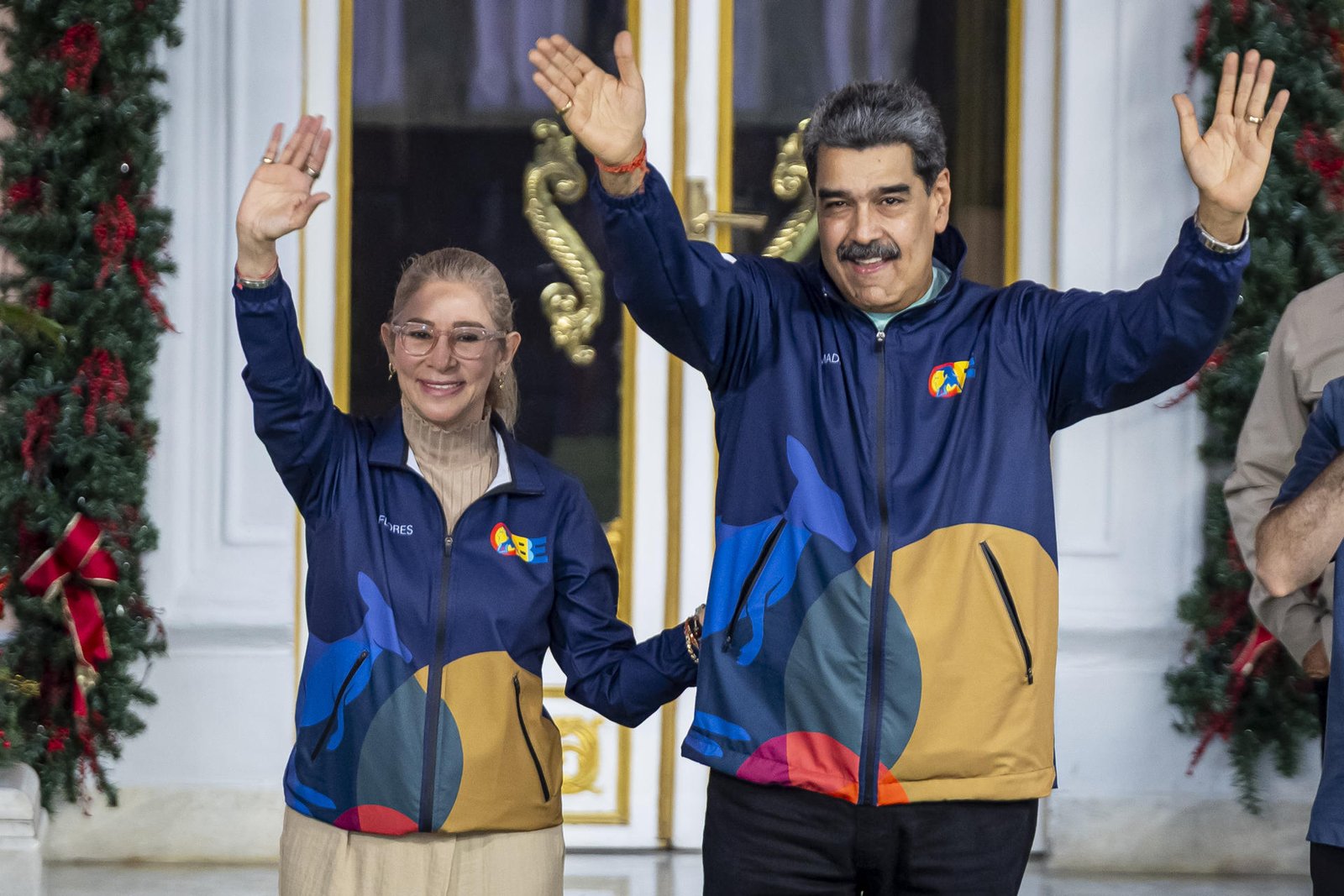
Venezuelan dictator Nicolás Maduro, who ruled Venezuela for more than a decade, was admitted last Sunday (4) in a New York prison, accused of drug trafficking and other violations. In Caracas, the day before, Delcy Rodríguez was declared interim president by the country’s Supreme Court of Justice, with the support of the remaining military leadership.
Arrested with him is First Lady Cilia Flores, who employed more than 40 relatives when she presided over the National Assembly – a blatant case of nepotism, which she herself did not deny. “I’m proud that they’re my family”, she declared, in the face of criticism.
Historically, personalist dictatorships tend to be supported not only by the figure of the leader, but also by relatives who concentrate wealth and power around him. Spouses, children, siblings, sons-in-law and nephews often occupy key positions, accumulate wealth and project themselves as informal heirs to the regime.
This family infrastructure serves as political shielding, facilitating control over other Powers and helping to guarantee loyalty in the State’s bureaucratic apparatus and elite positions. When the regime falls, however, this entire network of relatives and associates is the first to be exposed.
The fates of political heirs of dictatorships after their fall vary depending on the context. Some clans manage to reinvent themselves over time, even converting the notoriety of their surname into political capital; others are quickly destroyed.
In the Philippines, the son of a dictator deposed in 1986 is the current president
In the Philippines, the Marcos family is an emblematic example of a return to political life. Deposed in 1986 by a popular uprising, dictator Ferdinand Marcos fled into exile in Hawaii with his wife, Imelda, and children, leaving behind numerous evidence of illicit wealth.
The democratic government that succeeded Marcos confiscated part of the clan’s assets and opened corruption cases, but not all of the assets were recovered. In the 1990s, the Marcoses managed to return to the country and gradually rebuilt their influence: Imelda and her daughter Imee were elected to Parliament, and their son Ferdinand Marcos Jr., known as Bongbong Marcos, rose to governor and senator.
In 2022, Bongbong won the Philippine presidency with almost 60% of the vote, marking the family’s return to power 36 years after the patriarch’s fall. Electoral rehabilitation was possible through political alliances and the generational change of the electorate, which had little direct memory of the dictatorial period.
In Tunisia, dictator’s heirs quickly lost their power
In contrast, some heirs of dictators face immediate and relentless backlash, becoming fugitives or defendants as soon as the former boss loses power, and being neutralized before any possibility of return.
When Tunisian Zine El Abidine Ben Ali fled the country in January 2011, after weeks of protests, his family circle soon became the target of justice. In the days following the fall, dozens of the former dictator’s family members were detained on charges of crimes against the country.
State TV showed gold jewelry and precious stones seized from these relatives. The transitional government confiscated companies, properties, luxury cars and accounts linked to the Ben Ali–Trabelsi family, which totaled billions of dollars in seized assets, according to international agencies. Courts convicted the former president, his wife and several relatives of corruption, embezzlement and violent repression. The sentences had an mainly symbolic effect, as everyone was in exile in Saudi Arabia.
Some of these measures faced judicial reviews. In 2015, a Tunisian court annulled the decree confiscating the assets of 114 people linked to the dictatorial regime, a decision that generated controversy in the country. Still, politically the Ben Ali clan was dismantled. No relatives regained influence in the new democratic Tunisia. Ben Ali died in 2019. His immediate family, according to news agencies, continues to live in Saudi Arabia.
Son of Muammar Gaddafi tried to return to politics
In Libya, Muammar Gaddafi had groomed his sons, especially Saif al-Islam Gaddafi, to succeed him in command. The 2011 revolution, however, abruptly ended the dynasty in formation.
During the fighting that toppled Gaddafi, some of his sons were killed by rebels or in clashes. Others narrowly escaped. Saif al-Islam was captured by militiamen in November 2011 and was sentenced to death in 2015. The militia that detained him, however, refused to hand him over to the central government or the International Criminal Court.
Saif was eventually released in 2017 and disappeared from public life for a few years. A decade after his father’s fall, he resurfaced trying to pursue a political career: in 2021, he registered his candidacy for president of Libya. The election was eventually postponed because of internal disputes, and the eligibility of Gaddafi’s heir was challenged in the courts. To date, amid political instability, national elections have not been held.
Other members of the clan preferred exile. Saadi Gaddafi fled to Niger during the war, but was later extradited to Tripoli and spent years in detention on charges including murder and embezzlement. In 2021, he was acquitted and released, then went into exile in Türkiye. Gaddafi’s widow, Safia, and daughter Aisha took refuge in Oman, while other children survive in prison or exile.
Some family members of deposed dictators choose to live out of the spotlight
There are also cases in which family members of former dictators stay away from politics, but enjoy the accumulated wealth. Nicaragua’s Somoza dynasty ended in 1979 and practically disappeared from the political scene. Anastasio Somoza, the last dictator, was assassinated in exile in Paraguay the year after his deposition, and his descendants never regained national relevance.
In Zimbabwe, after Robert Mugabe was forced to resign in 2017, former first lady Grace Mugabe was named as his potential successor, but ended up withdrawing into private life, maintaining her assets and a luxurious lifestyle, according to several media outlets.
Maduro’s clan may flee to countries like Russia and Cuba
For now, there is no official confirmation on the whereabouts of other members of Maduro’s family circle. The dictator’s son, deputy Nicolás Maduro Guerra, known as “Nicolasito”, has been out of sight since the operation, but an audio attributed to him was released this Sunday.
“They will not see us as weak. President Nicolás Maduro will return. He will return”, says Nicolasito in the audio. “Let’s take to the streets, let’s call on the people, let’s unite, let’s form a nucleus around our highest political-military command with maximum unity”, he adds.
Family members and high-ranking Chavista figures – such as generals, party leaders and businesspeople linked to the regime – may try to flee to allied countries. Before the fall, it was even considered that nations such as Turkey, Russia, Iran or Cuba would serve as asylum destinations for Maduro and his family in the event of a negotiated exit. With the leader already captured, these same countries can attract members of Chavismo who seek to avoid arrests.
