
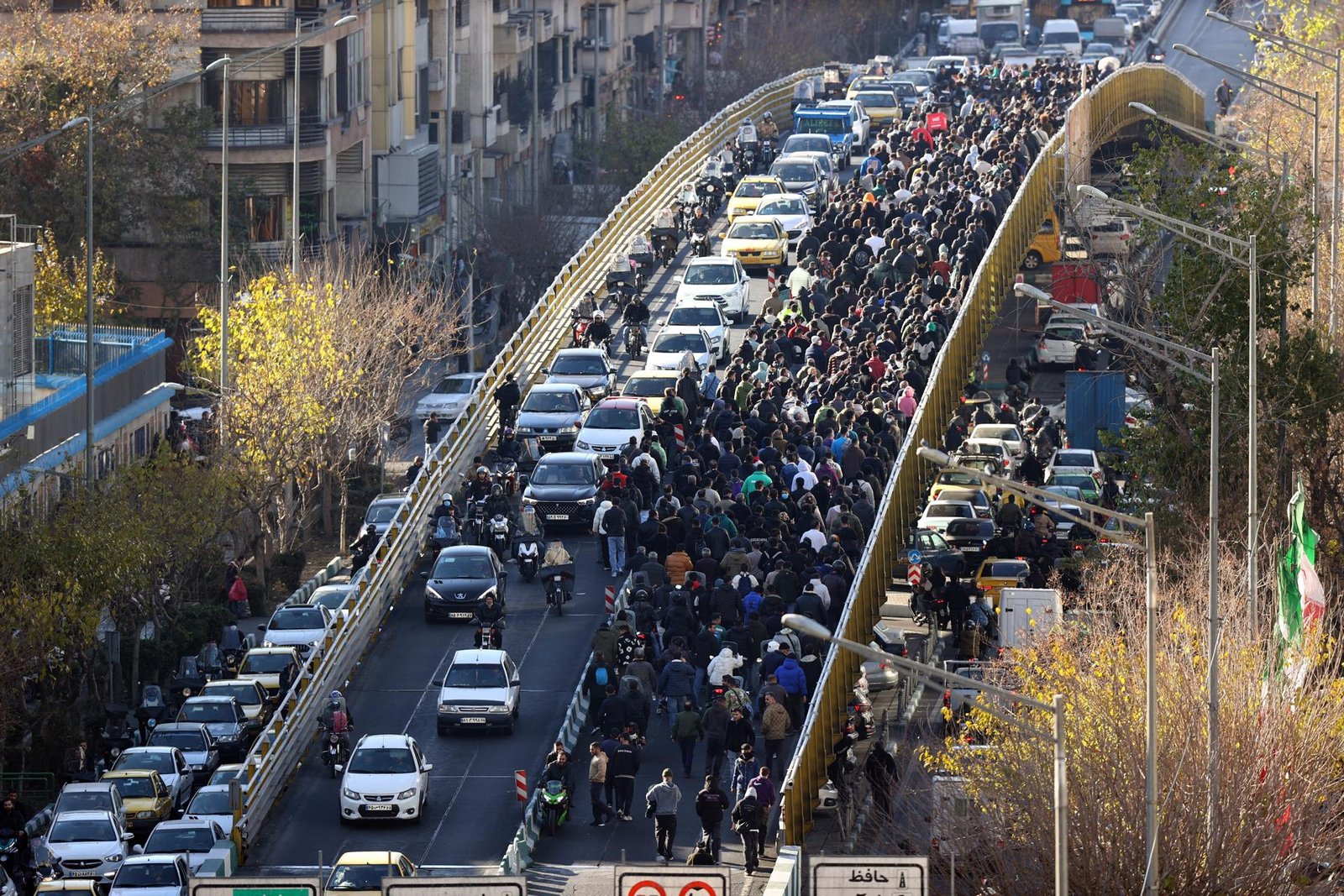
Iran entered this Friday (2) the sixth consecutive day of popular protests, triggered by the worsening of the economic crisis and which evolved into direct political demands against the Islamic regime, in a scenario marked by state repression, deaths and hundreds of arrests.
According to the Iranian human rights NGO Hrana, based in the United States, at least seven people have died, 33 have been injured and more than 100 have been detained since the mobilizations began last Sunday (28). The protests began in Tehran, led by traders and shopkeepers, and have now spread to around 32 cities in the Islamic country.
Videos released by activists on social media show that cities such as Zahedan, in southeastern Iran, and Fuladshahr, in the center of the country, registered new mobilizations this Friday, with protesters chanting slogans such as “death to the dictator”.
Iran tries to blame “external interference” for the protests. The official narrative of the Islamic regime says that the United States and Israel are instigating the ongoing mobilizations in the country. However, human rights organizations point out that the trigger for the protests is Iran’s economic collapse. The Iranian rial – the country’s official currency – reached record levels of devaluation last year, while annual inflation exceeds 42%, with accumulated inflation between November and December exceeding 52%. The increase in the cost of food, medicine and basic services has eroded the income of the population, including the urban middle class.
In addition to the economic crisis, Iran faces parallel structural problems, such as water shortages caused by a prolonged drought, an energy crisis and critical levels of air pollution. This accumulation of difficulties has increased social discontent in recent months and has contributed to the intensification of protests, at the same time as it reduces the regime’s ability to contain pressure solely through repression. During the demonstrations in recent days, the agendas also stopped being exclusively economic and began to incorporate slogans with a strong political content, including explicit calls for the end of the Islamic regime and the restoration of the monarchy.
In the city of Fuladshahr, residents held a wake this Friday for one of the protesters killed during the violent repression of the protests. According to human rights organizations and records released by activists, the protester was hit by security force fire during the mobilizations that took place this week. Iranian authorities said the deaths during the protests were linked to actions by “violent elements” and alleged attacks on police facilities.
United States President Donald Trump said on Friday that Washington would intervene in Iran if the Islamic regime used lethal force against peaceful protesters.
“If Iran shoots and violently kills peaceful protesters, the United States will rescue them,” Trump wrote in a post online. Truth Social.
In turn, the secretary of Iran’s Supreme National Security Council, Ali Larijani, stated that any “interference” by the United States in Iranian internal affairs would “destabilize the entire region” and put “American interests” at risk. He also warned that Washington would be responsible for a possible “escalation” of violence.
According to the NGO Hrana, new arrests of protesters have been recorded in the last few hours in different cities across the country. The organization also states that family members of several detainees report not having received official information about the whereabouts or legal status of the prisoners.
