
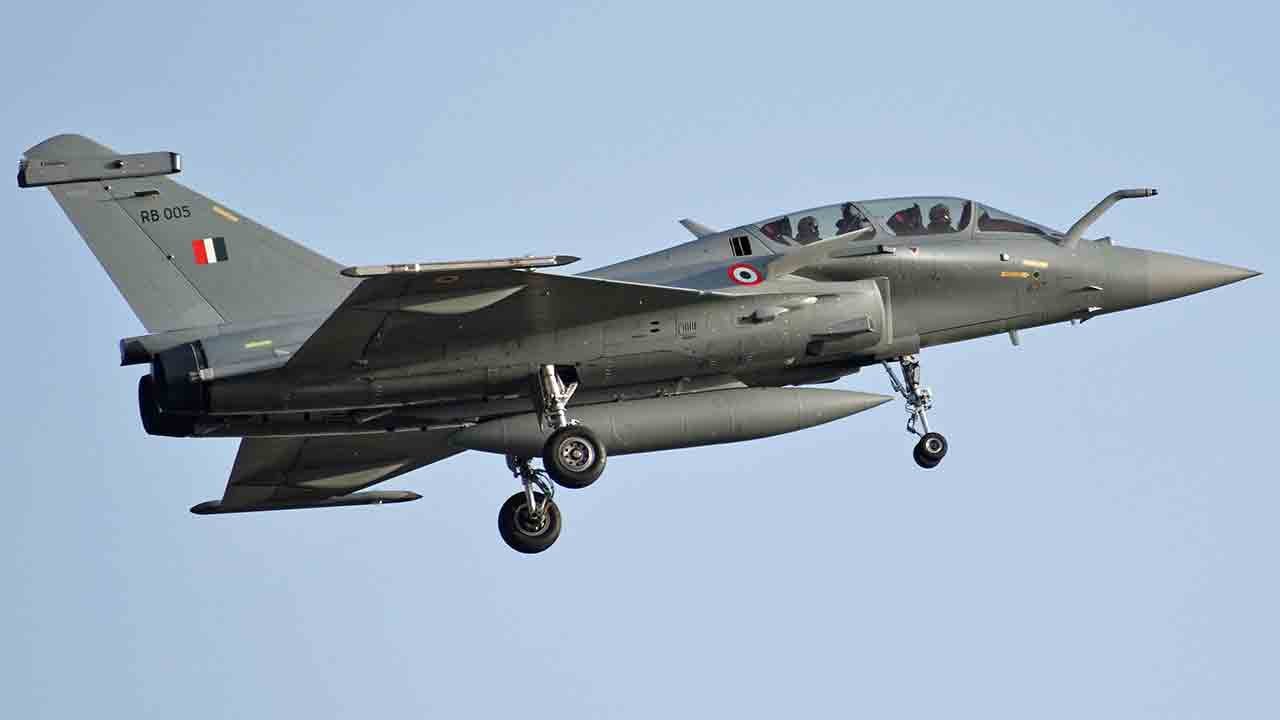
A Pakistan Air Force J-10CE fighter jet likely shot down an Indian Air Force Rafale fighter jet using a PL-15 air-to-air missile from a distance of about 200 kilometers.
The assessment was based on statements from Pakistani government officials, including the Royal United Services Institute for Defense and Security Studies.RUSSIAN) is shown in a study published by
+ US to deliver 191 F-35 fighter jets in 2025, setting a record high
The report said air engagements between Pakistani and Indian forces during Operation Sindor in May 2025 provided an important but still incomplete insight into the combat capabilities of the People’s Liberation Army’s aircraft and missiles compared to Western and Russian platforms.

The study found that during a series of long-range engagements, the Indian Air ForceRafaleIt is said that at least one aircraft was shot down. moreover,Su-30MKIIt said one fighter jet may have been shot down, and there were indications that two or three Indian planes may have been hit as well.
According to RUSI, destroying an air target at a distance of about 200 kilometers is extremely rare in air combat. The effective range of an air-to-air missile depends on multiple factors, including the speed and altitude of the launch vehicle, the target’s motion parameters, and the geometry of the engagement.
The official range of the PL-15E, the export version of the PL-15 missile, is said to be approximately 145 kilometers, but data analyzed suggests that actual hits may have occurred at much greater distances. This difference indicates that Pakistan may have used the non-exportable PL-15, which has a range of 200 to 300 kilometers.

Pakistani specialized media have previously reported that China transferred some missiles to the country, which come directly from its military stockpile and are not subject to export restrictions, about a week before hostilities began.
PL-15 was originallyChinese stealth fighter J-20It was developed to be mounted on a vehicle, and in order to make it possible to install it in the internal weapons storage, a design was adopted to make the exterior more compact. The missile uses active radar guidance and has a two-way data link, allowing the launcher to update its trajectory and transmit telemetry information during flight.
Its long range is achieved by a dual-pulse solid-fuel rocket motor that maintains high kinetic energy even in its terminal phase, increasing the probability of hitting long-range maneuvering targets.
Source: Royal United Services Institute for Defense and Security Studies (RUSI). This content was created with the assistance of AI and reviewed by our editorial team.
