
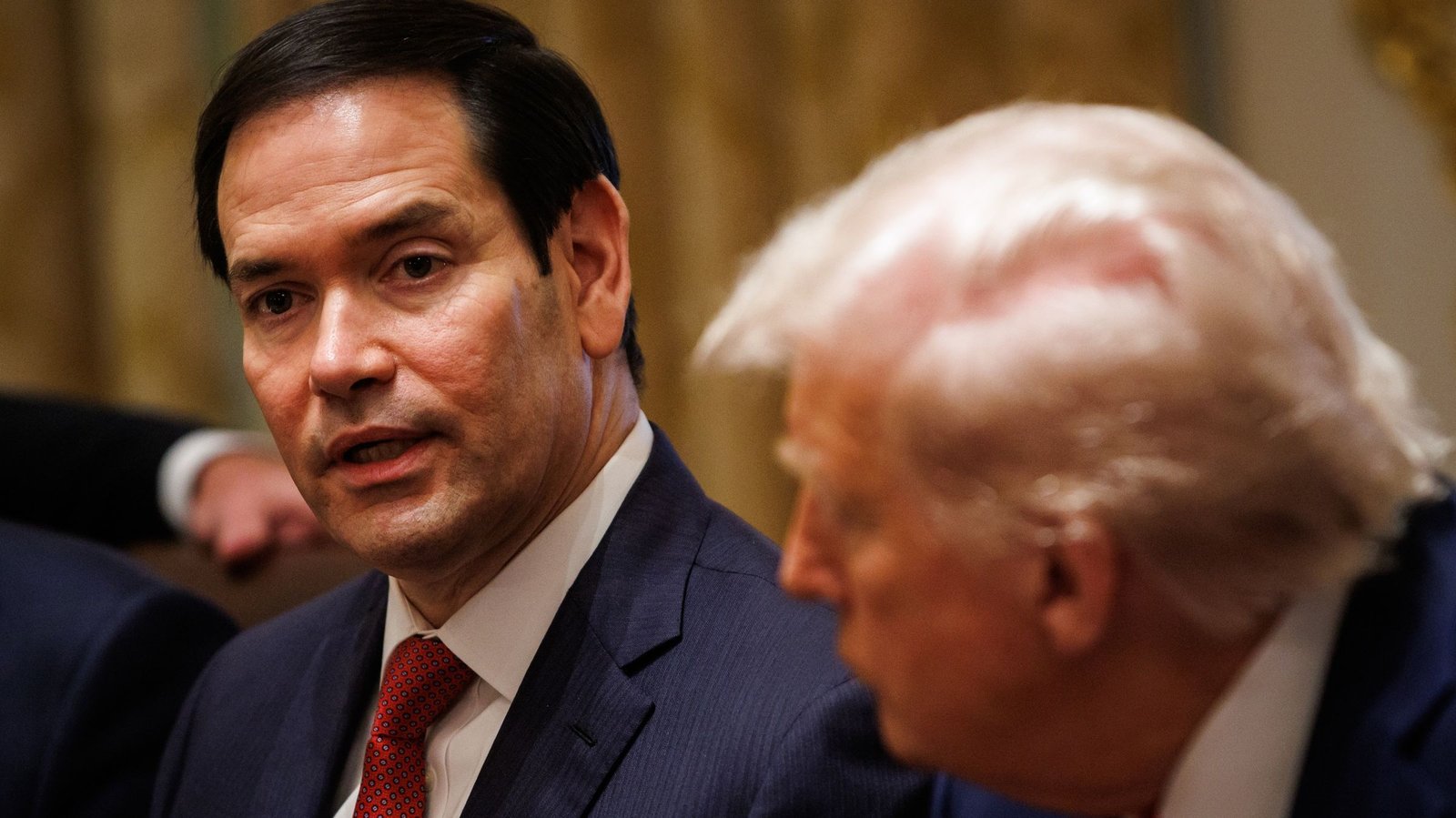
The American Secretary of State, Marco Rubio, was questioned this Sunday (4) about President Donald Trump’s declaration that the United States would govern Venezuela after the fall of dictator Nicolás Maduro. Instead of detailing how this administration would work, he explained that the American government will maintain sanctions on Venezuelan oil exports “until we see changes that not only serve the national interests of the United States, which are the priority, but also lead to a better future for the people of Venezuela.”
“We continue with this quarantine and we hope to see changes, not only in the way the oil industry is managed for the benefit of the people, but also to combat drug trafficking, so that we no longer have these problems with gangs, so that they expel the FARC and the ELN and so that there is no more collusion between them and Hezbollah and Iran in our own hemisphere,” added Rubio.
The statement was made in an interview with the program Face the Nationfrom the CBS television channel. The interviewer, Margaret Brennan, then countered the secretary, saying that he was describing more pressure on the Venezuelan regime through sanctions, and not through ground troops, as initially suggested, after Trump’s statement. “So, just to be clear, there is no plan for the American occupation of this country of almost 30 million inhabitants?”, he asked.
“Well, first of all, I think the president always maintains the possibility of choice in relation to everything and all these matters”, replied Rubio, signaling that a direct government by the US would, at this moment, be out of the plans.
This Saturday (3), after Maduro’s capture, Trump said that the US would govern Venezuela and take American companies to the country to explore oil. The White House, however, declared that Maduro’s vice president, Delcy Rodriguezwould assume the Presidency.
“He [Trump] does not think it will publicly rule out the options available to the United States, although that is not what we are seeing now. What you are seeing now is an oil quarantine that allows us to exert enormous influence over what happens next,” Rubio said.
The interviewer, Margaret Brennan, concluded, based on the response, that the Maduro regime would therefore continue in force, especially given the fact that the dictator’s direct assistants, such as the Interior and Defense ministers, had not been arrested. “They are still in power,” he said.
“You’re not going to go in and arrest everyone. You’re going to go in and arrest… but yeah, you can’t go in and arrest five people. They’re already complaining about this operation. Imagine the uproar we would have had if we had to stay there four days to arrest four more people. We had top priority. The number one person on the list was the guy who claimed to be the president of the country, which he wasn’t, and he was arrested along with his wife, who was also indicted. And this was a pretty sophisticated and, frankly, complicated operation,” Rubio explained.
He said that the two ministers mentioned “are being tried by the American judicial system”, although they remain in Venezuela. Afterwards, he was asked why María Corina Machado and Edmundo González, who for the US won the 2024 elections, are not now being recognized as legitimate rulers.
“I’m not going to go into detail publicly about any of these matters, other than to say that our expectations remain the same and that we will evaluate everyone we interact with going forward based on whether these conditions are met. We want, of course, to see Venezuela transform into a completely different place than it is today. But obviously, we don’t expect that to happen in the next 15 hours. What we do hope is that the situation will get closer. We believe that this is in our national interest and, frankly, in the interest of the Venezuelan people,” he quibbled. Rubio.
In another interview this Sunday (4), this time on NBC’s Meet the Press program, Rubio praised Corina, but said that the majority of opposition to Maduro is currently not present in Venezuela, “unfortunately”. “We have short-term issues that need to be resolved immediately. We want to see a bright future for Venezuela, a transition to democracy […] But what we are discussing is what will happen in the next two to three weeks and the next two to three months, and how that relates to the interest of the United States. So, we hope to see more compliance and cooperation than we received previously,” he said, adding that with Maduro it was not possible to make agreements.
SEE ALSO:
- Oil and pressure on Cuba, Iran and Russia: what does the US gain from capturing Maduro
