
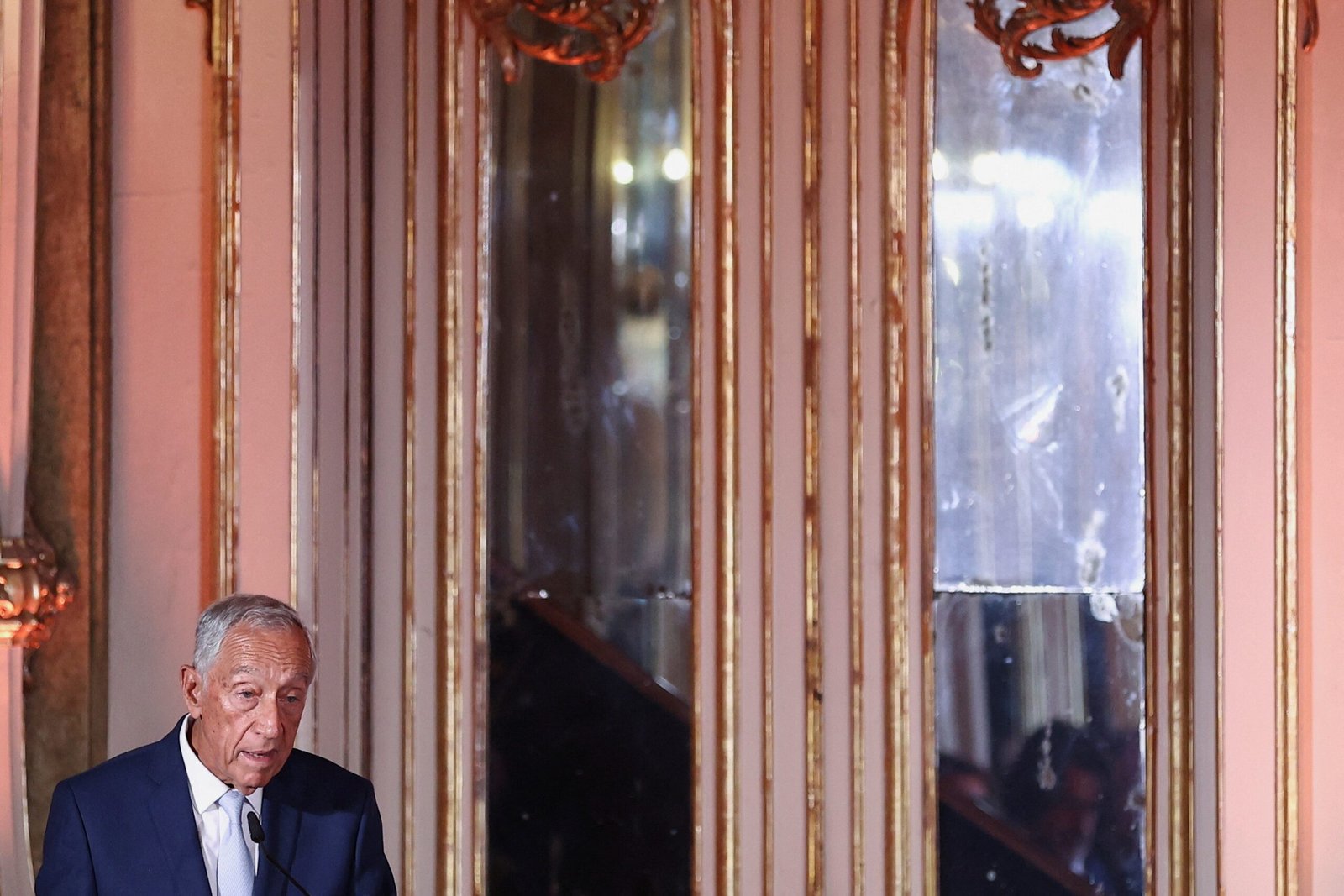
Portugal goes to the polls to choose a new president in a fierce dispute The Portuguese went to the polls this Sunday (18) to choose who will be the next president, in a vote that takes place less than a year after elections that defined the country’s prime minister. In an unusual arrangement, the Executive Branch of Portugal is divided between these two figures, due to the country’s political system, semi-presidentialism, which determines the existence of both positions. And the Portuguese president, although he stays away from the day-to-day running of the government, is the one who has the power to make major decisions regarding the country’s politics. ✅ Follow the g1 international news channel on WhatsApp Understand, below, why there are two heads in charge, and what each one does: 👉 The Prime Minister of Portugal is the head of government. In other words, he is the one who manages the country’s day-to-day operations, assembles the ministerial team, sends projects to the Legislature and talks with local governments, in addition to making decisions such as sending troops or military missions to other countries. 👉 The president, in Portugal, does not participate in the daily life of the Executive and exercises a more ceremonial and less political role, but gains weight at critical moments in the country: The president is also the head of State — a role that, in monarchies, is performed by the king or queen. This means that the Portuguese president is ultimately responsible for the Armed Forces, therefore capable of mobilizing or demobilizing troops; Although he is not directly involved in government matters, the Portuguese president is also a kind of supervisor of the current government, and has the power to dismiss it if he deems that the Executive is not fulfilling a function; In this case, it is also up to the president to dissolve Parliament and call new elections — the current president, centrist Marcelo Rebelo de Sousa, did this three times throughout his almost ten years in office; It is also the president who appoints the prime minister, after Parliament appoints the candidate who has the support of the majority of the House; It also has the power to veto laws that it considers unconstitutional or harmful to the country. At the ceremonial level, it is up to the president to receive world leaders and make state visits on specific events or commemorative dates — Rebelo de Sousa was in Brazil at least nine times during his term. Marcelo Rebelo de Sousa on April 24, 2023. Rodrigo Antunes/Reuters A survey by the University of Oxford estimates that around 50 countries adopt the same model. In Europe, France, Poland and Russia are semi-presidential, but each has its own particularities — in the French system, for example, the president has more political weight. In Portugal, the structure was consolidated after the Carnation Revolution, in 1974, to avoid the concentration of power and guarantee a type of mutual control between sovereign leaders. Fragmented election Portugal held the most fragmented presidential election in its recent history this Sunday — three parties competed in an almost tie, and, throughout the electoral race, five of the 11 acronyms competing were tied. Furthermore, surveys showed that more than a third of the approximately 11 million Portuguese people called to vote were undecided. Prohibited by the Constitution from running in a third round, Marcelo Rebelo de Sousa called the new election, which generated an unprecedented race for the post: eleven parties are in the fight, and five of them ended up tied in polls. Now, for the first time, three parties, not two, are competing for the position on an equal footing. This is because Chega, an acronym for the extreme right, became the second political force in Portugal in the last elections. A voting intention survey carried out by the Center for Opinion Studies and Polls (CESOP), at the country’s Catholic University, indicated the following scenario before the election: André Ventura, leader of Chega, leads the electoral race by a small margin, with 24% of voting intentions; In second place is the socialist António José Seguro, with 23%; João Cotrim de Figueiredo, Member of the European Parliament from the center-right Liberal Initiative party, appears with 19% of voting intentions; Luis Marques Mendes, from the center-right Social Democratic Party (PSD)/ Democratic Alliance (AD) coalition — which traditionally competed for the presidency with the socialists — appears only in 4th position, with 14% of the votes. This is a reflection of the political instability that Portugal has experienced in recent years, according to political scientist António Costa Pinto to the Reuters news agency. “The fragmentation of the electorate continues, making it likely that candidates from the two traditional parties will receive fewer votes than their parties obtained in last year’s parliamentary elections (in which Chega overtook the Socialists),” said the professor. Candidate for Chega, from the far right, André Ventura drinks wine during the presidential campaign, on January 9, 2026. Pedro Nunes/ Reuters Second round Nun votes in Portugal’s presidential elections, on January 18, 2026. Pedro Nunes/ Reuters If no candidate obtains more than 50% of the votes, a second round is scheduled for February 8. If this happens, it will be the first time in 40 years that a presidential election in Portugal will not be resolved in the first round. Although Chega’s leader leads the latest polls, research also shows that he has a rejection rate of 60% of voters, the highest among candidates. The percentage suggests that he could lose a possible second round against any of the other three favorites, José Castello Branco, professor of Political Science at the Catholic University of Lisbon, told Reuters. “It’s a completely open (electoral) race,” said Castello Branco, who thinks, however, that reaching the second round will already be a “victory” for Ventura, giving Chega greater negotiating power with the center-right minority government. See the videos that are trending on g1
Source link
Presidential election: why does Portugal have two leaders, and what does the Portuguese president do?
45

previous post