
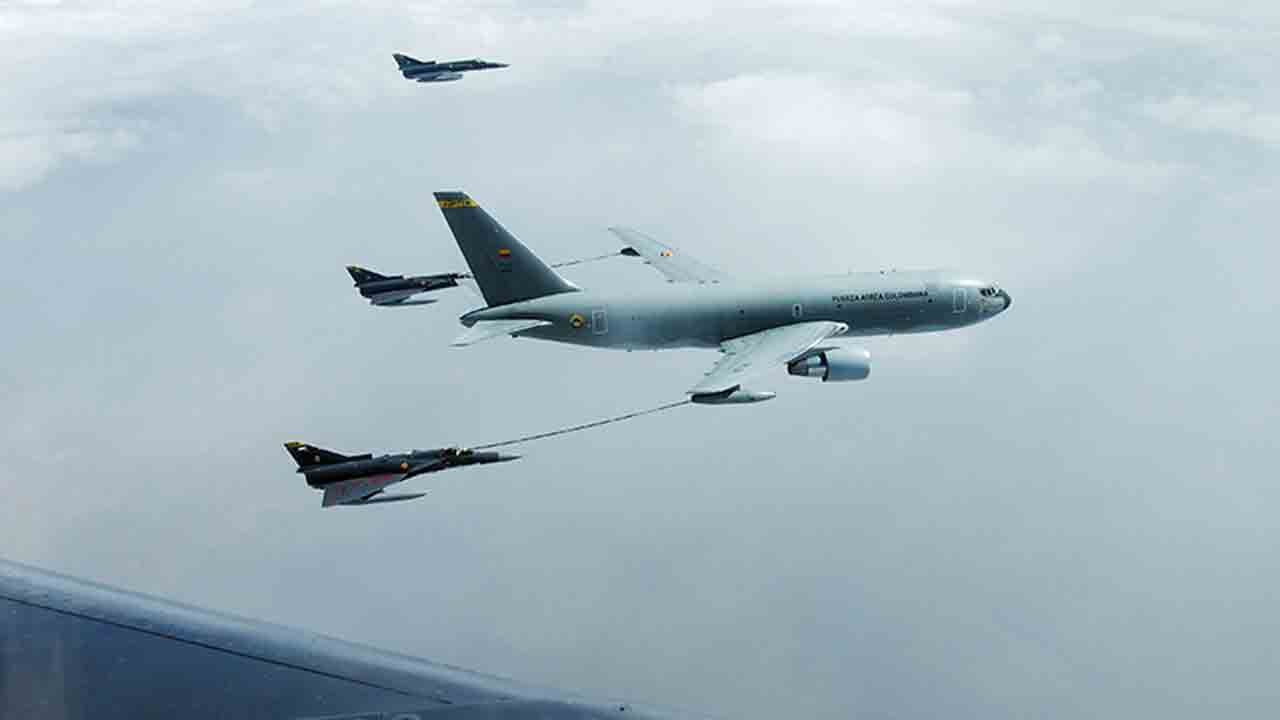
The Indian Defense Ministry’s Defense Acquisition Council (DAC) on December 29 approved an allocation of 9,000 crore rupees — about US$ 1 billion — for the procurement of six Boeing 767 MMTT (Multi Mission Tanker Transport) tanker aircraft for the Indian Air Force.
According to information published by the Indian Defense News portal, the planes will be supplied by Israeli companies Israel Aerospace Industries (IAI)in collaboration with the Indian company Hindustan Aeronautics Limited (HAL). The project includes the conversion of used Boeing 767 aircraft acquired from the civil market into military platforms for mid-air refueling and multi-mission transport.
As per the requirements set by the Indian Ministry of Defence, the program must ensure at least 30 percent participation of domestic industry, with HAL leading the contribution of Indian companies. The aircraft conversion will be carried out by IAI, which has proven experience in this type of modification.
To date, Boeing 767 MMTT has only one operator in the world: the Colombian Air Force, which since 2010 operates a single unit known as the Jupiter, with the registration FAC-1202. The aircraft was converted by IAI from a Boeing 767-200ER and serves as an operational reference for the type.
+ The United States delivered 191 F-35 fighter jets by 2025, the highest number in history

India’s program to procure new tanker aircraft has been ongoing since 2006 and over the years has involved various tender processes. On several occasions, the Indian government had chosen the Airbus A330 MRTT, but the decision was repeatedly canceled due to high procurement costs — estimated at no less than US$ 2 billion for six new aircraft.
The selection of the Boeing 767 MMTT converted from used airframes thus provides a lower cost alternative and has greater industrial flexibility, while meeting the Indian Air Force’s growing needs for air refueling capacity and strategic transport.
Sources and pictures: Indian Defence News | Israel Aerospace Industries (IAI). This content is created with the help of AI and reviewed by the editorial team.
