
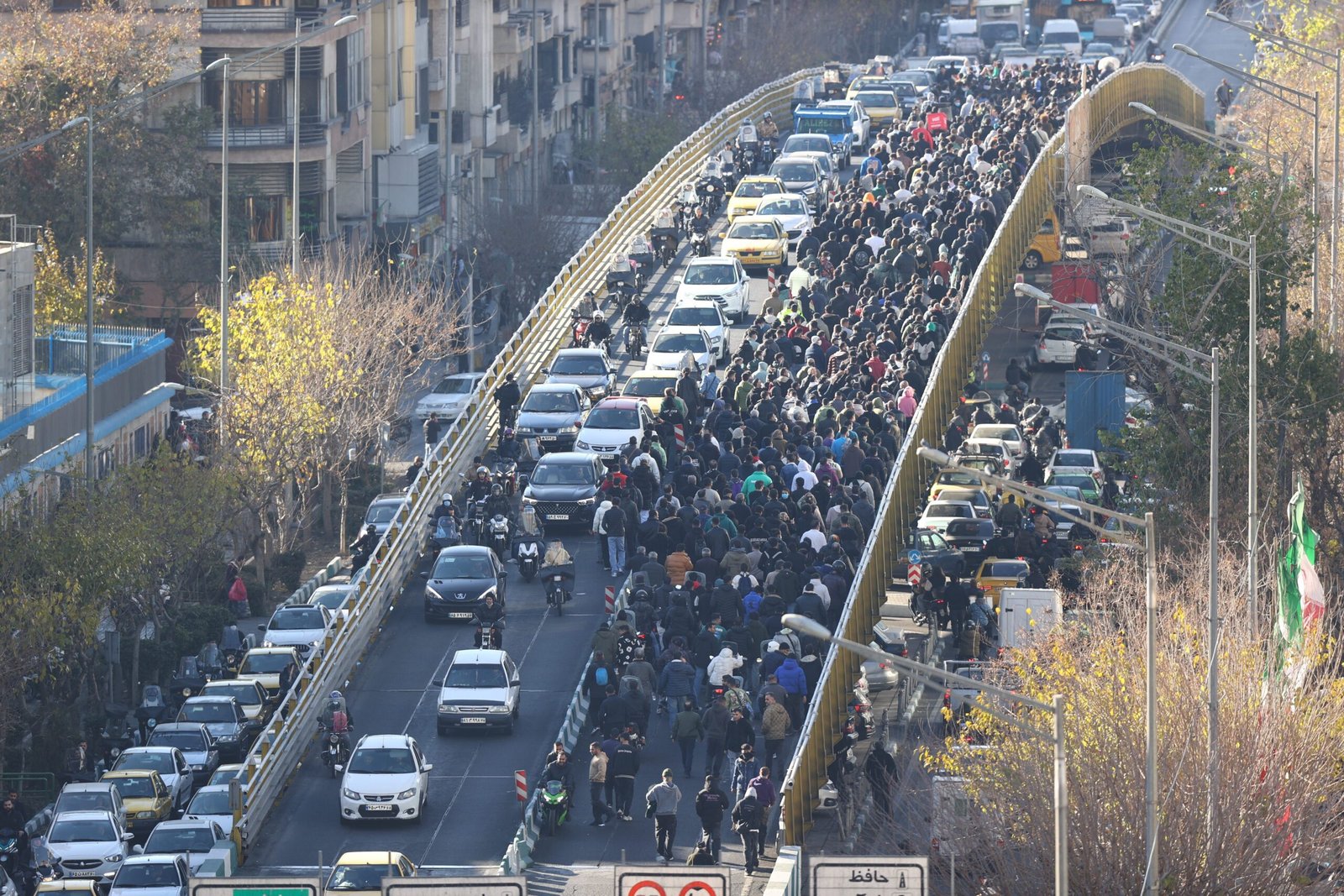
Protesters marched in the center of Tehran, Iran, against the country’s economic situation, on December 29, 2025 Fars via AP At least seven people died in a wave of demonstrations in Iran, according to figures released by local authorities this Thursday (1st). ✅ Follow the g1 international news channel on WhatsApp ▶️ Context: The demonstrations take place in the midst of a serious economic crisis, marked by high inflation, devaluation of the local currency and the impacts of international sanctions. The June war against Israel is also on the radar. The demonstrations intensified on Monday (29), when hundreds of people took to the streets to protest the economic situation and the cost of living. Traders also began a strike and closed stores in Tehran. The movements spread across the country with the support of students. President Masoud Pezeshkian’s government stated that it had opened a channel of dialogue with representatives of society to discuss the population’s demands. “We officially recognize the protests. We hear these voices and we know that this originates from natural pressure caused by the population’s difficulties in supporting themselves,” said the government spokeswoman on Tuesday. See the videos that are trending on g1 The government’s nod was not enough. In recent days, there have been clashes between protesters and security forces. Images circulating on social media show burning objects in the streets and the sounds of gunshots. On Thursday, according to local media, three protesters died and 17 were injured during an attack on a police station in the western province of Lorestan. According to the Associated Press, this is the biggest wave of demonstrations in Iran since 2022, when young Mahsa Amini died after being detained by police for violating the country’s strict dress code. What’s behind the crisis Ayatollah Ali Khamenei, Supreme Leader of Iran, speaks before members of the Iranian Judiciary in Tehran on July 16, 2025. Office of the Supreme Leader of Iran/Wana via Reuters Iran has been facing economic difficulties for years, mainly impacted by the reimposition of sanctions by the United States. The measure was adopted in 2018, when President Donald Trump left an international agreement on the Iranian nuclear program. Upon returning to the White House in January 2025, Trump resumed a policy of maximum pressure against Iran. In September, sanctions were also imposed by the United Nations, leading the Iranian government to hold meetings to try to avoid an economic collapse. The situation was also aggravated by the conflict between Iran and Israel in June. At the time, Israeli and US forces carried out attacks against targets linked to Iran’s nuclear program. Amid this scenario, the population began to face high inflation, above 40% per year. Discontent also grew in the face of inequality between ordinary citizens and the country’s elite, in addition to allegations of corruption in the government. On Monday, the president of Iran’s Central Bank resigned from his post. Iranian media have claimed that recent economic liberalization policies have put pressure on the local currency, leading to rapid devaluation. In 2025 alone, the Iranian rial lost about half its value against the dollar and reached an all-time low this month. The economic context adds to internal political tensions. Since the Islamic Revolution of 1979, Iran has been a theocratic republic, in which the highest authority is the supreme leader, Ayatollah Ali Khamenei. He has been in power for more than 30 years. The regime is the target of criticism for human rights violations and restrictions on social freedoms, especially among younger people, who have led several protests in recent years. VIDEOS: most watched on g1
Source link
Crisis, high inflation and war: what is behind the demonstrations in Iran that have already left 7 people dead
60
