
The Justice Department’s indictment against the Southern Poverty Law Center may contain serious legal defects that could lead to a full or partial dismissal because it struggles to articulate the elements of the alleged crimes, former federal prosecutors told CBS News.
The 11-count indictment alleges that the civil rights nonprofit organization, best known for its work to oppose the Ku Klux Klan, lied to donors about paying confidential informants to infiltrate hate groups and deceived banks about the bank accounts used to make those payments.
It charges the group with wire fraud, conspiracy to commit money laundering and making false statements. The group denies all the charges and vows to defend itself in court.
“Not a valid indictment”
Legal experts say it is not clear exactly how the SPLC’s statements to donors represent material falsehoods or omissions, or why its past use of paid informants would run counter to its mission of dismantling white supremacist groups, a tactic that federal and local law enforcement also utilize to infiltrate and break up criminal organizations.
“I don’t think any prosecutor with white-collar experience would look at this indictment and believe it makes out the elements of a crime,” said Kyle Boynton, an attorney who previously worked both as a federal civil rights prosecutor and an FBI agent. “It’s not a valid indictment.”
In a statement, a Justice Department spokesperson noted that the grand jury agreed to indict the group on 11 counts, just based on a portion of the evidence presented.
“These issues will all be litigated in court and the government remains confident in its case. It’s a shame that these former prosecutors aren’t aghast at these allegations of severe fraud, manufactured racism, and abuse of donor dollars,” the spokesperson added.
The Southern Poverty Law Center has long been at the center of the right-leaning groups’ ire, and represents the first of what is expected by many in the nonprofit world to be the first of more progressive groups who are likely to find that they’re in the Justice Department’s sights.
Allies of the Trump administration have accused the group of being “anti-Christian” and unfairly targeting Republican-aligned groups like Turning Point USA, the Family Research Council and Moms for Liberty.
In October, FBI Director Kash Patel severed the bureau’s ties to the group, which for decades has worked closely with law enforcement to pass along tips and intelligence about hate groups that could pose public safety risks, according to the group’s spokesperson. The spokesperson added that there were never formal ties, but that the group frequently shared evidence about potential threats with law enforcement officials.
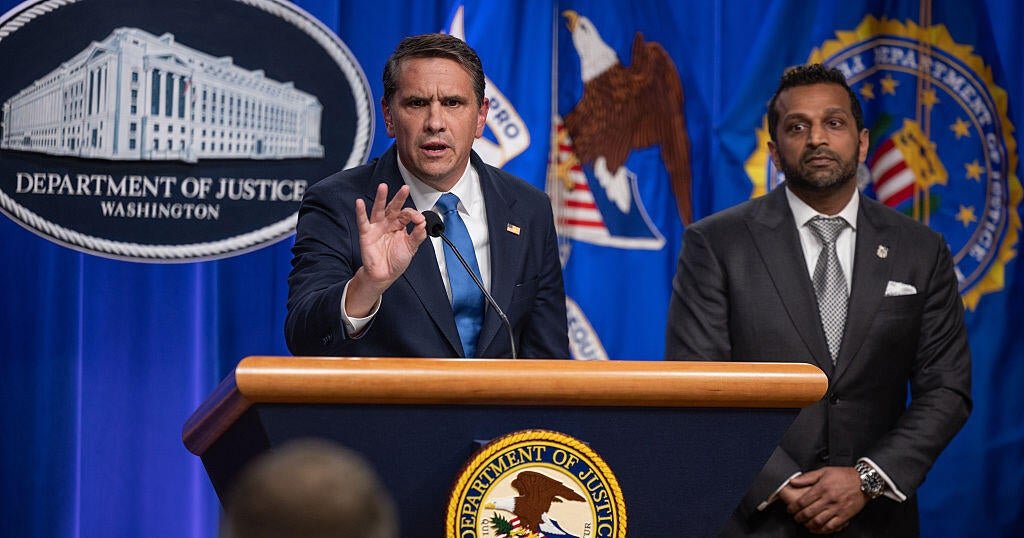
At a press conference earlier this week, Acting Attorney General Todd Blanche focused largely on the wire fraud charges, saying that between 2014 through 2023, the Southern Poverty Law Center paid at least $3 million to eight different informants who were affiliated with groups such as the Ku Klux Klan, the National Socialist Movement and the Aryan Nation.
To prove wire fraud, the government must show at trial that the Southern Poverty Law Center intentionally tried to fleece its donors and that those misstatements or omissions of facts were material.
The indictment points to statements the SPLC made on its website, where the group said it partnered with communities to “dismantle white supremacy” and it would “pursue a bold action agenda” that included “investigating and exposing candidates using hate and extremism to gain power.”
The vague fundraising language cited in the indictment, according to the lawyers, is not likely strong enough to show the group made affirmative false statements, omissions or half-truths, and the use of paid informants to obtain intelligence about hate groups does not on its face run contrary to its mission statement, with some predicting that the charges could be dismissed before the case makes it to trial.
“When I looked at this indictment, I was very surprised that anyone would have ever charged a case like this,” said William Johnston, a former assistant chief at the Justice Department’s fraud section who has experience prosecuting charity fraud cases.
“There have to be material misstatements or half-truths. And here, they really haven’t alleged anything explicit that the use of the money contradicted,” he said. “The idea that diverting money to insiders is not dismantling — it is very stretched.”
If the Southern Poverty Law Center is able to defeat the wire fraud charge, then the money laundering charge would automatically falter because a federal money laundering charge rests on certain predicated offenses, or underlying criminal acts that generate illicit proceeds, lawyers said.
The indictment relies on the underlying wire fraud allegations to support the money laundering claims.
Bank fraud charges stronger, but problems remain
The other charges against the group center on statements it made to various banks about checking accounts it opened in order to facilitate payments to its confidential informants.
Of all of the charges in the indictment, some lawyers say those are arguably the strongest part of the case and have a better shot at making it to a jury trial without being dismissed by a judge.
The indictment alleges that two employees from the SPLC opened bank accounts in the names of fictitious entities in order to mask how it was paying the informants. Prosecutors say the employees made “false or misleading” statements to the banks by certifying they were the sole owners of the accounts.
“Those are serious allegations,” said Gene Rossi, a former federal prosecutor. “You cannot set up phony accounts at a bank and then allegedly lie to the bank about the phony accounts.”
At the same time, former prosecutors told CBS News said there are still a host of possible challenges with the bank fraud charges, too.
For one, the Justice Department did not charge SPLC with a more generic bank fraud statute, but went with a narrower one under 18 USC 1014, which criminalizes fraud involving “loan and credit applications.”
That statute itself does not explicitly include the opening of a checking account as one of the actions covered, and several different federal circuit courts are split on the issue of whether it can be included or not, lawyers said.
The 11th Circuit Court of Appeals, which covers the Middle District of Alabama where the indictment was returned, has yet to weigh in on the matter.
The bank fraud statute charging SPLC also requires a showing that the defendant intended to influence the bank’s action, and such an allegation is absent from the indictment, said Joe Rillotta, an attorney who previously prosecuted financial crimes at the Justice Department’s Tax Division.
“You don’t have a pleaded allegation that references the object of the scheme as required by the statute. What bank action are you seeking to influence?” he said.
Several former Justice Department attorneys also predicted that the Justice Department may need to return to the grand jury to correct errors in the indictment’s discussion of the bank fraud charges.
The indictment alleges that the employee who opened the bank accounts in question made “false or misleading statements.”
But the Supreme Court last year, in Thompson vs. USA ruled that this bank fraud statute only criminalizes false statements — and not statements that are misleading but not false.
“The Supreme Court made crystal clear that false statements under 1014 must be actually false, not merely misleading,” said Aaron Zelinsky, a former federal prosecutor now with Zuckerman Spaeder LLP.
“This indictment appears to allege statements that were potentially only misleading. That’s not a crime.”
