
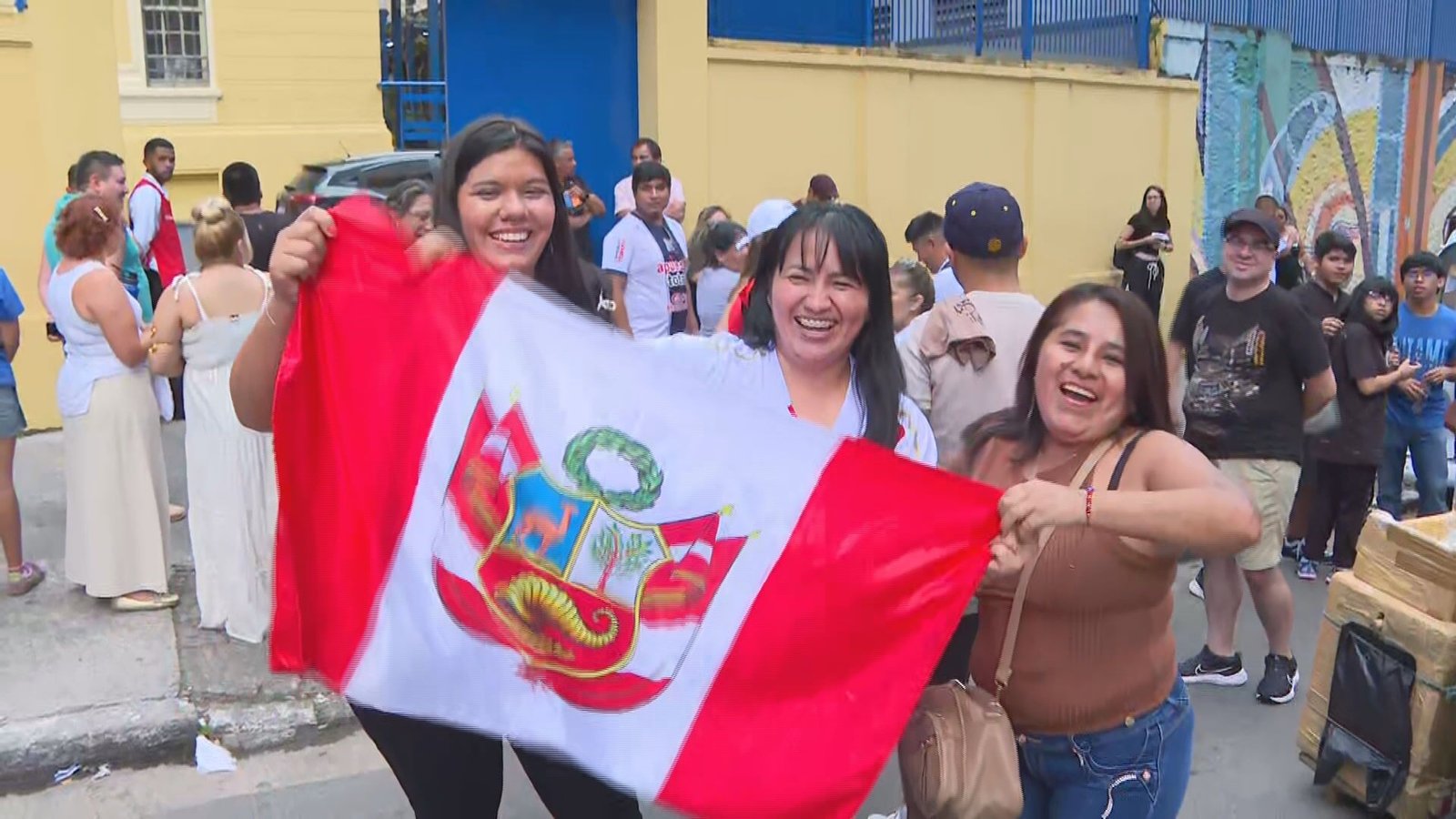
Peruvians residing in Brazil line up to vote in SP Peruvians residing in São Paulo lined up this Sunday (12) to vote in the general elections that will define the president of the Republic, vice-presidents, senators, deputies and representatives for the Andean Parliament. In the capital of São Paulo, the voting location was the Escola Estadual Rodrigues Alves, on Avenida Paulista, from 7am to 5pm, and Peruvians over 18 years old were able to participate. Voters complained about the queues at the Peruvian consulate in São Paulo. Peruvians residing in São Paulo line up to vote on Avenida Paulista Israel Smuk/TV Globo Peruvians residing in São Paulo line up to vote on Avenida Paulista Israel Smuk/TV Globo 35 presidential candidates Peruvians went to the polls hoping to break a cycle of political turmoil that has prevented any president from completing a full term in the last decade, amid corruption scandals, rising crime and voter frustration. Election in Peru: Peruvians go to the polls in a dispute with a record number of candidates Peruvians go to the polls in a dispute with an unpredictable scenario Understand the reason for so much instability in Peruvian politics People wait in line to vote during Peru’s general elections, in Lima, Peru, April 12, 2026 REUTERS/Angela Ponce TPX IMAGES OF THE DAY Around 27 million Peruvians are eligible to vote for a new president and members of a congress recently reestablished bicameral system. This year’s race features a record number of 35 presidential candidates, the highest number in the country’s history. Polling stations open at 7am (local time, 9am in Brasília) on Sunday and close at 6pm, when paper ballots measuring almost half a meter (44 centimeters) – the longest in the country’s history – will be counted. Opinion polls suggest that right-wing candidate Keiko Fujimori has a small lead. She is closely followed by at least three competitors – including two former mayors of Lima, the ultra-conservative Rafael López Aliaga and media entrepreneur Ricardo Belmont, and political outsider Carlos Alvarez, a former comedian. None of the candidates has more than 15% in voting intention polls, which makes a second round in June almost certain, according to analysts. Keiko Fujimori, Carlos Álvarez and Rafael Lopez Aliaga Reuters/Angela Ponca; Reuters/Leslie Moreno; Reuters/Angela Ponce Fragmented scenario The three candidates behind Fujimori, daughter of the late former president Alberto Fujimori, are also in a technical tie, said Urpi Torrado of polling firm Datum Internacional. The high number of undecided voters means that candidates who appear second in the polls “cannot be ignored”, said Nicolas Watson of consultancy Teneo, even if they only have 4.5% to 6% support. Polls suggest that about 13% of voters remain undecided. For many Peruvians, the fragmented dispute reflects a deeper institutional decline. The country has had eight presidents since 2018, as leaders have been impeached, imprisoned or forced from office. These elections could mark a break with this cycle of instability or “keep us trapped in it”, said political analyst Fernando Tuesta. Concern about corruption and security The fight against corruption is a prominent theme in the campaign. Four former presidents are currently in prison, most linked to bribery cases involving the construction company Odebrecht. Alberto Fujimori served 16 years in prison for human rights abuses and died in 2024 after being released on humanitarian grounds. Insecurity, however, now rivals – and in many cases surpasses – corruption as voters’ top concern. Peru was not traditionally associated with organized crime, but homicides and extortion have increased, particularly affecting transport workers and small businesses, said professor Paula Muñoz of the Universidad del Pacifico in Lima. Official data shows that extortion cases increased by almost 20% last year, and homicide rates reached new records. The rise has fueled support for tougher, more populist responses from the right, Muñoz said, reflecting a broader Latin American trend in which crime is increasingly seen as an issue that must be addressed by hard-line leaders such as El Salvador President Nayib Bukele. Proposals from some candidates include sending troops, reinstating the death penalty, withdrawing from international human rights tribunals, and allowing magistrates handling criminal cases to remain anonymous, which would reinstate the country’s so-called “faceless judges,” which Peru has not had since 1997. Political advertising in Lima, Peru on April 8, 2026; country goes to the polls this Sunday (12) to choose the presidential candidate REUTERS/Angela Ponce
Source link
Peruvians living in SP line up to vote at the school on Avenida Paulista
4

previous post