
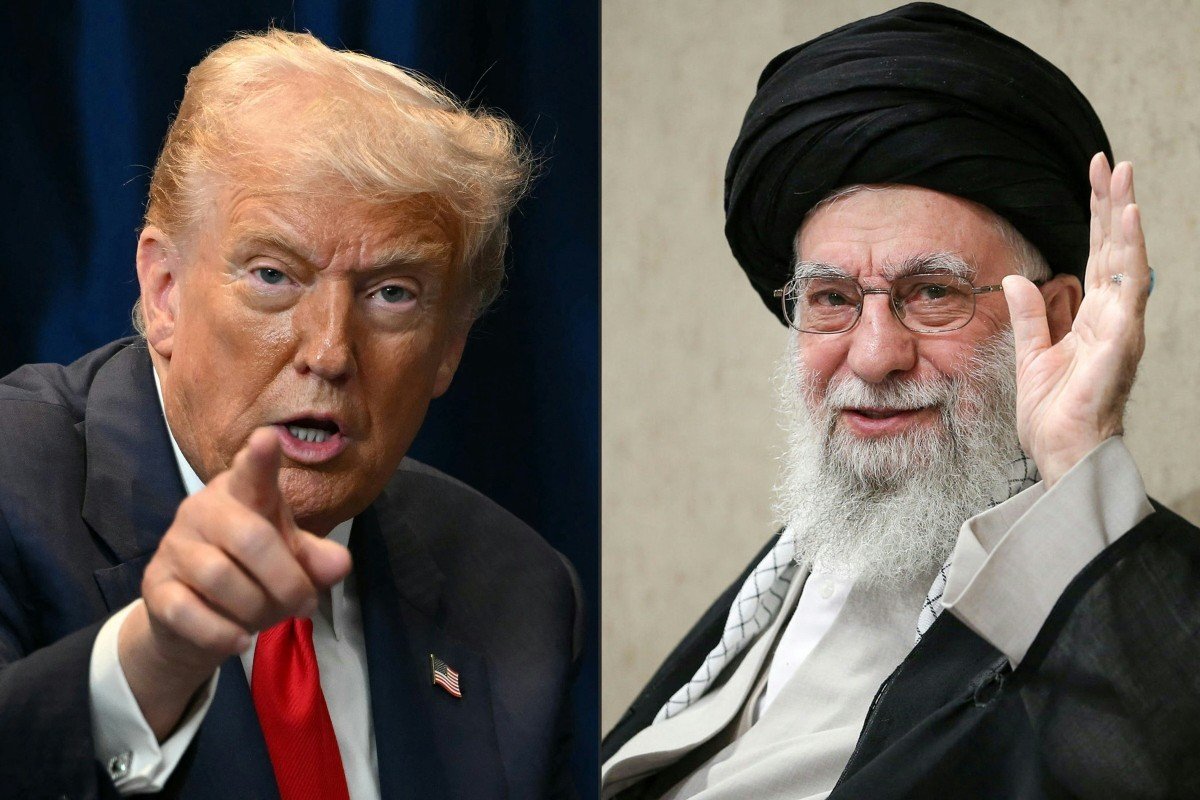
Israel’s attacks on Lebanon put ceasefire between Iran and the US at risk Even with a shaky ceasefire and peace negotiations still in their infancy, the United States and Iran have already been claiming, to the same extent, victory over a conflict that has not even ended. Delegations from both countries meet today in Pakistan in search of an agreement to end the conflict. Despite the narratives of victory, however, both sides record asymmetric losses and gains in strategic, political, economic and, mainly, military areas. ✅ Follow the g1 international news channel on WhatsApp LIVE: Follow the latest news from the war Check out the gains and losses of the USA and Iran in the conflict below: Military scope Economy Political scope Strategic field Debris in Isfahan, Iran, of what Tehran claims to be US military aircraft. Disclosure/Revolutionary Guard of Iran 1. Military scope Numerically, Iran, the target of the greatest number of bombings since the beginning of the war, suffered the most military casualties. According to the Pentagon, US and Israeli attacks on Iran killed more than 1,165 Iranian soldiers; They struck more than 2,000 targets, including 450 ballistic missile storage facilities and 800 attack drone storage facilities; They destroyed 51 aircraft and 27 military ships; They destroyed around 80% of Iran’s air defense systems. The US Armed Forces, however, did not emerge unscathed from the war. The balance of US military casualties includes: 13 dead soldiers; More than 300 injured; Ten aircraft destroyed or shot down. Although significant, the casualties did not make Iran’s ability to retaliate unfeasible, in the opinion of professor at the Escola Superior de Guerra, Ronaldo Carmona. “There is certainly a degradation in Iran’s military capabilities. However, Iran’s retaliatory capacity remains high, as Tehran continued to demonstrate in the final phase of the war, before the ceasefire,” he said. ➡️ Context: in addition to military losses, war brings an enormous human cost. There are records of civilian deaths in Iran, Israel, Lebanon (drawn into the conflict between Israel and Hezbollah) and in some Persian Gulf countries. 2. Economy In economic terms, the immediate losses were much greater than the gains on both sides. In the first 12 days of war alone, the United States spent around US$16.5 billion (around R$82.5 billion) on missiles, drones and bombs, according to projections by the Center for International and Strategic Studies (CSIS), in Washington. The country also records losses of around US$1.4 billion (around R$7 billion) in initial damages. For Iran, however, the consequences on the economy are likely to weigh more heavily in the post-war period. The country, which had already had a staggering economy for years, must face a period of around 15 years of reconstruction at an estimated cost of US$600 billion (around R$3 trillion), according to data from the International Monetary Fund (IMF). The expenditure, according to projections, would be necessary to cover the reconstruction of destroyed plants and infrastructure. Donald Trump and Ayatollah Ali Khamenei. ANDREW CABALLERO-REYNOLDS / VARIOUS SOURCES / AFP 3. Political scope On the Iranian side, the casualty was also the most visible: on the first day of attacks, Ayatollah Ali Khamenei, then the country’s supreme leader and highest Iranian authority for almost 40 years, was killed in one of the offensives. In addition to Khamenei, 15 other members of the Iranian regime were also shot and killed. In an impromptu transition, the council of ayatollahs elected Ali Khamenei’s son, Mojtaba Khamenei, to replace him. But US President Donald Trump said the new supreme leader was hit hard in an attack that also killed his entire family. Since taking power, Khamenei has not yet appeared in public. But the war also left a trail of political wear and tear for Trump, who will have a lot of work to do to try to regain support from Americans. A survey published at the end of March found that the war in Iran dropped the US president’s approval ratings to the lowest level since the beginning of his second term in the White House. Trump’s own base has also been dissatisfied. Former congresswoman Marjorie Taylor Greene, who supported Trump, called for the president’s impeachment under the 25th Amendment of the Constitution, after he said earlier this week that “an entire civilization will die tonight” unless Iran made a deal. ➡️ Context: the 25th Amendment to the US Constitution is a legislative instrument that can be invoked when the president is unable to perform his duties due to a physical or mental illness. The removal of the president requires the approval of a two-thirds majority of Congress — 67 senators and 290 representatives. Megyn Kelly, former Fox News host, also harshly criticized Trump with profanity and asked, on her podcast show: “Can’t he just behave like a normal human being?” “Trump managed to make the planet rotate around its axis, but the maneuver will have a high price: that of regaining the credibility of the USA and his own. His ultimatums and harbingers of the apocalypse will have reduced value in the bargaining market”, wrote g1 World columnist, Sandra Cohen. To capitalize on the war, Trump has also been banking on the narrative that there was a regime change in Iran after his attacks. But, although weakened, the ayatollah regime remains in control of the country. “There was no complete change of regime in Iran. For all intents and purposes, the ayatollahs’ regime continues to exist and was not overthrown even when attacked by the greatest military power in the world and the greatest military power in the Middle East, which is Israel”, declared Marcelo Lins, international news commentator for Globonews in an interview with the podcast O Assunto. Iran accuses Israel of violating the ceasefire agreement and decides to block the Strait of Hormuz again Jornal Nacional/ Reproduction 4. Strategic field In the strategic field, Iran has more advantageous gains, says professor at the Higher School of War Ronaldo Carmona. The country gained strength after realizing the geopolitical asset of the Strait of Hormuz, which it controls. And it managed to survive and even retaliate against intense attacks from the powerful US and Israeli Armed Forces. “It is worth noting that Iran takes advantage of its geography, establishing military installations and missile and drone factories nestled in the mountains,” Carmona told g1. On the United States side, analysts assess that Donald Trump is not only struggling now to find ways to end the war, but also has not achieved the main objective that he himself claimed to seek when attacking Iran: destroying Iran’s nuclear program. The Iranian government has already stated several times that it will not give up its uranium enrichment program. “Objectively, the goals set by the American government to justify the military offensive do not appear to have been achieved. Although shaken by the death of prominent figures, the regime was preserved under an even more intransigent leadership, contrary to what Trump would have us believe, that he negotiates with ‘more reasonable’ actors”, analyzes Sandra Cohen. For Professor of International Relations at Fundação Getúlio Vargas and FAAP Vinícius Rodrigues, the strategic loss of the United States could even define the “decline of American power and in an irreversible way”. “The long-term consequences of this conflict appear likely to continue. […] We have a defining moment of American decline”, said Vinícius Rodrigues, in an interview with GloboNews Em Ponto.
Source link
USA x Iran: who has lost and won the most in the war so far? Peace negotiations begin today in Pakistan
15
