
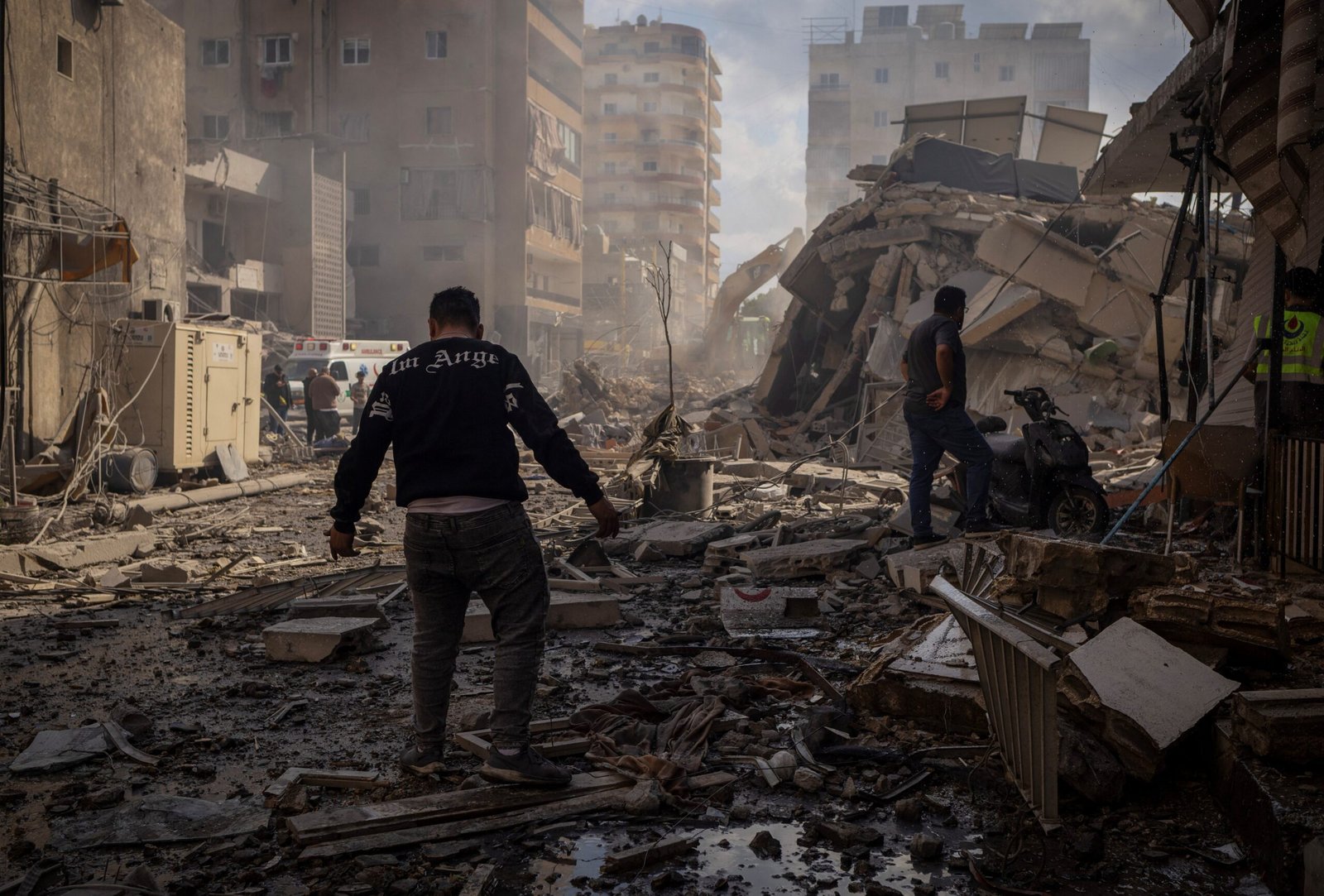
Videos show Israeli bombings in Beirut and Tire, Lebanon, amid ceasefire In the early hours of this Thursday (9), Donald Trump made a publication saying that American troops will remain in Iran and its surroundings until a “real agreement” is negotiated. If the agreement does not happen, Trump said that new attacks will occur “bigger, better and stronger than anyone has ever seen.” He reinforced that the agreement will only be concluded if Iran cannot have nuclear weapons and the Strait of Hormuz remains open and safe. ✅ Follow g1’s international news channel on WhatsApp LIVE: Follow the latest news from the war “Meanwhile, our great Armed Forces are resupplying and resting, looking forward, in fact, to their next conquest,” he said in a post on Truth Social. The president repeated again that the “enemy has already substantially weakened”. Minutes earlier, he accused The New York Times and CNN of publicizing a “false” 10-point plan to end the war. Understand the 3 main points of divergence for a ceasefire between the US and Iran The continuity of the ceasefire between the United States and Iran remains uncertain this Thursday. The truce announced two days ago has proven fragile and full of uncertainty, with violations reported and the Strait of Hormuz closed. The ceasefire stipulated that, for two weeks, the US and Israel would pause attacks on Iranian territory. In return, Iran committed to reopening the Strait of Hormuz, but the opening of the sea lane lasted only a few hours. On Wednesday morning (8), attacks were recorded on both sides of the conflict. Iran claims that Iranian islands were attacked and denounces Israel’s attacks on Lebanon. At the same time, Gulf countries (such as Saudi Arabia and Kuwait) denounced Iranian missile and drone attacks that had occurred during the truce. 👉 Context: the ceasefire, by determination, is just a pause. In this case, the truce will run in parallel with official negotiations between the two parties for a definitive peace agreement, which would put an end to the conflict. These conversations will begin this Friday (10) in Islamabad, Pakistan, which mediates the negotiations. Check below the main differences between the US and Iran regarding the ceasefire. 1. 10-point plan as a basis When confirming the ceasefire on Tuesday, Iran said it had presented to the US, through Pakistan, a ten-point plan as a condition for ending the war. Trump initially called the proposal a “viable” or “workable basis” for beginning definitive negotiations. But, this Wednesday, he said that “only a few points” are viable. The White House stated that the ten-point plan was considered “unacceptable” and discarded, and that negotiations with Tehran will now be based on a new Iranian proposal, described by the US as “more condensed and reasonable” and whose content was not disclosed. Iranian authorities, in turn, indicate that the first list remains valid and defend it as a reliable basis for an agreement. 2. Nuclear commitment One of the ten points of the Iranian plan provides for the maintenance of uranium enrichment. This Wednesday, Iran’s Supreme National Security Council (a type of Ministry of Security) claimed that Washington agreed to the term. Trump denied this and said he will “excavate” all the enriched uranium from Iranian soil, including with the help of Tehran. “There will be no uranium enrichment, and the United States, in cooperation with Iran, will excavate and remove all deeply buried “nuclear material” (B-2 bombers). This is now, and since the attack, under extremely strict satellite surveillance,” Trump said in a post on Wednesday (8). On Tuesday night (7), the Associated Press had already reported on these inconsistencies in the versions of the agreement. According to the agency, the plan released by Iran, in Persian, contained the phrase “acceptance of enrichment” for its nuclear program, something that was absent in the English versions shared by Iranian diplomats with journalists. Iran’s uranium enrichment program has been a point of contention between Tehran and the US and other Western countries for many years, due to concerns that the regime seeks to build a nuclear weapon. ➡️Why is uranium enrichment controversial? Uranium has a variant called U-235, used as fuel and for weapons production. However, the uranium found in nature only contains 0.72% of this element. The uranium enrichment process increases the concentration of U-235. This is done in centrifuges, which spin at high speeds to separate U-235 from other types of uranium, using a gas called uranium hexafluoride. Uranium with a low concentration of U-235 (3% to 5%) is used as fuel for nuclear power plants. Levels above 20% are generally used for research. When enrichment reaches around 90%, the material can be used to produce nuclear weapons. Therefore, this process is highly sensitive and monitored by the International Atomic Energy Agency. 3. Inclusion of Lebanon This is the biggest impasse in the agreement. Pakistan, which has acted as a mediator in the conflict, and Iran say the truce includes Lebanon — and therefore prohibits attacks on the country during the ceasefire period. “I am pleased to announce that the Islamic Republic of Iran and the United States of America, together with their allies, have agreed to an immediate ceasefire everywhere, including Lebanon and others, with immediate effect,” Pakistani Prime Minister Shehbaz Sharif said in a statement posted on social media on Tuesday (7). However, Israel and the US declared that Lebanon and the fight against Hezbollah are outside the agreement. In a statement released in the early hours of Wednesday (8), the office of Israeli Prime Minister Benjamin Netanyahu said it supported Trump’s adherence to the ceasefire, “as long as Iran immediately opens the straits and stops all attacks against the US, Israel and countries in the region.” “The two-week ceasefire does not include Lebanon,” he added. In an interview with PBS, the US public TV network, this Wednesday (8), Trump said that “they (Lebanon) are not included in the ceasefire agreement.” “Because of Hezbollah. They were not included in the agreement either,” he said. CNN International said it had heard from White House spokeswoman Karoline Leavitt that, in a conversation with Israeli Prime Minister Benjamin Netanyahu, Trump was not opposed to Israel continuing to attack Lebanon. Israeli forces carried out this Wednesday (8) the biggest attack on Lebanese territory since the beginning of the war. The bombings left 254 dead and more than 830 injured, according to a report by Lebanese authorities. They took place in the capital, Beirut, and elsewhere, mainly in southern Lebanon. A man walks through the rubble of a building at the site of an Israeli attack in Tire, Lebanon, on April 8, 2026 Adnan Abidi/Reuters See the videos trending on g1
Source link
Trump says troops will remain in the Middle East until ‘real agreement’ is reached
16
