
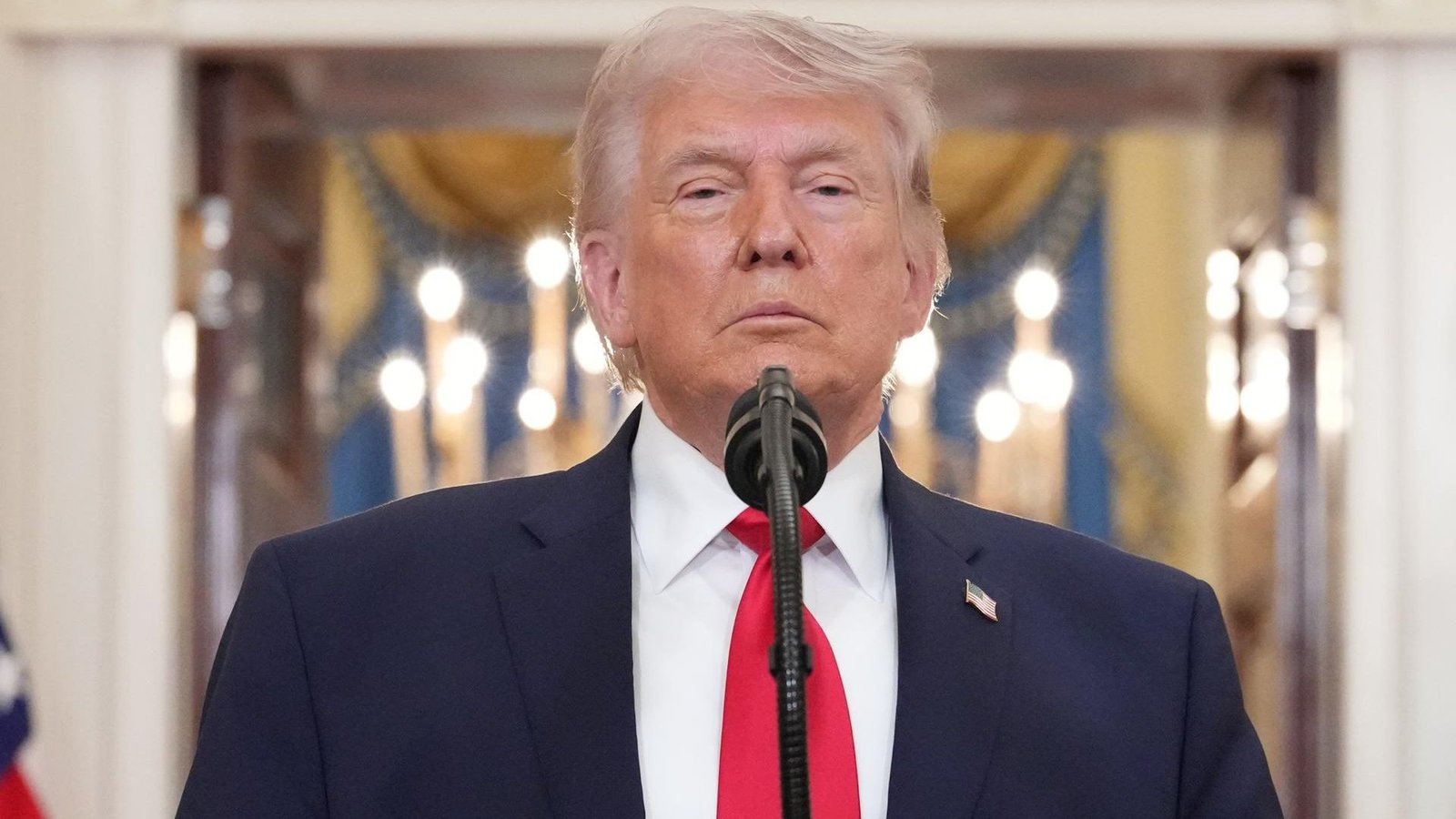
Donald Trump has set a 48-hour ultimatum for Iran to reopen the Strait of Hormuz. The threat is clear: if you refuse to negotiate, you will face devastating military retaliation. What is at stake goes beyond diplomacy — it is control of 21% of global oil and the world’s energy stability.
This is the third ultimatum that Washington has issued in less than a month. The previous two, launched in March, were postponed without resolution. Trump’s strategy follows a pattern: maximum pressure followed by negotiation. But this time the scenario is different.
The White House faces increasing internal pressures. Popular disapproval of war. Volatility in oil prices. Direct impact on the American economy. The threat now focuses on targets of high economic relevance: Kharg Island, the main Iranian oil export terminal. Its destruction would paralyze the energy flow in the region.
Trump responded by threatening to destroy critical Iranian infrastructure: desalination plants, power plants and nuclear facilities. A projectile has already reached the perimeter of the Bushehr nuclear power plant, damaging an auxiliary building. The IAEA did not detect an increase in radiation, but the incident generated global warning about nuclear risks in combat zones.
Explosions were also reported in the Mahshahr Special Petrochemical Zone, a vital center of Iran’s oil economy. Any structural damage would accelerate the reduction of Iranian oil production capacity. Iran already maintains tight control over the Strait of Hormuz. An escalation that damages production infrastructure would transform this pressure into an effective blockade.
Military reality: when technological superiority does not guarantee victory
On Friday (3), an American F-15E Strike Eagle fighter was shot down over Iranian territory. The rescue only managed to get one of the two crew members. The other disappeared.
International analysts point out that if captured and shown on Iranian television, the American military would offer Tehran an unprecedented trump card in the ceasefire negotiations. For Trump, allowing this would be a political humiliation that would require an immediate and disproportionate response. The Iranian government has already signaled the importance: it offered a reward for the officer’s capture alive.
Washington presented the air campaign as “total dominance”, as Secretary of Defense Pete Hegseth declared. The reality is different. The F-15E shot down is the fourth fighter of this model since the beginning of the conflict. An A-10 Warthog also crashed near the Strait of Hormuz. Despite 12,000 combat missions in five weeks, the material and human cost is rising.
More worrying: Although Iranian air defenses have been attacked, mobile systems and the ability to quickly repair missile bunkers demonstrate that Tehran still has the capacity to respond. American technological superiority does not automatically translate into operational control.
On Tehran’s side, the rhetoric is one of structured resistance. Foreign Minister Abbas Araghchi said the country was seeking “clear conditions for a definitive and lasting end to the illegal war.” The Revolutionary Guard ensures that its missile and drone infrastructure remains operational. The shootings of American aircraft prove this capability.
Iran confirmed having shot down an F-15E and an A-10 Warthog. This demonstrates that Iranian air defense, although technologically inferior, can inflict significant losses on the Americans. This reality emboldens regional actors. Israel, which depends on air supremacy for its operations against Hezbollah in Lebanon, is watching closely. The Gulf countries—Saudi Arabia, the United Arab Emirates, Qatar—that bet on America’s ability to contain Iran now face uncertainty about the durability of that protection.
The Escalation Cycle: When Action-Reaction Becomes Uncontrollable
Israel continues to carry out heavy attacks against Tehran and Hezbollah targets in Lebanon. Iran responds with daily salvos of missiles at Israeli territory. This cycle is accelerating.
The shooting down of the American F-15E does not interrupt this pattern—it intensifies it. If Iran can demonstrate that it can inflict significant losses on Americans, it reinforces the narrative that resistance to American power is viable. Hezbollah, which operates in Lebanon under Iranian protection, is watching this dynamic with interest: an Iranian show of force reinforces its regional position.
The unannounced visit of Italian Prime Minister Giorgia Meloni to Qatar and Saudi Arabia — the first by a NATO leader to the region since the start of the war — highlights European concern about the trajectory of the conflict. As Trump signals willingness for massive retaliation, Europe seeks mediation. This fissure in Western cohesion weakens the ability of either side to impose a negotiated solution.
Pakistan acts as a recognized mediator for Tehran, but its influence is limited. Russia and China adopt critical stances towards Washington’s conduct. Beijing has demanded an immediate ceasefire, holding the US and Israel directly responsible for disruptions to commercial shipping in the Strait of Hormuz. Moscow sees the escalation as an opportunity to strengthen ties with Tehran and expand its influence in the Middle East.
