
Just as American President Donald Trump alternates between promising a quick exit from the war in Iran and threatening to continue bombing the Persian country, the United States government has ambiguous positions on the possibility of carrying out a ground operation against the regime.
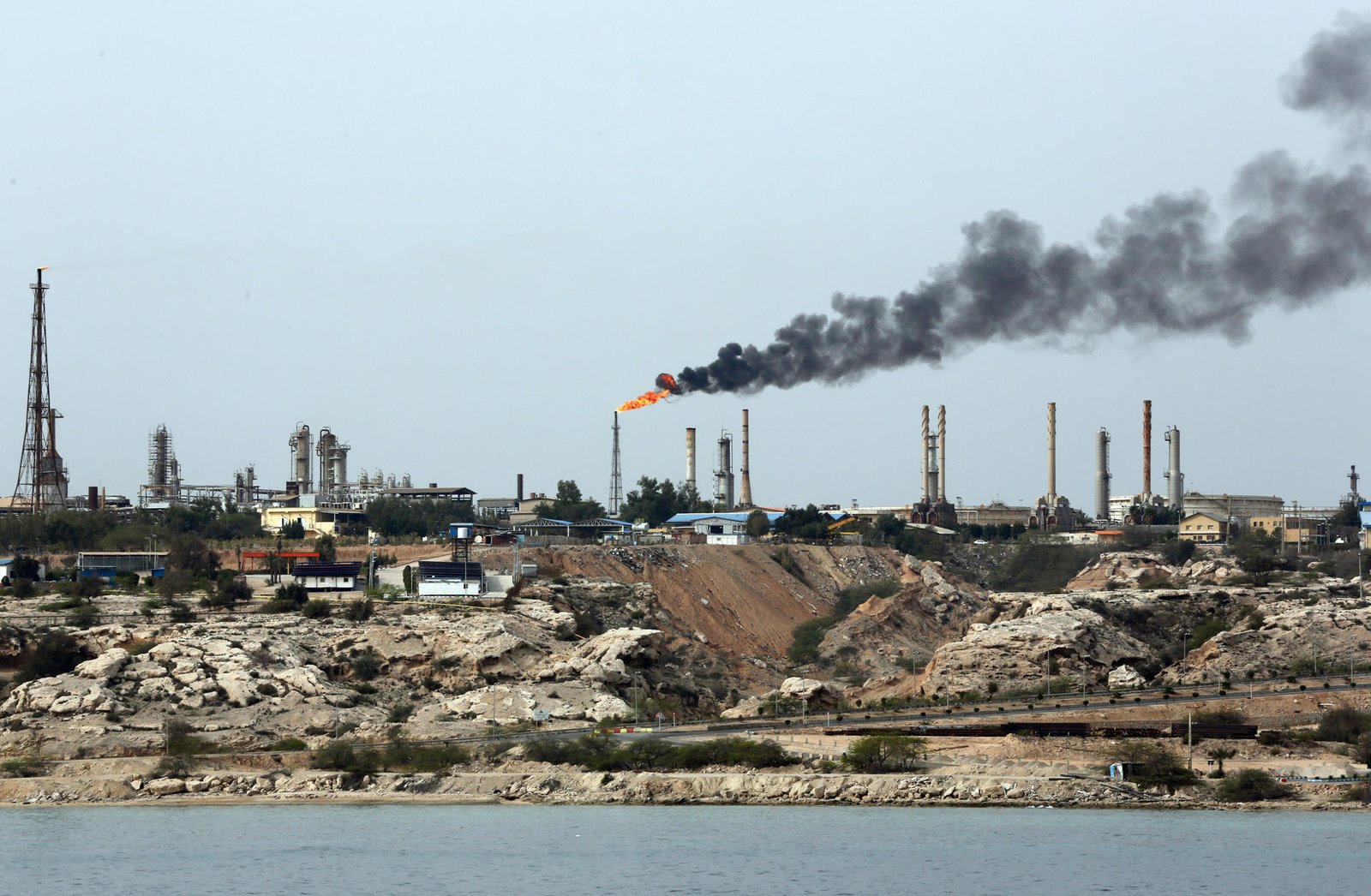
In an interview with the British newspaper Financial Times, published on Sunday (29), Trump suggested that action in this regard could be taken to occupy Kharg Island, through which 90% of Iran’s oil exports pass.
“Maybe we’ll take Kharg Island, maybe we won’t. We have a lot of options,” Trump said in the interview. “It would also mean that we would have to stay there [na Ilha de Kharg] for a while.”
On Tuesday (31), the United States Secretary of War, Pete Hegseth, signaled that “no option” in the war, which began on February 28, has been ruled out.
“We are not going to rule out any option. It is not possible to fight and win a war if it is revealed what you are willing to do or not do, including sending troops into the field,” he told the press.
Other members of the American government were more cautious. White House spokeswoman Karoline Leavitt told The Washington Post that the announced deployment of an additional 10,000 infantry troops to the Middle East does not mean that a land invasion of Iran will occur.
“It is the Pentagon’s job to make the necessary preparations to give the commander in chief [Trump] maximum flexibility. This does not mean that the president has made a decision”, he argued.
In turn, the American Secretary of State, Marco Rubio, declared in France last Friday (27) that the United States “can achieve all its objectives [na guerra] without ground troops.”
Pentagon sources interviewed by the Washington Post stated that, if a ground operation is carried out in Iran, it would not be a large-scale action and would likely consist of attacks combining special operations forces and conventional infantry troops.
According to these sources, the Trump administration has discussed the possibilities of taking Kharg Island, as commented by the American president, and ground attacks on coastal areas near the strategic Strait of Hormuz, blocked almost entirely by Iran due to warto locate and destroy weapons that could target commercial and military ships. Authorities interviewed by the Post estimated that this action would last between “weeks” and “a few months”.
SEE ALSO:
-
How the war against Iran could affect the US military dispute with China and Russia
-

War in Iran gives Russia breathing room, but does not solve Putin’s financial problems
Experts design scenarios for ground action in Iran
Counting the reinforcements that have already arrived in recent weeks, It is estimated that the United States currently has around 50,000 military personnel in the Middle East.
However, Sandro Teixeira Moita, professor of the postgraduate program in military sciences at the Army Command and General Staff School (Eceme), recalled that only around 17 thousand of these soldiers are ground troopswhich would likely make any ground operations in Iran “extremely limited.”
Also to People’s GazetteBrazilian Army reserve colonel Marco Antonio de Freitas Coutinho, a specialist in international relations and master in international political science, agreed with this analysis, highlighting that the current American force in the Middle East is insufficient for a major land operation, since the Iranian forces have 1.5 million men and a “resilient” missile and drone capability.
However, Coutinho highlighted that Kharg Island is small (22 km²) and is only 250 km from the coast of Saudi Arabia, an American ally.
“Considering this, an action on this island cannot be ruled out. The most suitable troops for this action at the current time would be the paratroopers, carrying out a airmobile assault from the coast of Saudi Arabia, employing helicopters and Osprey vertical landing and takeoff aircraftas long as air supremacy was established and threats from Iranian missiles and drones could be contained,” said the analyst.
Teixeira Moita stated that, in addition to Kharg, another American option could be a special forces operation to withdrawal of high-value assets from Iran, such as enriched uraniumto derail the Iranian nuclear program.
“It would probably be something one-off, taking over the location where the stockpile would be and removing this uranium. Now, the problem is that removing material like this would be an expensive operation, taking days. Then, there would be another problem, which would be the logistics of an operation in this sense, it would be extremely complex”, said the Eceme professor.
US would face challenges in maintaining strategic island in Iran
If Trump’s choice is to take Kharg, experts stated that the biggest American challenge would not be so much to occupy the island, but keep it under control. Kharg is located just 25 km from mainland Iran and the US troops occupying it would be exposed to drones, artillery, missiles and rockets fired from the coast.
“Iran would certainly use a lot of weapons to, first, produce American casualties, because that would reflect badly on the American public [em ano de eleições de meio de mandato]; and, second, to make the cost of the American presence on the island increasingly expensive, to the point of becoming unviable”, stated Teixeira Moita.
He added that taking Kharg Island, despite its importance to the regime, would not necessarily bring Iran to the negotiating table.
“The problem is that, with the exception of the president of the Iranian parliament, Mohammad Ghalibaf, who now has a lot of power in his hands, the figures in the Iranian leadership are very radicalized. They are much more radical than the figures who were killed by the Israelis and the Americans on the first day of the war. So, they are not so taken by the economic side”, said the Eceme professor.
Coutinho warned that the seizure of Kharg would bring no guarantee that the Strait of Hormuz would be reopened – the island is around 650 km away – and, if local facilities were damaged or destroyed in a battle for the island, the consequent suspension of Iranian exports would generate a serious disruption in the global oil chain.
“All these factors would only worsen the political pressure on Trump and increase the international market crisis to unbearable levels”, emphasized the colonel. “Typically, Trump cites the importance of having good cards at hand. Right now, it appears he has no easy options to play with.”
