
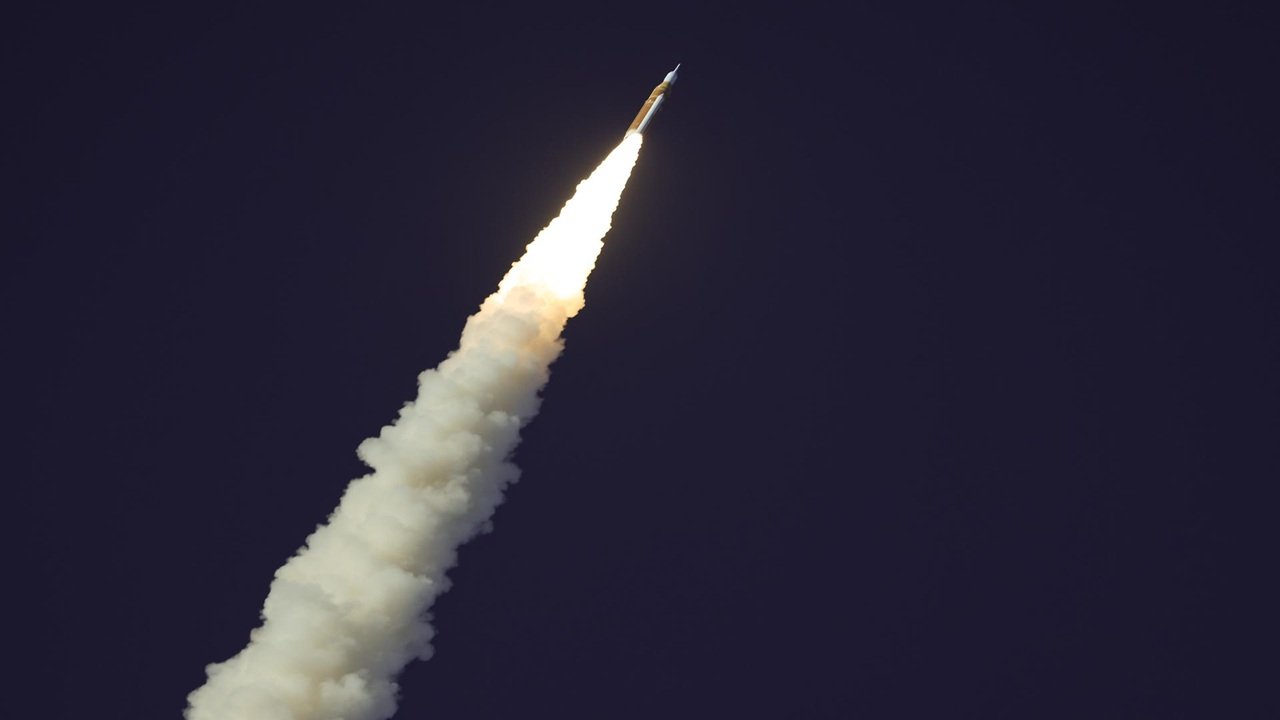
NASA reported this Wednesday (1st) that the Artemis II mission will spend around 24 hours in Earth orbit before deciding whether to continue the journey towards the Moon, as part of testing the ship’s systems. Orion after launch.
According to the American space agency, this initial period will be essential to evaluate the functioning of the capsule’s main systems, including navigation, communication and crew support. If the tests are successful, the spacecraft will head towards lunar orbit, on a journey that should last around four days.
The mission marks the return of astronauts to the Moon’s surroundings after more than 50 years. The last time humans traveled to Earth’s natural satellite was in 1972, during the Apollo 17 mission.
NASA also confirmed that the Orion spacecraft successfully separated from the rocket’s central stage after launch, which took place at 7:35 pm Brasília time, in Cape Canaveral, Florida. According to the agency, the capsule’s solar panels were duly activated, ensuring energy supply for the mission.
During the first hours of flight, the mission recorded a technical problem in one of the ship’s systems. According to Amit Kshatriya, associate administrator at NASA, a warning light indicated an “inconvenience in the controller” of the capsule’s bathroom system. According to the person responsible, diagnosing and correcting the problem should take a few hours.
According to NASA, the spacecraft Orion features the Universal Waste Management System, a bathroom designed for use in deep space missions – an evolution in relation to the Apollo missions, when astronauts used improvised methods to deal with waste during flight.
NASA also reported an initial communication failure after launch, but reported that the problem has now been resolved and that the spacecraft remains on a stable trajectory in Earth orbit.
The Artemis II mission is scheduled to last about ten days and aims to test the capsule’s necessary systems. Orion for future manned trips to the lunar surface. Unlike the Apollo missions, this stage does not involve landing on the Moon, being limited to a flight around the satellite.
Artemis II is considered an essential step in the Artemis program, which seeks to establish a sustainable human presence on the Moon.
