
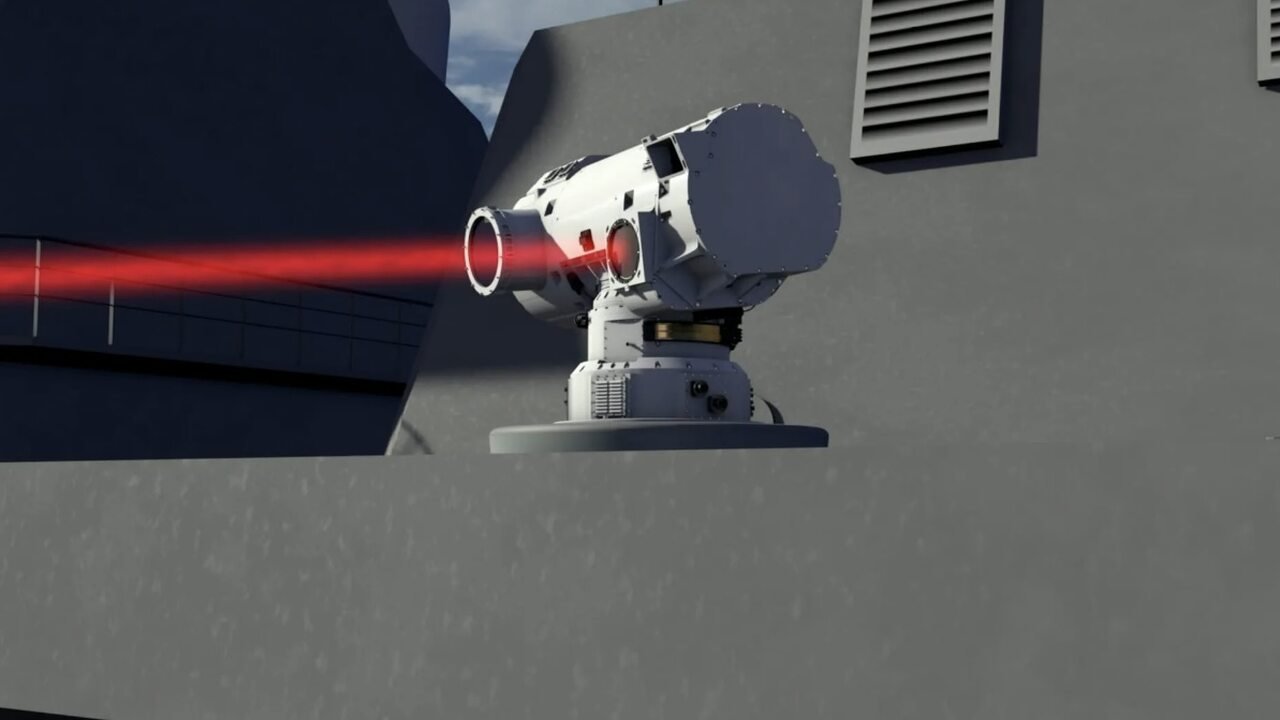
A arma a laser DragonFire it remains on track for deployment for the Royal Navy until 2027, with ministers reiterating existing plans rather than announcing further acceleration.
According to the website UK Defence Journalthe information was confirmed by the minister of defense Lord Coakerwho emphasized that the government is committed to advancing the development, testing and integration of the system.
“The UK government is committed to accelerating the development, testing, production and installation of the high energy laser system DragonFire,” he said.
Despite Coaker’s vague statement, the referenced timeline reveals that progress is already underway. A contract for the first two systems was awarded to MBDA in November 2025, with the first to be installed on a destroyer Type 45 in 2027, five years earlier than originally planned.
+ France seeks low-cost anti-drone defense after studying war in Ukraine and Iran
Two major firing tests completed in 2025 supported the system’s movement towards operational capability, with the UK aiming to become the first European NATO nation to field a laser directed energy weapon.
DragonFire
O DragonFire is a laser-directed energy weapon developed in the United Kingdom that is being built by a consortium including MBDA UKa Leonardo UKa QinetiQ and the Defense Science and Technology Laboratory.
The weapon is designed to combat threats such as drones and mortars using a high-energy laser in the 50-kilowatt class. The system combines multiple fiberglass lasers into a single beam and is mounted on a turret alongside tracking sensors, including an electro-optical camera.
The tests demonstrated a high degree of accuracy, with the Ministry of Defense previously stating that the accuracy is comparable to hitting a small coin from a distance of one kilometer. Its range remains classified, although it is understood to operate as a line-of-sight system.
One of the key features highlighted by the Ministry of Defense is the cost of around £10 per shot, significantly lower than conventional missile interceptors. As an electrically powered system, DragonFire also reduces reliance on stored munitions, which could have implications for sustained operations where resupply is restricted.
Photo: Royal Navy. This content was created with the help of AI and reviewed by the editorial team.
