
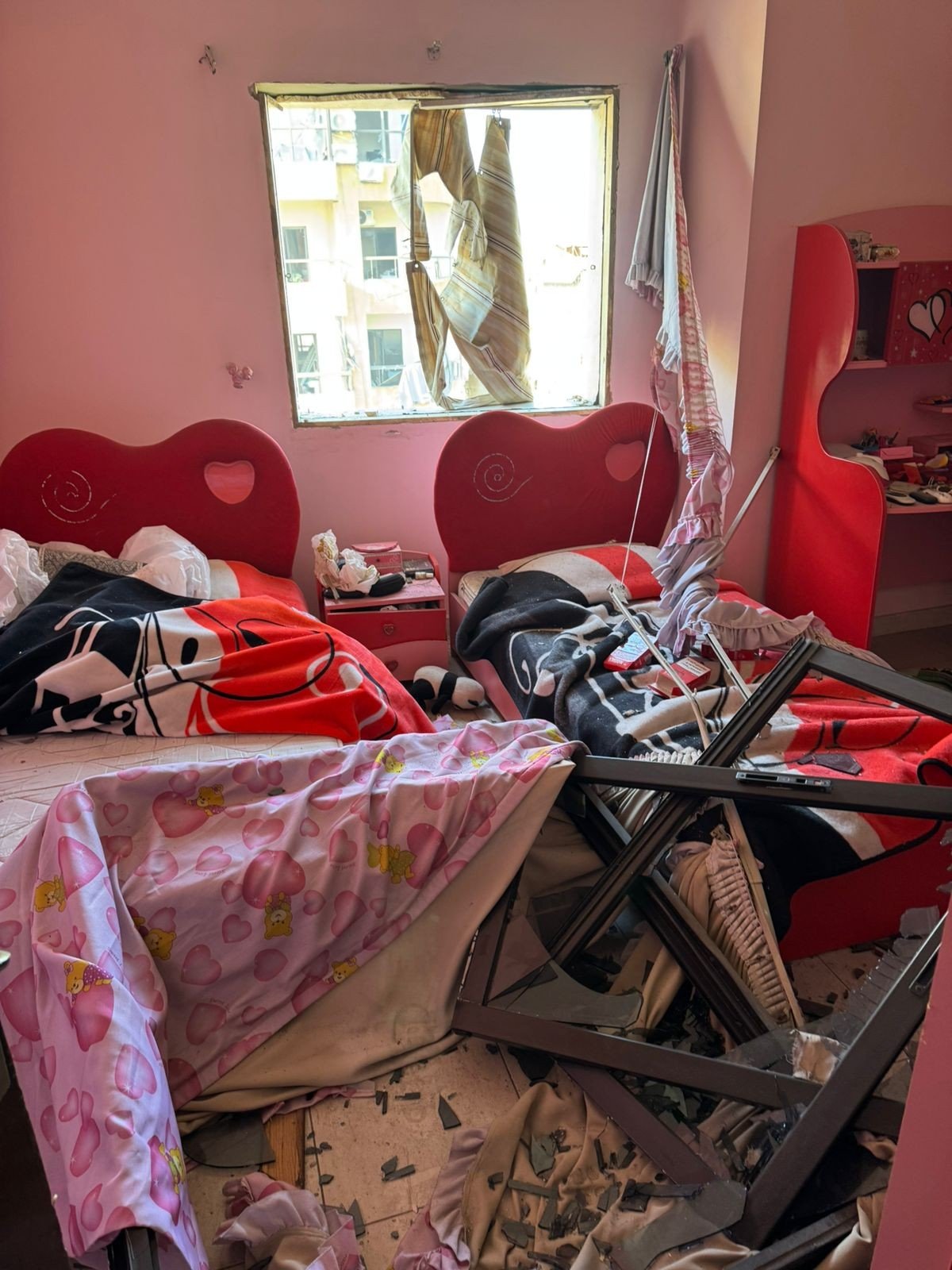
Brazilians leave their homes and take shelter in schools and cars in Lebanon after Israeli attacks “We woke up in the early hours of the morning, around 2:30 or 3 am, with the bombs. There was a lot of shouting in the building and throughout the city.” The story is from Brazilian Romilda Salman who, on March 2, when Israel attacked Lebanon, left the house where she had lived for 25 years with her husband and children. Romilda is one of more than 1.2 million people — about a fifth of the population — displaced by the war between Israel and Hezbollah, which has killed at least a thousand people in the country, according to the United Nations (UN). Twenty-two thousand Brazilians live in Lebanon, according to Itamaraty. ✅ Follow g1’s international news channel on WhatsApp What is a ‘buffer zone’, like the one Israel says it wants to expand in Lebanon Before or during attacks, authorities issue movement orders for residents to leave areas at risk of bombing. This happened in significant portions of southern Lebanon, parts of Beirut, border villages and the Bekaa Valley, according to the UN. This week, Israeli Defense Minister Israel Katz said that residents of southern Lebanon who have left their homes should not return: “They will not return to the south of the Litani River until the safety of residents of northern Israel is guaranteed,” he said. According to the UN, 472 educational buildings are being used as collective shelters in the country. The UN Refugee Agency (UNHCR) called, this Friday (27), the current situation in Lebanon “a profound humanitarian crisis” and warned of the risk of a catastrophe in the region. The conflict is the result of the war in the Middle East, which broke out on February 28. The extremist group Hezbollah, an ally of the Iranian regime, launched rockets at Israel, which responded by attacking several regions in Lebanon and sending soldiers to the south of the neighboring country. The scenario is tragic. Families living in precarious situations in tents, cars and shelters, with no date to return home. To g1, Brazilian women who live in Lebanon share their stories. ‘If I die, I want to die with my daughter’ Mohammad, Housni, Carolina and Romilda. Personal collection Romilda Salman met her Lebanese husband Housni in Foz do Iguaçu (PR) almost three decades ago. They got married and had their first son Mohammad, 26, in Brazil. They then moved to Lebanon, where Carolina, 23, was born. On the day Israel attacked Lebanon, the family had to hurriedly leave their apartment in Haret Hreik, a suburb in the south of Beirut. Knowing they wouldn’t be back anytime soon, they split up to take the motorcycle and car. Mohammad was driving the motorcycle and Carolina, the car. Faced with congestion, the children tried to convince their mother to leave the area as quickly as possible. “At one point along the way, my son said: ‘Mama, come with me because we’ll get there faster on a motorbike’”, says Romilda. “I said: no. If I die, I will die with my daughter. She started crying and screaming, she was desperate, nervous, driving. She said: ‘Mama, go, we won’t all die together'”. “We’re walking and the bombs are behind us and the bombs are falling. You know, a horror movie, a war movie?”, he describes. Romilda ended up going with her son on a motorbike and arrived in just over 20 minutes in a more central area of Beirut. The daughter and her husband, by car, took more than three hours to make the same journey. Currently, the family is sheltering in an apartment provided by a Lebanese man who lives outside the country for those displaced by the war. The building has six floors, with one apartment per floor. According to Romilda, each apartment is occupied by around three families. “We’re practically camped out. We don’t have a refrigerator, we don’t have a stove. We bought a small stove and we’re sleeping on mats,” he says. Despite this, she says she is grateful that they were able to find a place to stay. “We were lucky. There are a lot of people in tents on the streets and living in cars”, he says. “Besides, we have no way to go home. Right now, they are bombing there,” he says. Romilda says she doesn’t know the current situation of her house, but she received images of neighboring buildings that were bombed. One of the images shows his neighbor’s daughters’ room after the attack. See below. Romilda’s neighboring building Personal collection Romilda’s neighbor’s daughters’ room Personal collection ‘We are sharing a room with other families, there are 20 people in total’ Lindaura Hijazi is 52 years old, was born in Assis-Chateaubriand (PR) and has lived in Lebanon since 1991. Like Romilda, she had to leave her house in Haret Hreik due to the Israeli attacks. “I was at home when about six missiles fell very close. That’s when I decided to leave. I didn’t know if I could get away — every five or ten seconds, a bomb fell,” he says. Lindaura had to leave her home after Israel attacked Lebanon Personal collection Since then, she and her children, Sadek, 14, and Amin, 9, have lived in a classroom at a state college in the center of Beirut, converted into a shelter by the government. “There are three floors, each with seven rooms, and two bathrooms per floor. We are sharing a classroom with other families — there are 20 people in total”, he says. According to her, the chairs became “closets” to store belongings (see the photo below) and the mattresses are stored during the day and laid out on the floor at night. Lindaura states that the government, but mainly social organizations, have provided food and hygiene items to those sheltered. But not all of Lindaura’s family is at the shelter. Her husband, Bilal Hijazi, sleeps in his car, parked on a nearby street. Lindaura explains that he feels more comfortable this way. “When there are men here, women can’t take off their scarves. So, he gets embarrassed and sleeps downstairs,” he says. Chairs in the classroom being used as a shelter in Beirut Personal collection Land advance In recent weeks, Israel has increased its presence and attacks in southern Lebanon. The situation raises fears that a large-scale invasion could be on the horizon. On Tuesday (24), Israeli Defense Minister Israel Katz stated that he intended to take control of an area of 30 km in Lebanese territory, from the Israeli border to the Litani River (see map below). Litani River, in southern Lebanon g1/Thalita Ferraz The following day, Israeli Prime Minister Benjamin Netanyahu stated that his Army would expand the “buffer zone” in Lebanon. Previously, Israel had already destroyed at least five bridges in the region. ➡️”Buffer zone” is a military term used to describe a strip of territory used as a containment area between two combat fronts. Israel says the creation and expansion of this “security zone” would protect its population from Hezbollah. But, for a buffer zone to be considered legitimate, it needs to be the result of an agreement between the parties to the conflict, with respect to sovereignty, according to professor of International Relations at UFF and Harvard researcher Vitelio Brustolin. “In the case of the buffer zone that Israel wants to create in Lebanon, it would be within Lebanese territory, and would need Lebanon’s consent to be considered legitimate,” he says. Brazilians in Lebanon had to leave their homes due to the War with Israel Personal collection
Source link
‘If I die, I want to die with my daughter’: under bombs, Brazilians in Lebanon hurriedly leave their homes and take shelter wherever they can
39
